

Stop Guessing, Start Knowing: The Guide to Deep User Understanding
Golden Hook & Introduction
SECTION
Nova: Atlas, if you had to sum up the conventional approach to product development—you know, how most companies they're building what customers want—in exactly five words, what would they be? Give me your raw, unfiltered, five-word review.
Atlas: Oh, that's easy. "More features, less actual impact."
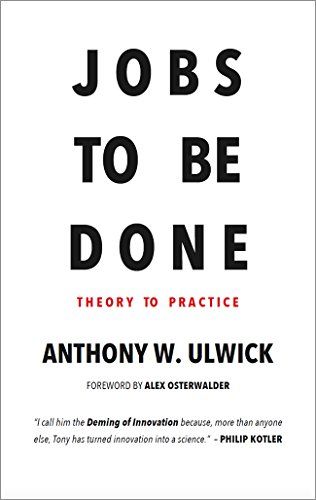
Nova: Oh, a little cynical, but also… painfully accurate for so many. And that, my friends, is precisely what we’re digging into today. We're talking about a paradigm shift that promises to move us beyond that feature-creep cycle, straight into deep user understanding. We're exploring the foundational ideas from "Stop Guessing, Start Knowing: The Guide to Deep User Understanding," a powerful framework championed by industry veterans like Tony Ulwick and the late, great Clayton Christensen.
Atlas: It’s interesting how Christensen, a Harvard Business School professor, became so renowned for his work on disruptive innovation, essentially challenging the very companies he taught about. This framework feels like a natural extension of that—really getting to the root of why some innovations succeed wildly and others just… fizzle.
Nova: Exactly. Because the cold, hard fact is, too many products fail. Not because they’re poorly built, but because they solve surface-level problems. They don’t tap into the true, underlying needs of users. It's like building a faster horse when people really need a car.
Atlas: And for our listeners, the aspiring architects and empathetic builders out there, that's the ultimate frustration, isn't it? Pouring your heart and strategic mind into something, only to find it doesn't quite connect.
The Transformative Power of Jobs to Be Done
SECTION
Nova: That's where the "Jobs to Be Done" framework, or JTBD, comes in. Tony Ulwick really codified this. It’s a powerful lens that shifts our focus entirely. Instead of looking at product features, we ask: what "job" is the customer actually hiring this product to do?
Atlas: Hold on. "Hiring" a product? That's a unique way to put it. What exactly do you mean by a "job" in this context? Is it just another way of saying "customer need"?
Nova: It's deeper than a customer need, Atlas. A "job" isn't a task, it's a fundamental problem a customer is trying to solve or a goal they're trying to achieve in a specific circumstance. Think of it like this: if your sink is leaking, you "hire" a plumber to fix it. The job isn't "get a wrench," it's "restore peace of mind by getting the water to stop gushing." The plumber might use wrenches, but you're not hiring the wrench; you're hiring the outcome.
Atlas: That makes sense. So it's about the outcome, the desired state, rather than the tool or the feature itself.
Nova: Precisely. And this framework helps us see beyond the obvious. Take IKEA, for instance, a classic example from Christensen's work in "Competing Against Luck." On the surface, what job are you hiring IKEA to do?
Atlas: Well, I'm hiring them for affordable furniture, right? Maybe to furnish a new apartment without breaking the bank.
Nova: That's the surface-level feature. But when Christensen and his team dug deeper, they found people were hiring IKEA for a far more complex "job." It wasn't just "buy furniture." It was often the "job" of "furnishing my first apartment quickly and affordably, reflecting my personal style, and feeling like I accomplished something significant in my new life stage, even if it means a little assembly."
Atlas: Wow. That's a lot packed into one "job." So it's not just about the physical product, but the emotional, social, and functional dimensions all wrapped up together?
Nova: Exactly! People weren't just buying a bookshelf; they were buying a fresh start, a sense of independence, a feeling of competence from building something themselves. The low price, the flat-pack design, the meatballs—they all served that deeper, multi-faceted "job." If you only focused on "affordable furniture," you might miss the entire emotional and social context that makes IKEA so successful.
Atlas: That's fascinating. But wait, looking at this from a product development perspective, isn't that just good marketing? Understanding your customer's emotional needs is Marketing 101. How does JTBD fundamentally change product strategy beyond that?
Nova: It changes everything because it informs you build, not just you sell it. It forces you to innovate around the entire "job" experience, not just individual features. Consider Airbnb. What job were people "hiring" a hotel for before Airbnb came along?
Atlas: A place to sleep when traveling. Safety. Cleanliness. Maybe a continental breakfast.
Nova: Yes, those are functional elements. But Airbnb uncovered a deeper "job." Many travelers, especially a certain segment, weren't just looking for a bed. They were "hiring" a solution for the "job" of "experiencing a new city like a local, feeling connected to the culture, and finding unique, authentic accommodations that reflect my adventurous spirit."
Atlas: Oh, I get that feeling. It's like you're not just booking a room; you're booking an experience. A chance to step outside the tourist bubble.
Nova: Precisely. And by understanding that deeper "job," Airbnb didn't just build a better hotel booking site. They built a platform that connected people looking for unique local experiences with hosts offering them. It was a completely different solution to the same overarching "job" of travel accommodation, but it tapped into a previously unmet, deeper need.
Atlas: For our listeners who are trying to achieve product-market fit, how does this idea of "hiring" a product fundamentally change their strategic approach? Because it sounds like it could be a complete reorientation.
Nova: It absolutely is. It shifts you from asking, "How can I make my product better?" to "How can I help my customer get their job done more effectively, conveniently, or affordably?" It moves you away from competitor-centric thinking and towards customer-centric innovation. It helps you see white space for new solutions, even in crowded markets, because you're identifying unsolved "jobs."
Atlas: That sounds great in theory, but for someone building a complex B2B product, or even a nuanced consumer app, how do you even begin to identify these "jobs" without getting lost in abstraction? It feels like it could be overwhelming.
Nova: That’s a crucial point, and it's why Nova’s framework is so powerful. You don't guess. You observe. You interview. You look for workarounds. For instance, if you're building software for project managers, you don't just ask what features they want. You ask: "What was the last time you struggled to get a project approved? What happened? What emotions were involved? What did you try to do?" You're looking for the struggles, the aspirations, the progress they're trying to make. You're moving beyond demographics and towards motivations, context, and desired outcomes.
Synthesis & Takeaways
SECTION
Nova: So, ultimately, the "Jobs to Be Done" framework is about profound empathy. It’s about understanding the full context of a user's life and what they're truly trying to accomplish, not just what they say they want or what features they request.
Atlas: I guess that makes sense. This isn't just about building features; it's about building solutions that truly resonate and create lasting value. It's about impact, for the product and the people using it. It's understanding that when someone buys a drill, they don't want the drill; they want the hole.
Nova: Exactly! It's one of the most powerful reframes in product development. It allows you to build products that become indispensable because they genuinely help people make progress in their lives.
Atlas: And for anyone who's ever felt like their product was just a guess in the dark, this framework offers a real compass. It provides that clarity and strategic insight that every empathetic builder craves.
Nova: So, here's your tiny step, your challenge for this week: for your next product feature, or even just a task you're trying to accomplish, try articulating the 'job' your user is hiring it for, rather than just listing its functionalities. Dig deeper into that underlying motivation.
Atlas: It’s a simple shift in perspective that can lead to profound insights and, ultimately, much more impactful products. It’s about trusting your instincts to look beyond the surface.
Nova: Absolutely. It’s about not guessing, but truly knowing.
Atlas: This is Aibrary. Congratulations on your growth!