

The Day One Mindset: Unpacking Jeff Bezos's Architecture of Learning and Innovation
Golden Hook & Introduction
SECTION
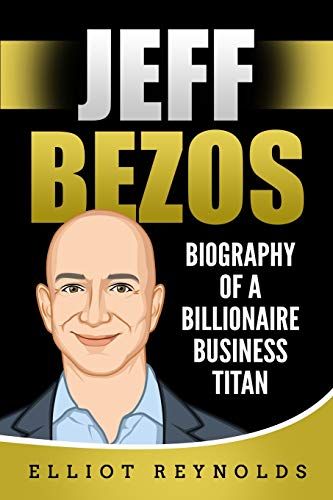
Nova: Picture this: It's 1994. You're a thirty-year-old senior vice president at a prestigious Wall Street investment firm. You have a secure, highly lucrative career. But then, you notice a statistic: the internet is growing at twenty-three hundred percent a year. What do you do? If you're Jeff Bezos, you quit your job, pack your life into a Chevy Blazer, and drive across the country to start an online bookstore in a garage. How do we make leaps like that without being paralyzed by fear? Today, we're diving into Elliot Reynolds' biography, Jeff Bezos: Biography of a Billionaire Business Titan. We'll tackle this from two fascinating angles: first, how the Regret Minimization Framework can revolutionize our decision-making, and second, how the Day 1 philosophy serves as the ultimate blueprint for lifelong learning and staying perpetually curious. I'm Nova, and joining me today is Peris Karanga, an incredibly curious and analytical learner who loves connecting the dots across different domains. Welcome, Peris!
Peris Karanga: Thanks, Nova! I am so excited to be here. You know, when I look at Jeff Bezos's story, I don't just see a business biography. I see a masterclass in cognitive agility. Bezos is someone who constantly stepped outside his comfort zone, treated every new industry as a learning laboratory, and built mental models to navigate massive uncertainty. For anyone who loves to learn, his life is a goldmine of insights.
Nova: Oh, absolutely! We are going to have so much fun breaking this down. It's not just about the billions of dollars; it's about the cognitive toolkit he used to build an empire from scratch. Let's start at that pivotal moment in 1994, because that decision-making process is legendary.
Deep Dive into Core Topic 1
SECTION
Nova: So, Elliot Reynolds describes this amazing scene in the book. Bezos is sitting on a park bench in Central Park with his boss at the investment firm, D. E. Shaw. His boss listens to this wild idea of selling books on the internet, takes a long walk with him, and says, "That sounds like a really good idea for someone who didn't already have a good job." Talk about a reality check! It would have been so easy for Bezos to just stay put, right?
Peris Karanga: It really would have. And this is where his analytical mind did something brilliant. Instead of getting bogged down in a standard cost-benefit analysis—which, let's be honest, would have favored staying at his high-paying Wall Street job—he created what he called the Regret Minimization Framework. He literally projected himself forward to age eighty. He asked himself, "When I am eighty, will I regret leaving this Wall Street bonus?" The answer was an immediate no. But would he regret not participating in this thing called the internet that he knew was going to be a revolution? The answer was a resounding yes.
Nova: I love that so much! It's like a time-travel mental model. We often get so caught up in the short-term friction—the fear of what people will say, the temporary loss of income—that we lose sight of the big picture. By shifting the timeline to age eighty, he completely bypassed his immediate survival instincts and tapped into his long-term values.
Peris Karanga: Exactly, Nova. From a cognitive psychology perspective, what Bezos did was combat 'omission bias.' As humans, we tend to perceive the risks of taking action—like starting a business and failing—as much higher than the risks of inaction, like staying in a comfortable but unfulfilling job. But in reality, over a lifetime, our deepest regrets almost always stem from the things we try. The paths not taken. By framing the decision through the lens of his eighty-year-old self, he made the active choice the logical choice.
Nova: That is such a powerful way to look at it. And it wasn't just a one-time trick for him. He used this long-term thinking as the foundation for Amazon's entire business model. Reynolds points out in the biography that in his very first letter to shareholders in 1997, Bezos wrote, "It's all about the long term." He was willing to make decisions and weigh tradeoffs differently than other companies. He was willing to lose money for years to build customer trust and infrastructure.
Peris Karanga: Yes! And that requires an incredible amount of cognitive discipline. Think about it: Wall Street is obsessed with quarterly earnings. They want to see profits. But Bezos was playing a completely different game. He was optimizing for the long-term value of the network. As a learner, I find this fascinating because true learning operates on the exact same principle. You have to be willing to look foolish in the short term—to ask the 'dumb' questions, to fail at a new skill—in order to build deep, long-term mastery.
Nova: Oh, that is a beautiful connection, Peris! We have to embrace the awkward 'garage phase' of our own learning journeys. Bezos was literally packing books on his knees on a concrete floor in the early days. He actually suggested they get kneepads, and his employee looked at him and said, "Jeff, what we need are packing tables." And Bezos was like, "Oh, right! That's a much better idea!"
Peris Karanga: I love that story! It shows that even a genius Wall Street quant didn't have it all figured out. He was learning on the fly, remaining open to feedback, and adapting instantly. He didn't let his ego get in the way of a better solution.
Nova: Right! And that willingness to learn and adapt is what kept Amazon from becoming just another dot-com bust. They started with books, but they quickly realized that the underlying platform they were building—the logistics, the customer database, the website infrastructure—could be applied to almost anything. They connected the dots from books to music, to toys, to electronics, and eventually to cloud computing with AWS!
Peris Karanga: And that is a classic example of cross-domain synthesis. AWS, or Amazon Web Services, is a perfect case study. They didn't start as a tech infrastructure company. They built highly efficient internal systems to handle their own massive e-commerce traffic, and then they realized, "Hey, other companies need this exact same infrastructure. We can rent this out!" They took a capability developed in one domain and used it to completely revolutionize another, essentially inventing the modern cloud computing industry. It's the ultimate form of creative learning.
Deep Dive into Core Topic 2
SECTION
Nova: It really is. And that constant evolution brings us perfectly to our second core topic: the famous Day 1 philosophy. In the biography, Reynolds explains that Bezos kept the phrase "It's still Day 1" as a constant mantra. He even named the main building at Amazon's headquarters 'Day 1'. Peris, how do you interpret this concept of Day 1, especially through the lens of continuous learning?
Peris Karanga: To me, Day 1 is all about maintaining a beginner's mind, or what Zen Buddhism calls 'Shoshin'. On Day 1, you are curious, you are agile, you are customer-obsessed, and you are eager to experiment. You don't have any legacy systems to protect, so you aren't afraid of disrupting yourself. But Day 2... Day 2 is stasis. Bezos famously said that Day 2 is followed by irrelevance, followed by excruciating, painful decline, followed by death.
Nova: Yikes! That sounds incredibly dramatic, but when you look at corporate history, it's so true, isn't it? Companies get big, they get comfortable, they start protecting their existing profits, and suddenly they get disrupted by a hungry startup operating on Day 1.
Peris Karanga: Absolutely. And the same thing happens to us as individuals. When we are in 'Day 1' of learning something new, we are highly alert, we are absorbing information like sponges, and we accept that we will make mistakes. But once we acquire some expertise, we risk entering 'Day 2'. We get comfortable. We start relying on our past successes, we stop asking questions, and we become defensive when our ideas are challenged. We get trapped by our own expertise.
Nova: Oh, that is a profound insight, Peris. "Trapped by our own expertise." We've all seen that happen, right? So, how did Bezos keep a massive, multi-billion-dollar company with hundreds of thousands of employees in Day 1? What were his practical tools for fighting off the Day 2 creep?
Peris Karanga: Well, one of his most powerful tools was an absolute obsession with customers over competitors. He argued that if you are competitor-obsessed, you have to wait until a competitor does something cool before you react. But if you are customer-obsessed, you are constantly pioneering on their behalf. You are looking at what they need, even if they can't articulate it yet.
Nova: Yes! Like the Kindle. Customers weren't actively asking for an e-reader that could download books in sixty seconds, but Amazon anticipated that need. And here's the kicker: by creating the Kindle, Amazon was actually willing to cannibalize its own highly profitable physical book business! That is the ultimate Day 1 move. They disrupted themselves before anyone else could do it to them.
Peris Karanga: Exactly. And another fascinating tool Bezos used to maintain Day 1 thinking was how he structured meetings and decision-making. He banned PowerPoint presentations at Amazon. Can you believe that? A major tech company with no PowerPoints!
Nova: I know! As someone who has sat through my fair share of boring slide decks, that sounds like absolute heaven. But what did they use instead?
Peris Karanga: They used six-page, narrative-structured memos. Before any major decision was made, the presenter had to write a deeply thought-out, six-page narrative. And at the start of the meeting, everyone would sit in silence for up to thirty minutes, reading the memo and taking notes. Bezos called this 'silent reading time.'
Nova: That is so unique! Why did he prefer narratives over bullet points?
Peris Karanga: Because bullet points are easy to hide behind. They allow for sloppy thinking. You can put a vague bullet point like "increase efficiency" on a slide, and everyone nods. But when you have to write a narrative, with full sentences and clear cause-and-effect relationships, you are forced to deeply understand the problem. It democratizes the meeting. The best writer or the best presenter doesn't win; the best wins because everyone has read the same detailed analysis.
Nova: That is brilliant. It forces active cognitive processing. It's not just about passive listening; it's about deep, analytical engagement with the material. It's a structured learning environment right there in the corporate boardroom.
Peris Karanga: It really is. And he paired this with another rule: the 'two-pizza team' rule. He believed that no team should be so large that it couldn't be fed by two pizzas. This kept teams small, autonomous, and agile. It prevented the bureaucratic bloat that leads to Day 2. It allowed small groups of people to take ownership of an idea, experiment quickly, and learn from their failures without needing approval from ten layers of management.
Nova: I love that. It's all about reducing friction to experimentation. If you make failure too expensive or too bureaucratic, people will stop trying new things. They'll play it safe, and that's the beginning of the end. We have to give ourselves permission to run small, low-stakes experiments in our own lives, too.
Synthesis & Takeaways
SECTION
Peris Karanga: Yes! That is the ultimate takeaway for me. Whether you are building a space company like Blue Origin, or just trying to learn a new language, you have to design your environment to support experimentation and long-term thinking.
Nova: We've covered some truly mind-expanding concepts today, Peris. From the Regret Minimization Framework that helps us make bold, value-aligned leaps, to the Day 1 philosophy that keeps our minds agile, curious, and resistant to stagnation. It's clear that Jeff Bezos's success wasn't just about being in the right place at the right time; it was about a relentless commitment to a specific set of cognitive mental models.
Peris Karanga: Beautifully put, Nova. For me, the biggest lesson is that learning isn't just something we do in school; it's a lifelong operating system. Bezos showed us that if you remain customer-obsessed—or in our case, growth-obsessed—and if you are willing to think in decades rather than quarters, you can navigate almost any level of disruption.
Nova: Well, we want to leave our listeners with a little bit of that Day 1 energy today. Here is our challenge for you: Think about a decision you've been putting off because of short-term fear or uncertainty. Now, project yourself to age eighty. Looking back from that vantage point, will you regret taking the leap, or will you regret staying exactly where you are?
Peris Karanga: And remember, it is always Day 1. Keep asking questions, keep experimenting, and never stop connecting those dots.
Nova: Thank you so much for sharing your incredible insights with us today, Peris. This was an absolute joy.
Peris Karanga: Thank you, Nova! It was a blast.
Nova: And to all our listeners, thank you for tuning in. Until next time, keep learning, keep growing, and we'll see you in the next episode!