The Harmony of Grief and Forward Momentum
Golden Hook & Introduction
SECTION
Nova: We are obsessed with the idea of closure. We treat grief and difficult seasons like broken appliances that just need a quick fix to get back on the assembly line of productivity. But what if that very desire to fix things is actually the thing that breaks us further?
Atlas: Oh, I see where you are going with this. We treat human emotion like a software bug that needs patching. It is a very modern, very frantic way to live, isn't it? We want to solve our pain as if we are debugging code, but some things in life are not bugs, they are just features of the human experience.
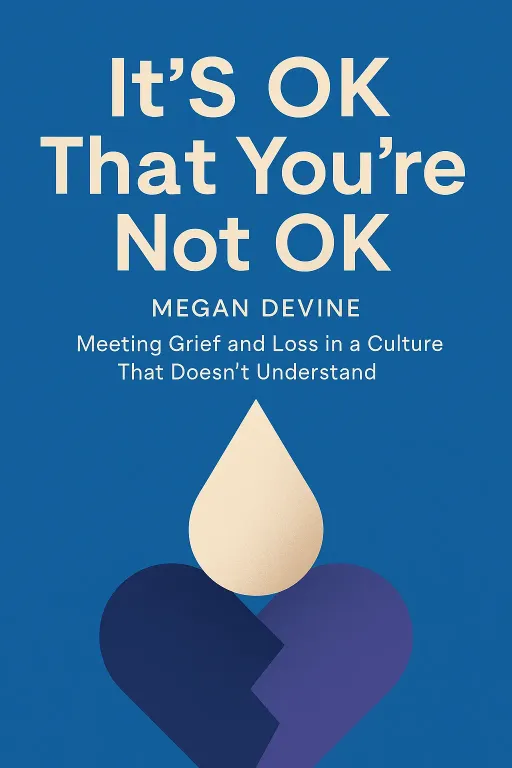
Nova: Exactly. And that is the central tension we are unpacking today. We are looking at two seemingly different perspectives that actually form a powerful, necessary harmony. On one hand, we have Megan Devine’s work, specifically her book, It’s OK That You’re Not OK. It is a raw, uncompromising look at how our culture fails the grieving. Devine, who is a psychotherapist, wrote this from the most personal place possible after her partner died in a tragic drowning accident. She had to navigate the world of standard therapy and realized that most of the advice she received was not just unhelpful, it was actually harmful.
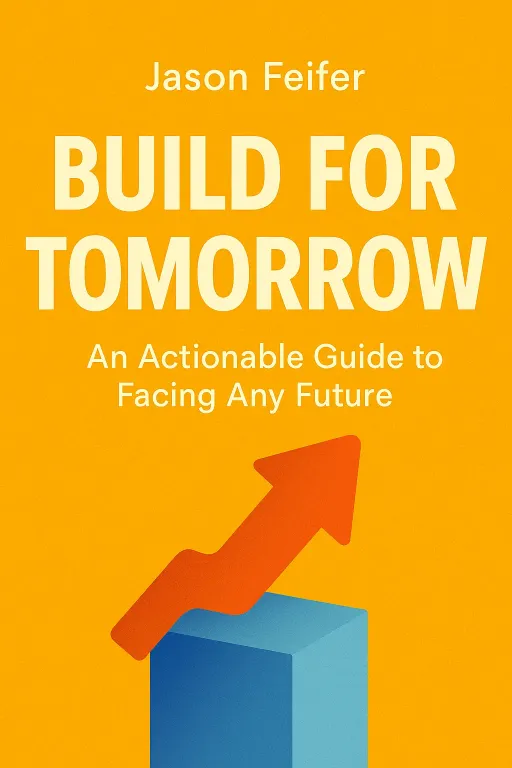
Atlas: That is such a heavy origin story for a book, but it gives it so much weight. And then, to balance that out, we are looking at Robert Glazer’s Friday Forward. Glazer is an entrepreneur and CEO, and his book is essentially a collection of fifty-two stories designed to spark incremental leadership growth. It is the antithesis of the toxic positivity we often see in business literature. It is about consistent, small, weekly action.
Nova: Right. One book tells us to stop trying to fix everything, and the other gives us a framework to keep moving forward. The magic happens when you realize you do not have to choose between the two. You can hold space for the grief while simultaneously building the architecture for your next chapter.
The Myth of the Fix
SECTION
Atlas: That makes sense, but let me push back a little. If we stop trying to fix our pain, aren't we just resigning ourselves to being stuck? I mean, the "Strategic Seeker" in our audience is probably thinking, "If I don't fix this, how do I get back to being effective?"
Nova: That is the exact question most people have. And the answer lies in understanding what Devine calls the "problem of problems." See, when you are in a state of grief or deep transition, you have the actual, primary pain—the loss, the burnout, the heartbreak. That is heavy enough. But then, we add a secondary layer of suffering: the judgment we place on ourselves for not being "over it" yet. We tell ourselves, "I should be fine by now," or "I need to snap out of it." That secondary layer is what Devine argues we can actually control, not by fixing the primary pain, but by changing our relationship to it.
Atlas: Oh, I love that distinction. It is the difference between having a broken leg and beating yourself up because you cannot run a marathon on it. The leg is still broken, but the beating yourself up is optional.
Nova: Precisely. Devine’s work is highly regarded precisely because it calls out this cultural obsession with "moving on." She points out that for many people, the goal of therapy or self-help is to get back to a baseline of "happy." But what if that baseline is gone? What if the life you lived before the loss or the burnout is not the life you are living now? She suggests that we need to shift from "fixing" to "witnessing."
Atlas: Witnessing. That sounds almost passive, though. How does a high-achiever, someone who is used to solving problems, actually practice witnessing without feeling like they are just giving up?
Nova: It is not about doing nothing. It is about changing the of your action. When you are in a, let’s call it a "difficult season," your action should not be aimed at erasing the pain. It should be aimed at acknowledging it. Think of it like this: if a friend came to you and said, "I just lost my job," you wouldn't say, "Well, have you tried being happy about it?" You would say, "That is terrible. I am so sorry." Devine says we need to offer that same level of validation to ourselves.
Atlas: That is a tough pill to swallow for the type-A personality. We are wired to provide solutions. If someone tells me a problem, my brain immediately starts drafting a three-point plan to solve it. So, you are saying the first step is actually silencing that internal consultant?
Nova: Exactly. It is about tolerating the discomfort of being "not okay." When you stop running from the pain, you actually stop wasting energy on the chase. That energy can then be redirected. And that is exactly where we can pivot to the second half of our conversation, because once you have stopped trying to fix the unfixable, you are left with a very important question: what do I do with the time I have left?
The Architecture of Momentum
SECTION
Atlas: Okay, but let’s bridge that gap. If I am in that state of witnessing, acknowledging that things are not okay, how do I prevent that from turning into a spiral of stagnation? How do I get from "I am in pain" to "I am still growing"?
Nova: This is where Robert Glazer’s framework becomes essential. Glazer’s Friday Forward is not about massive, overnight transformations. It is about the power of the marginal gain. He has this background as a CEO, building a global agency, and he started these weekly messages essentially as a way to keep his team focused on growth. It became a cultural phenomenon because it stripped away the fluff. He realized that most people do not need a grand, sweeping life overhaul. They need a small, consistent nudge.
Atlas: So, it is the compounding interest of personal development.
Nova: Spot on. Glazer’s approach is about intentional, incremental growth. He argues that if you can just commit to one small, purposeful action each week, the trajectory of your life changes over time. It is a stark contrast to the "hustle culture" that says you have to burn the candle at both ends. He is talking about a sustainable, quiet momentum.
Atlas: That feels like a much more manageable approach. It is not about running a marathon while your leg is broken; it is about doing physical therapy exercises every single day.
Nova: Beautiful analogy. And that is the synthesis, right? Devine gives you the permission to have the broken leg—to stop running the marathon—and Glazer gives you the physical therapy plan. You don't have to choose between acknowledging your humanity and maintaining your momentum. You can do both.
Atlas: I am curious, though. How do we apply this in a real-world, high-stakes environment? Say you are a leader at work, and you are going through a personal tragedy. You cannot just "witness" your way through a quarterly earnings report or a team crisis. How do the two philosophies coexist in the office?
Nova: That is the million-dollar question. And the answer is vulnerability as a leadership tool. If you are a leader going through a hard time, the "fix-it" approach is to hide it, pretend you are fine, and burn out. The Glazer/Devine hybrid approach is to acknowledge the reality—"I am navigating a difficult season"—while still showing up for the small, incremental commitments you have made. You don't have to be perfect; you just have to be consistent.
Atlas: So, you are saying transparency is the bridge?
Nova: Partially. It is about authenticity. Glazer’s stories often highlight that leaders are humans first. When you share a small, purposeful story with your team, you are building connection. You are demonstrating that growth is not a linear, upward line. It is a jagged, messy, beautiful climb.
Atlas: I like that. It removes the pressure of having to be a superhuman machine. It allows for the "not okay" to exist in the same room as the "let's keep going."
Synthesis & Practical Application
SECTION
Nova: Let’s talk about the "Strategic Seeker" profile again. They want to bridge theory with application. So, for the listener who is feeling stuck, what is the actual, day-one experiment they can run?
Atlas: That is what I want to know. If I am feeling that weight of "not being okay," but I also want to maintain that "Friday Forward" momentum, what does my Tuesday look like?
Nova: Start with a two-part ritual. In the morning, practice the Devine method. Take five minutes to just sit with whatever the current reality is. If you are grieving, or burned out, or just overwhelmed, name it. Don't try to fix it. Just say, "Today is hard, and that is a valid experience." That is your anchoring.
Atlas: And then what? Just sit there all day?
Nova: No, that is where the Glazer method kicks in. Once you have acknowledged the reality, you pivot to the "one thing." Glazer’s philosophy is deeply rooted in the idea that you don't need a hundred things to move forward. You need one. What is the one small, purposeful action you can take today that aligns with your values? Not a massive project, not a career-defining move. Just one small step.
Atlas: So, it is "Validate, then Act."
Nova: Exactly. Validate the pain so it doesn't fester as a secondary problem, then act on the momentum so you don't stagnate. It is about holding the space for the grief without letting it become the entire room.
Atlas: That gives me chills, honestly. It is such a hopeful way to look at it. It takes the pressure off. You aren't failing because you are hurting; you are succeeding because you are hurting you are still moving.
Nova: And that is the true test of resilience. It is not about bouncing back to who you were before. It is about building a new version of yourself that is capable of carrying both the weight of the past and the potential of the future.
Atlas: I’ve been thinking about this, and it really shifts the definition of "success." Success isn't the absence of struggle. It's the ability to integrate that struggle into a life of purpose. It’s like the difference between a house that is built on sand, which washes away in the first storm, and a house built on rock, which incorporates the landscape, even the uneven parts.
Nova: That is a perfect way to put it. The landscape of your life includes the valleys. If you try to flatten them, you are just building a fragile, artificial structure. If you build the landscape, you create something that can withstand anything.
Atlas: So, for our listeners, the takeaway is: stop trying to pave over the valleys. Acknowledge them, build your house around them, and keep taking those weekly, incremental steps.
Nova: Precisely. You don't have to rush the healing, and you don't have to pause the growth. You just have to be willing to hold both. Megan Devine taught us that it is okay to not be okay, and Robert Glazer reminded us that we are still capable of forward motion. When you combine those two, you get a life that is deep, resilient, and undeniably yours.
Atlas: I love that. It’s a complete framework. It’s permission to be human, mixed with the discipline to be purposeful.
Nova: And that is a powerful combination for anyone looking to lead, not just in their career, but in their own life. Whether you are navigating a major life transition or just trying to find your footing in a busy week, remember: witness the pain, then take the step.
Atlas: Witness the pain, then take the step. I am going to write that down. That is the perfect summary for today.
Nova: It has been a pleasure diving into these ideas with you. We’ve covered a lot of ground, from the raw reality of grief to the structured beauty of weekly growth.
Atlas: It really has been eye-opening. I think a lot of people are going to breathe a sigh of relief hearing that they don't have to "fix" everything right this second.
Nova: That relief is the first step toward real growth. Thank you for walking through this with me. And to our listeners, thank you for joining us on this journey. Take that one small step today, but don't forget to give yourself the grace to be exactly where you are. This is Aibrary. Congratulations on your growth!