

Emotional Architecture for Leaders
Golden Hook & Introduction
SECTION
Nova: The most dangerous person in the boardroom is not the one who yells or loses their temper. It is the one who feels absolutely nothing. We are conditioned to believe that the pinnacle of professional success is a kind of emotional armor, a state where you are effectively Teflon to the chaos around you.
Atlas: That sounds like the classic definition of a professional. If I am in a high-stakes negotiation or managing a massive pivot, I want the person at the helm to be steady. Are you suggesting that being that steady, unflappable presence is actually a liability?
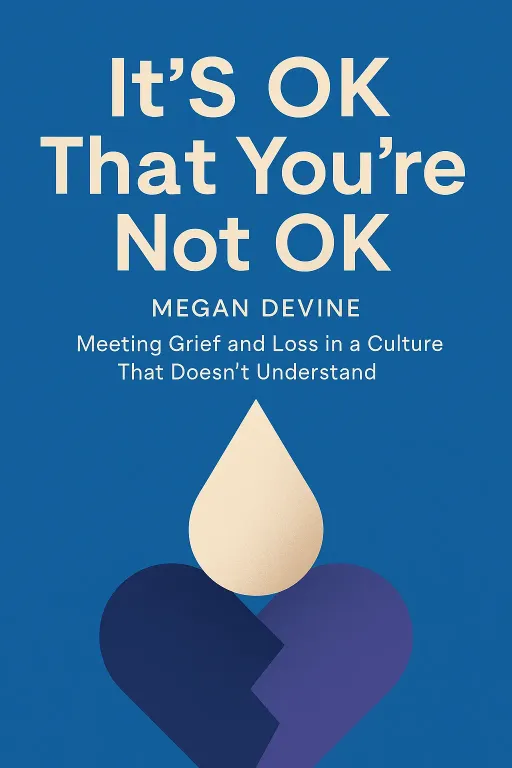
Nova: I am suggesting that what we often call steady is actually suppressed. When you ignore the internal data of your own emotional state, you are not being a better leader. You are just flying blind. Today, we are looking at the concept of Emotional Architecture for Leaders. We are pulling insights from two distinct, yet complementary, approaches. First, we look at the work of Megan Devine in It’s OK That You’re Not OK, which forces us to confront the toxic positivity that often plagues corporate culture. Then, we pair that with the granular, tactical approach found in Thibaut Meurisse’s Master Your Emotions.
Atlas: I have seen that dynamic play out in real time. We have all sat in meetings where the room is burning down, and the leader is just smiling, repeating corporate platitudes. It feels like they are reading from a script while the building is collapsing.
Nova: Exactly. Devine’s work really challenges that specific posture. She argues that by pretending everything is fine when it clearly is not, you are not providing stability. You are providing gaslighting. You are signaling to your team that their reality does not matter. And then, Meurisse comes in with the toolkit. He provides the granular, actionable techniques to take that raw, authentic processing and turn it into regulated, effective action.
Atlas: So, we have the permission to be human, followed by the instruction manual on how to keep that humanity from becoming a liability. That is a compelling mix. I am ready to dig into how we actually build this architecture.
The Myth of the Unflappable Leader
SECTION
Nova: Let’s start with the first pillar: the destruction of toxic positivity. In many high-stakes environments, we treat emotions like they are errors in the code. If you feel frustration, fear, or grief over a failed project, the internal narrative is that you need to patch that bug immediately. You need to get back to being optimized, happy, and productive.
Atlas: That is the standard operating procedure. If I show up to a quarterly review and I am visibly frustrated, the feedback I am going to get is that I need to manage my executive presence. The implication is that my emotions are a distraction from the facts.
Nova: That is the trap. The reality is that your emotions are the facts. They are the data points. When you ignore them, you are ignoring a massive stream of information about what is working and what is failing. Devine’s perspective on this is transformative because she moves the conversation away from fixing the emotion and toward acknowledging the reality. In a professional context, this means that when a strategy fails, the leader who says, this is a disaster, we need to sit with the weight of this for a moment, is actually more effective than the one who says, let’s just pivot and stay positive.
Atlas: I can see why that would be uncomfortable for a lot of leaders. Sitting with the weight of failure feels like an admission of defeat. If I am the one steering the ship, and I stop to acknowledge that the ship is taking on water, I am worried that the crew is going to panic.
Nova: That is a valid concern, but consider the alternative. When you minimize the problem, the crew knows. They can smell the fear, and they can see the water coming over the deck. When you lie to them about the severity of the situation, you lose their trust. The architecture of a truly resilient team is built on shared reality. Authenticity is not about venting to your employees or crying in the boardroom. It is about being a reliable narrator of the current situation.
Atlas: So, it is about calibration. If I am the leader, I am the one who sets the dial for how we interpret events. If I react to a crisis with toxic positivity, I am teaching my team to ignore the warning signs.
Nova: Precisely. You are conditioning them to bury their heads in the sand. And that is where the architecture fails. You end up with a culture where nobody speaks up about the looming disaster because the culture demands that everyone stays in that happy, productive zone. It is a fragile system. It looks strong until the moment it breaks, and when it breaks, it shatters completely.
Atlas: I have been in those environments. It is high-energy, high-productivity, until it is suddenly zero-productivity because everyone is burnt out or blindsided. But let’s play devil’s advocate for a second. If I stop the meeting to acknowledge the emotional weight of a failure, how do I keep that from becoming a therapy session? We have goals to hit. We have shareholders. We cannot just sit in a circle and talk about our feelings all day.
Nova: That is exactly where we need the second pillar. Acknowledging the reality is not the end of the process. It is the beginning. You acknowledge the reality, you name the emotion, you hold space for it, and then—and this is the crucial part—you move into the regulation phase. This is where the work of Meurisse becomes so valuable. You do not get stuck in the emotion. You process it, you extract the insight, and you pivot to action.
Atlas: That makes sense. It is the difference between wallowing and processing. Wallowing is circular. Processing is linear. It has a start, a middle, and an end.
Nova: Exactly. Think of it like a pilot in a cockpit. When the alarm starts blaring, the pilot does not pretend the alarm is not ringing. They do not get paralyzed by the fear of the alarm. They acknowledge the alarm, they identify the source of the problem, and they execute the checklist. The emotion is the alarm. It is signaling that something is happening. The architecture is the checklist.
Atlas: I like that analogy. The alarm is not the problem. The fire is the problem. If I ignore the alarm, I am dead. If I stare at the alarm and cry, I am also dead. I have to acknowledge the alarm to get to the checklist.
The Architecture of Regulation
SECTION
Nova: Now, let’s get into the mechanics of that checklist. This is where we shift from the philosophy of being authentic to the granular, tactical side of emotional management. Most people think emotional regulation is about willpower. They think it is about gritting their teeth and forcing themselves to feel something different.
Atlas: I am guilty of that. I think about it as mental toughness. If I am angry, I tell myself, stop being angry. If I am anxious, I tell myself, calm down. It rarely works, but it is the only tool I have in the kit.
Nova: That is the equivalent of trying to fix a software bug by hitting the monitor with a hammer. It does not address the underlying process. Meurisse’s approach is far more surgical. It is about understanding that emotions are physiological states. When you are angry, your heart rate spikes, your cortisol levels rise, your breathing changes. You are in a physical state of fight-or-flight. You cannot talk yourself out of a physiological state. You have to intervene physically.
Atlas: That sounds like we are talking about biology, not management. How does a leader in a high-stakes meeting intervene physiologically without looking like they are having a breakdown?
Nova: You do not need to do a yoga session in the middle of a board meeting. It is about subtle, internal interventions. The first step is what we call labeling. When you feel that surge of frustration, you stop and you name it. You say to yourself, I am feeling frustration right now. That simple act of naming it engages the prefrontal cortex. It pulls you out of the reactive, emotional center of the brain and moves you into the analytical center. It creates a tiny bit of space between you and the emotion.
Atlas: I have heard of this in mindfulness circles, but it sounds almost too simple to be effective in a boardroom. Does labeling really do anything to the physical response?
Nova: It does. It acts as a circuit breaker. By labeling the emotion, you are essentially categorizing the data. You are saying, this is not me, this is an event happening to me. It is the difference between saying, I am a failure, and saying, I am feeling a sense of failure. Do you hear the difference?
Atlas: One is an identity, the other is an experience. That is a massive shift. I can see how that would change the trajectory of my internal dialogue.
Nova: And that is just the beginning. Once you have labeled it, you can move into the physical regulation. If you are in a high-pressure moment, you can use tactical breathing. You slow your exhale. By extending your exhale, you force your nervous system to switch from the sympathetic, fight-or-flight mode, to the parasympathetic, rest-and-digest mode. You are literally hacking your own biology to calm down.
Atlas: So, I am sitting there, the board is grilling me, I am feeling the heat, and I am internally labeling the sensation as anxiety, and then I am consciously slowing my breathing. Does that actually allow me to think more clearly?
Nova: It allows you to access your executive function. When you are in fight-or-flight, your brain is literally shunting blood away from the prefrontal cortex—the part that does the strategic thinking—and sending it to the limbs. You are literally less intelligent when you are reactive. By regulating your physiology, you are bringing that blood flow back to your brain. You are becoming smarter in real time.
Atlas: That is a fascinating way to look at it. It is not about being tough; it is about being efficient. If I want to be the best decision-maker in the room, I need to keep my brain online. And if my emotions are shutting down my brain, then managing those emotions is a strategic imperative. It is not a soft skill. It is a hard skill.
Nova: Exactly. And that is the bridge between the two books we are discussing today. You need the permission from Devine to acknowledge that you are human, that you have a nervous system, and that you are going to react to stress. And then you need the tools from Meurisse to manage that reaction so that it does not manage you.
Atlas: I am thinking about the legacy aspect mentioned in the user profile. If I start doing this—if I start being transparent about the reality of a situation, but also disciplined about my own regulation—what does that do to the culture I am building?
Nova: It creates a permission structure. When you, as a leader, model this behavior—when you say, this is a difficult situation, I am feeling the pressure, and here is how I am managing my response—you are giving everyone else permission to do the same. You are moving the team from a culture of suppression to a culture of mastery.
Atlas: That is a powerful shift. It changes the team from a group of people trying to hide their struggles to a group of people trying to solve their problems. It stops being about who can fake it the best and starts being about who can perform the best.
The Strategic Legacy
SECTION
Nova: And that is the ultimate legacy. Think about the long-term impact of that. You are not just hitting your quarterly targets; you are building an organization that is antifragile. It can handle stress, it can handle failure, and it can handle change, because it has the emotional architecture to process those things as they happen.
Atlas: It feels like we are talking about moving from a rigid, brittle structure to one that has some give. Like the difference between a glass building and a modern skyscraper that is designed to sway in the wind. The glass building looks perfect until the earthquake hits, and then it is gone. The skyscraper sways, it absorbs the energy, and it stays standing.
Nova: That is a perfect analogy. The suppression approach is the glass building. It is rigid, it is brittle, and it is terrified of the wind. The architecture we are talking about today is the skyscraper. You are building in the capacity to sway.
Atlas: I want to push on that for a second. If I am listening to this, and I am the leader of a high-pressure team, how do I start? Do I hold a meeting and tell everyone, hey, we are going to be more vulnerable now? That sounds like a disaster waiting to happen.
Nova: Please, do not do that. That is the quickest way to lose credibility. This is not about a grand announcement. This is about quiet, consistent modeling. You start with yourself. The next time you are in a meeting and you feel that rush of adrenaline or frustration, you pause. You label it. You breathe. You demonstrate the regulation.
Atlas: So, I do not need to announce it. I just need to perform it.
Nova: Exactly. And when you are in a one-on-one with a direct report who is clearly struggling, instead of offering toxic positivity—instead of saying, don't worry, it will all work out—you try the Devine approach. You say, this is a really tough spot. I can see why you are frustrated. That is a completely valid reaction to what we are dealing with.
Atlas: And that feels like it would build a massive amount of trust. It validates their experience. It makes them feel seen.
Nova: It does. And once they feel seen, they are much more willing to listen to the next part, which is the Meurisse approach. You ask them, okay, now that we have acknowledged the reality, what is the next best step we can take to manage this?
Atlas: I love that flow. It is the validation, then the activation. It is the perfect two-step process for leadership. It is empathetic, but it is not passive. It is active, but it is not aggressive.
Nova: And consider the legacy of that. If you are a leader who validates people and then helps them activate, you are going to be the leader that people want to work for. You are going to be the leader who retains talent, because you are providing the psychological safety that everyone is craving, but nobody knows how to build.
Atlas: It is funny, because we started this conversation talking about being the most dangerous person in the room—the one who feels nothing. And we have ended up at the exact opposite conclusion. The most dangerous person is actually the one who feels everything, acknowledges it, processes it, and then acts with total clarity.
Nova: That is the ultimate competitive advantage. In a world that is increasingly volatile, uncertain, and complex, the ability to maintain your own emotional architecture is not just a personal benefit. It is the foundation of your professional legacy.
Atlas: I think I have my homework for the week. The next time I feel that spike of tension in a meeting, I am going to label it, I am going to breathe, and I am going to see if I can bring my brain back online before I open my mouth.
Nova: That is the perfect starting point. It is not about being perfect. It is about being conscious. And that consciousness is what separates the leaders who survive from the leaders who actually thrive.
Atlas: This has been a great shift in perspective. It makes the idea of emotional intelligence feel less like a buzzword and more like a tactical, operational necessity.
Nova: It is the bedrock. Everything else—strategy, operations, culture—it all sits on top of this. If the bedrock is cracked, the building is never going to be stable.
Atlas: Well, I have a few decisions to make today, and I think I am going to approach them with a much more regulated, and perhaps a bit more honest, mindset. Thank you for the blueprint.
Nova: You are very welcome. Remember, the goal is not to be a robot. The goal is to be a master of your own internal landscape.
Atlas: I am definitely going to keep that in mind. This is Aibrary. Congratulations on your growth!









