

Breaking the Cycle: The Emotional ROI of Inner Peace
Golden Hook & Introduction
SECTION
Nova: If you had to calculate the cost of your own inner peace, what would the ledger look like? In finance, we often talk about the sunk cost fallacy—that dangerous trap of continuing to invest in a losing proposition simply because of how much you've already put into it. But what happens when that investment isn't capital? What if it's your heart, your safety, and your future?
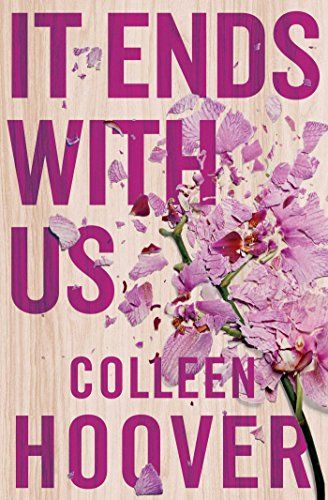
Ankitha: Exactly, Nova. It’s that moment where your analytical brain says, "Cut your losses," but your emotional side is screaming, "But look at everything we've built!" Today, we are diving deep into Colleen Hoover's incredibly powerful novel,. And we're not just looking at it as a romance or a drama. We're looking at it as a masterclass in self-development, boundary-setting, and the ultimate pursuit of inner peace.
Nova: I love that perspective, Ankitha! And we are so thrilled to have you here. As a graduate student in finance and a stay-at-home parent, you bring such a fascinating, multi-layered lens to this story. Today, we're going to tackle this book from two distinct angles. First, we'll explore the emotional sunk cost fallacy—why it is so incredibly hard to leave toxic situations when we've invested so much of ourselves. And second, we'll look at what we're calling the generational ledger—how making the hardest choice to break a cycle is actually the highest-yield investment we can make for our future and our children.
Ankitha: I'm so excited to be here, Nova. You know, as someone who loves books that promote inner peace and self-development, really shook me. It’s easy to look at toxic relationships from the outside and make quick judgments. But when you analyze the emotional mechanics of people stay, it becomes a much more complex, human story. It’s about the courage it takes to rewrite your own balance sheet.
Nova: It really is. So, let’s set the stage for our listeners who might not know the story, or who need a quick refresher. The book follows Lily Bloom, a young woman who grew up in an abusive household. Her father, a highly respected town mayor, regularly abused her mother behind closed doors. Lily hated him for it, and she promised herself she would never end up in a relationship like that.
Ankitha: Right, she had a clear boundary in her mind. A non-negotiable rule.
Nova: Exactly! But then, she moves to Boston, starts her own dream flower shop, and meets Ryle Kincaid. Ryle is a brilliant, charming, incredibly successful neurosurgeon. He is, by all accounts, a dream. He’s passionate, he’s driven, and he falls hard for Lily. But as their relationship progresses, we start to see these cracks. These dark, volatile moments. And that brings us right into our first big topic.
Deep Dive into Core Topic 1
SECTION
Nova: Let’s talk about that first incident of abuse, because Colleen Hoover writes it in a way that makes the reader feel just as confused and conflicted as Lily. Ryle is in the kitchen, he burns his hand on a hot casserole dish, and he gets incredibly frustrated. He kicks a cabinet, and when Lily tries to laugh it off and help him, he shoves her to the floor. She hits her head. It’s sudden, it’s shocking, but immediately afterward, Ryle is devastated. He’s crying, apologizing, begging for forgiveness, blaming his intense stress and a childhood trauma of his own. Ankitha, from an analytical standpoint, what is happening to Lily's decision-making process in this moment?
Ankitha: Oh, this is a classic case of cognitive dissonance mixed with the emotional sunk cost fallacy. You see, Lily has invested a massive amount of emotional capital into Ryle. She has built a mental model of him as this perfect, loving partner. When this violent event occurs, it’s a massive anomaly. It doesn't fit her model. So, instead of discarding the model—which would mean accepting that her partner is abusive and that her investment is compromised—her brain tries to rationalize the anomaly. She thinks, "He was stressed. He burned his hand. He’s deeply sorry. This is a one-time write-off, not a systemic issue."
Nova: Yes! And we do that so often in life, don't we? Not just in relationships, but in careers, projects, even habits. We think, "I've put so much time and love into this, I can't just walk away now. If I just invest a little more patience, a little more understanding, I can fix this asset."
Ankitha: Exactly, Nova. In finance, we know that past investments should not dictate future decisions. The money you spent yesterday is gone; you have to make your next decision based on what is best for your portfolio. But emotionally, we are terrible at this. Lily loves Ryle. She has married him by the time the second and third incidents happen. Each time, the abuse escalates. He pushes her down the stairs. He attempts to force himself on her in a fit of jealousy over her childhood love, Atlas Corrigan. And yet, after each incident, the "apology cycle" reinvests hope back into the relationship. It’s a highly volatile, high-risk cycle that slowly erodes her inner peace.
Nova: It’s heartbreaking because Ryle isn't a cartoon villain. He genuinely loves her, but he is deeply broken and dangerous. And Lily is trying to navigate this while running a business and, eventually, finding out she is pregnant. That pregnancy changes the entire equation, doesn't it?
Ankitha: It completely rewrites the risk profile. When you are single, you might be willing to tolerate a high level of risk because you are the only one bearing the consequences. But the moment a child enters the picture, you are suddenly managing a portfolio for someone else. You are responsible for their future stability.
Nova: That is such a powerful way to put it. Let’s look at how Lily handles this. After the final, most violent assault, where Ryle nearly rapes her, Lily finally takes a step back. She goes to the hospital, discovers she is pregnant, and realizes she needs space to think. She doesn't immediately divorce him. She asks him for space. She wants to see if she can find a way to make it work safely, but she is also quietly gathering data. She is stepping outside of the emotional fog to look at the situation clearly.
Ankitha: And that is a crucial step in self-development. When you are in the middle of a storm, you can't make rational decisions. You have to create distance to find your inner peace. Lily's decision to take space allowed her to stop reacting and start analyzing. She had to ask herself: "What is the long-term cost of staying, not just for me, but for this new life I am bringing into the world?"
Deep Dive into Core Topic 2
SECTION
Nova: And that brings us beautifully to our second core topic: the generational ledger and breaking the cycle. This is the emotional climax of the book, and honestly, it’s one of the most powerful scenes in modern fiction. Lily gives birth to her daughter, Emerson. Ryle is there in the hospital room, and he is holding this beautiful, innocent baby girl. He is crying, completely in love with his daughter. And Lily looks at him, and then she looks at her baby, and she makes her decision. Ankitha, walk us through what happens in Lily's mind in that hospital room.
Ankitha: This scene makes me tear up just thinking about it, especially as a parent. Lily looks at her daughter, Emerson, and she has this profound realization. She asks herself: "If Emerson came to me one day and told me that her husband pushed her down the stairs, or shoved her to the floor, what would I tell her?" And the answer is instant. She would tell her to leave. She would tell her she deserves to be safe and loved.
Nova: Yes! She realizes she has to lead by example.
Ankitha: Exactly. She realizes that if she stays with Ryle, she is teaching Emerson that this behavior is acceptable. She is passing down the ledger of trauma that she inherited from her own mother. She looks at Ryle and says, "We need to get a divorce." And when Ryle begs her, asking her to think about their family, she says the words that give the book its title: "It ends with us." She tells him, "I don't want our daughter to grow up witnessing this. We have to break the cycle."
Nova: It is such a brave, agonizing choice. Because she still loves Ryle. This isn't a story where the love magically disappears. She has to choose her daughter's future—and her own inner peace—over the love she has for a man who cannot keep her safe.
Ankitha: And that is the ultimate high-yield decision. In finance, we talk about long-term versus short-term gains. Staying with Ryle might have felt easier in the short term. It would avoid the pain of divorce, the awkwardness of co-parenting, the grief of a broken dream. But the long-term cost would be catastrophic. It would cost her inner peace, and it would likely cost Emerson her emotional well-being. By choosing to leave, Lily accepts a massive upfront emotional cost—the pain of separation—to secure a lifetime of safety and peace for her daughter. She pays the price so her daughter doesn't have to.
Nova: "She pays the price so her daughter doesn't have to." Oh, Ankitha, that is incredibly profound. It really highlights the difference between a sacrifice and an investment. A sacrifice can sometimes feel bitter, but an investment is made with the expectation of a better future. Lily is investing in a future where Emerson doesn't know the sound of a father's fist hitting a mother's face.
Ankitha: Yes! And as an ENTP, I love looking at the systemic nature of this. Cycles of abuse, cycles of poverty, cycles of negative self-talk—they are all systems. They run on momentum. If you do nothing, the system keeps running. To break a cycle, you have to introduce a massive force of resistance. You have to say, "The momentum stops here. I am willing to absorb the shock of stopping this train so that the people behind me can walk on solid ground." That is self-development in its purest, most heroic form.
Nova: It really is. And it’s not just about domestic abuse. This applies to so many areas of our lives. We all carry generational ledgers. Maybe it’s a legacy of anxiety, or a habit of people-pleasing, or a fear of taking risks. Breaking those cycles requires us to look at our lives and say, "This pattern ends with me."
Synthesis & Takeaways
SECTION
Ankitha: Absolutely, Nova. And finding that inner peace isn't a passive state. It’s not just sitting in a quiet room meditating—though that can help! True inner peace is active. It’s about making those hard, analytical choices to protect your emotional boundaries. It’s about auditing your life and asking, "Is this relationship, this job, or this habit yielding a positive return on my emotional investment, or is it bankrupting my peace of mind?"
Nova: I love that concept of an "emotional audit." How would someone go about doing that in their daily life, Ankitha? What’s a practical takeaway for our listeners?
Ankitha: I think it starts with tracking your energy. Just like you would track your expenses in a budget. For one week, pay attention to where your emotional energy is going. When you interact with certain people, or engage in certain activities, do you feel enriched, or do you feel depleted? If you find that you are constantly investing energy into a "sunk cost"—something that only drains you and never gives back—it’s time to re-evaluate. You don't have to make a drastic change overnight, but you do need to start setting boundaries. Remember, boundaries aren't walls to keep people out; they are gates to protect the peace you've worked so hard to build inside.
Nova: That is beautiful. "Gates to protect the peace you've built inside." Colleen Hoover’s is a heavy book, but ultimately, it’s a book of immense hope. It shows us that we are not prisoners of our past. We are the authors of our own ledgers.
Ankitha: Yes. We have the power to look at our lives, acknowledge the pain we've inherited or experienced, and decide that we are going to invest in a different future. We can choose self-development. We can choose inner peace. And we can declare, with absolute certainty, "It ends with us."
Nova: What a perfect note to end on. Ankitha, thank you so much for sharing your incredible insights, your analytical brilliance, and your warm heart with us today. This has been such an uplifting conversation.
Ankitha: Thank you, Nova! It was an absolute pleasure. I hope our listeners feel empowered to look at their own lives and make those high-yield investments in their own peace.
Nova: To everyone listening, thank you for joining us. We leave you with this question to ponder: What is one cycle in your life—no matter how small—that you are ready to say "it ends with me" to? Until next time, keep investing in your growth, protect your peace, and remember, we are all in this together. Bye for now!
Ankitha: Bye everyone!