

Mastering the Art of Valuation: From Theory to Real-World Application
Golden Hook & Introduction
SECTION
Nova: Atlas, if I told you that some of the most powerful stories in the world aren't found in books or movies, but hidden in spreadsheets and financial reports, what would you say?
Atlas: Huh. I’d probably say, Nova, you’ve been spending a little too much time with earnings calls. But, honestly, I’d also be intrigued. Because as someone who's always looking for the 'why' behind the 'what,' especially in business, that’s a pretty bold claim.
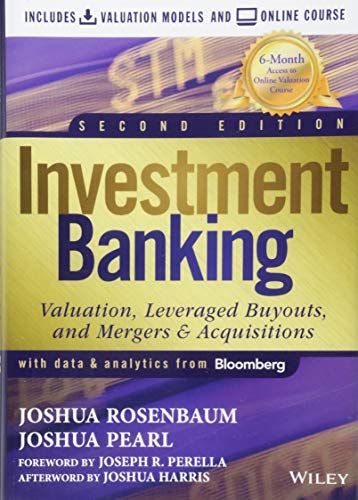
Nova: It is a bold claim, but it's one we're unpacking today as we dive into the fascinating world of valuation. Specifically, we're looking at the insights from two seminal works: "Investment Banking: Valuation, Leveraged Buyouts, and Mergers & Acquisitions" by Joshua Rosenbaum and Joshua Pearl, and "Valuation: Measuring and Managing the Value of Companies" by McKinsey & Company, with Tim Koller, Marc Goedhart, and David Wessels. These books aren't just textbooks; they're like decoding manuals for the future of business. What’s truly unique about the Rosenbaum and Pearl book, for instance, is that both authors built their careers at the highest levels of investment banking, bringing that direct, in-the-trenches experience right onto the page. You feel like you're getting a masterclass from people who've actually done it, not just theorized about it.
Atlas: That’s a great point. It makes you feel like you’re getting the secret playbook, not just a theoretical overview. I imagine a lot of our listeners, especially those aspiring strategists and practical learners, are always looking for that direct, actionable insight. So, for those of us who might find 'valuation' a bit intimidating, where do we even begin to unearth these powerful stories?
Unpacking Valuation Methodologies: The Art of the Numbers
SECTION
Nova: Exactly. We start by seeing these methodologies not as dry calculations, but as different lenses through which to tell a company's story. Think of it like a detective building a case from various pieces of evidence. The first lens, and arguably the most fundamental, is Discounted Cash Flow, or DCF.
Atlas: So, you’re saying DCF isn't just about crunching numbers in a spreadsheet? For someone who's tried to wrap their head around it, it often feels like a pure math problem. What’s the narrative there?
Nova: That’s the magic! DCF is essentially a forecast. It asks: what is a company worth today, based on all the cash it's expected to generate in the future? It’s a story about potential and future performance. You project a company's free cash flows for the next five to ten years, then estimate a terminal value for everything beyond that, and finally, you discount all those future cash flows back to a present value using a discount rate.
Atlas: Okay, so it’s like trying to predict the plot of a novel based on the first few chapters, and then guessing how successful it will be overall. But how accurate can that really be? Those future cash flows are just assumptions, right?
Nova: Absolutely, they are assumptions. And that's where the art comes in. It forces you to deeply understand the business, its industry, its competitive advantages, and its growth prospects. It’s not just plugging numbers into a formula; it’s about building a coherent, defensible story about why those cash flows will materialize. Rosenbaum and Pearl walk you through this step-by-step, showing how every assumption, from revenue growth to operating margins, contributes to the overall narrative.
Atlas: I guess that makes sense. It's not about being perfectly right, but about having a robust, logical framework for your predictions. What are some of the other 'storytelling lenses' these books introduce?
Nova: Well, after DCF, you move into what are called "relative valuation" methods. This is where you compare the company you're valuing to similar companies or similar transactions. We're talking Comparable Companies Analysis, or CCA, and Precedent Transactions Analysis, PTA.
Atlas: Okay, so if DCF is the internal monologue of a company, what are CCA and PTA? Are they like looking at other characters in the story, or other stories in the same genre?
Nova: That’s a great analogy! CCA is like looking at other characters in the same story, or rather, other companies currently operating in the same space. You find publicly traded companies that are similar in terms of industry, size, growth profile, and profitability, and then you look at their valuation multiples – things like Enterprise Value to EBITDA, or Price to Earnings. If those comparable companies are trading at, say, 10x EBITDA, and your company has similar characteristics, then it might also be worth around 10x its EBITDA.
Atlas: So it's about benchmarking, essentially. But isn’t every company unique? How do you account for the nuances that make a company special, or less special?
Nova: That’s the critical challenge, and it’s where a lot of the analytical skill comes in. You can’t just pick any company. You have to carefully select the most relevant comparables and then make adjustments for differences in growth, risk, and capital structure. McKinsey's "Valuation" really emphasizes this, showing how context is everything. You're not just comparing numbers; you're comparing narratives – the market's current narrative about similar businesses.
Atlas: And PTA? Is that like looking at the entire history of those other characters, or how their stories ended?
Nova: Exactly! Precedent Transactions Analysis looks at what companies were actually bought and sold for in the past. If a similar company was acquired last year for 12x EBITDA, that provides a useful benchmark for what your target company might be worth in an acquisition scenario. It’s the ultimate reality check for what someone was willing to pay for a similar business narrative.
Atlas: Wow, that’s actually really insightful. So, you're not just looking at a company in isolation, but seeing it within a whole ecosystem of market perception and historical transactions. It's like seeing the big picture of how value is created and realized.
Beyond the Spreadsheet: Connecting Valuation to Value Creation and Strategic Narratives
SECTION
Nova: Precisely. And this leads us to our second core idea: valuation isn't just about calculating a number; it's about understanding the narrative of a business and its potential for value creation. McKinsey's book, in particular, excels here, emphasizing the link between strategic decisions and how they actually create value.
Atlas: Okay, so it’s not just about the math; it’s about the meaning behind the math. For our listeners who are aiming to make a tangible difference in their roles, how do these complex valuation models connect to real-world strategic decisions?
Nova: They are intrinsically linked. Think about it: a company's strategy—whether it's to expand into new markets, develop new products, or cut costs—directly impacts those future cash flows we talked about in DCF, or how it stacks up against comparables. If a company announces a bold new strategy, a valuation model is how you quantify the potential impact of that strategy on its intrinsic worth.
Atlas: So, valuation becomes a tool for strategic planning, not just accounting. It helps you answer the 'what if' questions before you commit to a path. But what if the market doesn't agree with your valuation? What if your carefully constructed narrative isn't accepted?
Nova: That’s a fantastic question, and it brings us to a crucial point about the iterative nature of valuation. Nova's take, and a key message from these books, is that valuation isn't a one-and-done exercise. Your first model, your first narrative, won't be perfect. And that's okay. The market often has its own narrative, driven by sentiment, short-term news, or even irrational exuberance.
Atlas: So it's about embracing the journey, as the 'Aspiring Strategist' might say. It sounds like a healing moment, almost, to accept that your initial analysis might need refining.
Nova: Absolutely. It’s an ongoing dialogue with the market and with the business itself. You build a model, you present your narrative, you see how the market reacts, and then you refine. This iterative process helps you understand not just the 'value' but also the 'drivers' of that value, and how those drivers are perceived. It’s about building your 'valuation muscle,' as we like to say.
Atlas: I love that – 'building your valuation muscle.' It makes it sound less like a dry academic exercise and more like a skill you hone over time. So, if I'm a practical learner eager to apply this, what's a tiny step I could take to start flexing that muscle?
Nova: A great tiny step is to pick a publicly traded company you admire. Go to their investor relations section, download their financial statements, and try to perform a simple DCF analysis. Don't worry about perfection. Just try to project a few key assumptions – revenue growth, profit margin – and see what number you arrive at. It’s about getting your hands dirty and starting to connect the numbers to the story.
Atlas: That’s really actionable. And it directly addresses the 'apply them' mindset of our practical learners. I can see how that would demystify the process pretty quickly. What about a deeper question for our impact seekers, those who really want to understand the profound implications?
Nova: A deep question to ponder is: how does a company's competitive landscape influence the multiples used in a comparable companies analysis? Think about a company in a highly fragmented, competitive industry versus one with a strong, defensible moat. How would that affect how the market values them, even if their financials look similar? It forces you to think beyond the numbers and into the strategic narrative.
Atlas: That makes so much sense. It's connecting the dots between the micro and the macro. It really is about understanding the narrative, not just the data points.
Synthesis & Takeaways
SECTION
Nova: And that’s the profound insight these books offer. Valuation isn't just about calculating a share price; it's about understanding the core value drivers of a business, deciphering its strategic narrative, and recognizing its potential for future growth. It’s a dynamic, iterative process that demands both analytical rigor and strategic foresight. It’s a skill that allows you to see beyond the surface, to understand the true story a company is telling, and to anticipate where that story is headed.
Atlas: Absolutely. It transforms what seems like a purely technical skill into a powerful tool for strategic thinking and decision-making. It’s about more than just numbers; it’s about making informed judgments about the future, about seeing potential where others just see data. For anyone looking to make a real impact, understanding this narrative of value is indispensable. It's the ultimate key to unlocking a company's true potential.
Nova: It truly is. And remember, embracing the iterative nature of valuation is key. Your first model might not be perfect, but each attempt refines your understanding, much like each draft refines a compelling story.
Atlas: So, keep practicing, keep asking those deep questions, and keep refining your narrative. It’s a journey, not a destination.
Nova: This is Aibrary. Congratulations on your growth!