

Introduction to Statistical Learning
with Applications in Python
The Legend of the Orange Book
The Legend of the Orange Book
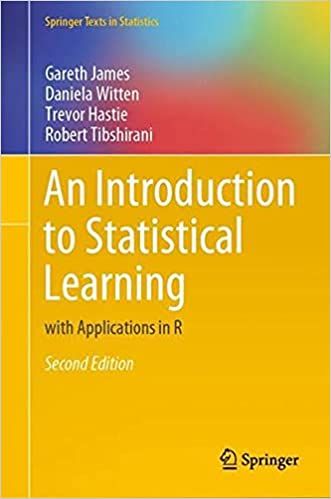
Nova: If you have ever spent more than five minutes in a data science forum or a machine learning subreddit, you have seen it. That bright orange cover with the white text. It is basically the passport to the entire industry. We are talking about An Introduction to Statistical Learning by Gareth James, Daniela Witten, Trevor Hastie, and Robert Tibshirani.
Atlas: The Orange Book. It is funny how a textbook can achieve that kind of cult status. It is like the Harry Potter of the data science world. Everyone has a copy, everyone recommends it to beginners, and yet, it is actually a serious academic text from Stanford professors.
Nova: Exactly. And there is a reason for that cult status. Before this book came out, if you wanted to learn the math behind machine learning, you usually had to dive into The Elements of Statistical Learning, which is the red book by the same authors. But that book is legendary for being incredibly dense. It is full of heavy-duty linear algebra and calculus that can make even a math major sweat.
Atlas: I have looked at the red book. It is terrifying. It feels like it was written for people who already have a PhD in statistics. So, ISLR, the orange book, was the answer to that? The bridge for the rest of us?
Nova: Precisely. The authors realized there was this massive gap. You had practitioners, engineers, and analysts who needed to understand how these models worked under the hood, but they did not necessarily need to derive every proof from first principles. They needed the intuition. They needed to know why a model works, when it fails, and how to actually implement it.
Atlas: And that is what we are diving into today. Why this book changed the game, the core concepts that every data scientist needs to master, and how it has evolved with the brand new second edition. If you have ever felt intimidated by the term statistical learning, stick around, because we are going to demystify the gold standard of the field.
The Philosophy
Statistical Learning vs Machine Learning
Nova: One of the first things the book does is define what statistical learning actually is. And Atlas, you might find this interesting because people often use the terms statistical learning and machine learning interchangeably, but there is a subtle philosophical difference.
Atlas: I was going to ask that. Is it just a fancy way for statisticians to say machine learning so they do not feel left out of the hype?
Nova: A little bit, maybe! But the book explains it beautifully. Machine learning often focuses on prediction. You have a black box, you feed it data, and you want the most accurate prediction possible. You do not necessarily care how the box works, as long as the output is right.
Atlas: Right, like a self-driving car. I do not care about the coefficients of the regression; I just want the car to stay on the road.
Nova: Exactly. But statistical learning, as Gareth James and his colleagues present it, is just as interested in inference. Inference is about understanding the relationship between variables. It is asking, how does education level affect income? Or how does a specific drug affect a patient's recovery time? In those cases, the black box is not enough. You need to see inside.
Atlas: So it is about the why as much as the what. That makes sense. But does the book actually give you the tools to do both?
Nova: It does. It covers the entire spectrum from simple linear regression to complex non-linear models. But the genius of the book is how it frames everything around the idea of a function. You have some input data, X, and you are trying to estimate a function, f, that maps those inputs to an output, Y. The whole book is essentially a guide on different ways to estimate that function.
Atlas: It sounds simple when you put it that way, but I know there is a catch. If it were just about estimating a function, we would all be experts by now. What is the big hurdle they warn you about early on?
Nova: The big hurdle is the trade-off between flexibility and interpretability. This is a recurring theme in the book. If you use a very simple model, like a straight line, it is easy to interpret. You can say, for every year of education, income goes up by five thousand dollars. But a straight line is not very flexible. It might miss the nuances of the data.
Atlas: And if you go the other way? If you use a super flexible model that wiggles around every single data point?
Nova: Then you have the opposite problem. You might get a perfect fit on your current data, but it becomes impossible to explain what is actually happening. Plus, you run into the biggest monster in all of data science: overfitting. The book spends a lot of time making sure you understand that more complex is not always better.
The Bias-Variance Tradeoff
The Heart of the Matter
Atlas: Okay, let's talk about that monster. Overfitting. In the book, they explain this through something called the Bias-Variance Tradeoff. Every time I hear that term, my brain starts to glaze over a little bit. Can we break that down the way the Orange Book does?
Nova: It is actually the most important concept in the whole book. Think of it like this. Bias is the error that comes from using a model that is too simple. If the real relationship in the world is a complex curve, but you use a straight line, you have high bias. You are fundamentally missing the pattern because your model is too rigid.
Atlas: Okay, so bias is like having a preconceived notion that is too simple to capture reality. What about variance?
Nova: Variance is the opposite. It is the error that comes from the model being too sensitive to the specific data you gave it. If you have a model with high variance, it will change drastically if you give it a slightly different set of data. It is like a student who memorizes the exact answers to a practice test but fails the real exam because the questions changed slightly.
Atlas: That is a great analogy. So the student has high variance because they learned the noise of the practice test, not the actual subject matter.
Nova: Exactly. The book uses these amazing visualizations to show that as you make a model more flexible, the bias goes down because you are fitting the data better, but the variance goes up because you are starting to follow the random fluctuations in that specific dataset.
Atlas: So there is a sweet spot. A U-shaped curve where the total error is at its lowest.
Nova: Yes! Finding that U-shaped bottom is the holy grail. And the book introduces a technique called cross-validation as the primary tool to find it. Instead of just trusting your model on the data you have, you split your data into pieces. You train on some and test on others. It is a way of simulating how the model will perform in the real world.
Atlas: I love that the book emphasizes that. It is not just about the math; it is about the procedure. It is about being a good scientist and not fooling yourself with a model that looks perfect on paper but falls apart in practice.
Nova: And that is why Gareth James and the team are so respected. They are teaching you a mindset. They are saying, look, you can use the most advanced neural network in the world, but if you do not understand the bias-variance tradeoff, you are just guessing in the dark.
Lasso and Ridge Regression
Shrinkage and Selection
Atlas: One of the chapters that people always talk about in ISLR is Chapter 6, which covers linear model selection and regularization. Specifically, these two things called Ridge Regression and the Lasso. Why are these such a big deal?
Nova: Because they solve a very common problem: having too many variables. Imagine you are trying to predict house prices, and you have a thousand different pieces of information for every house. If you put all of them into a standard regression, your model will likely overfit. It will find patterns in the noise.
Atlas: So you need to pick the best variables. But doing that manually for a thousand variables sounds like a nightmare.
Nova: It is. And that is where the Lasso comes in. Robert Tibshirani, one of the authors, actually invented the Lasso. It stands for Least Absolute Selection and Shrinkage Operator. What it does is ingenious. It adds a penalty to the model for having too many variables.
Atlas: A penalty? Like a tax on complexity?
Nova: Exactly! It tells the model, you can use these variables, but it is going to cost you. If a variable is not helping the prediction enough to justify its cost, the Lasso will actually shrink its coefficient all the way to zero. It effectively deletes the variable from the model.
Atlas: Wait, so it does the variable selection for you automatically? That is incredibly powerful.
Nova: It is. It gives you a simpler, more interpretable model. Now, Ridge Regression is similar, but it does not shrink coefficients to zero. It just makes them very, very small. It keeps all the variables but reduces their impact so they do not overwhelm the model with variance.
Atlas: So Ridge is like a gentle filter, and Lasso is like a pair of scissors. When would you use one over the other?
Nova: The book explains that if you think only a few variables are actually important, Lasso is your best friend. If you think lots of variables have a small effect, Ridge is usually better. But again, they tell you to use cross-validation to decide which one works best for your specific data.
Atlas: It is amazing how these techniques, which sound so advanced, are really just clever ways to manage that bias-variance tradeoff we talked about earlier. It all comes back to that same core principle.
ISLR2 and the Python Shift
The Modern Frontier
Nova: We have to talk about the update. For years, ISLR was based entirely on the R programming language. But recently, they released the second edition, ISLR2, and even more recently, a Python version called ISLP.
Atlas: That is huge. I know so many people who stayed away from the original book just because they did not want to learn R. Now that it is in Python, the gates are wide open.
Nova: It really is a new era for the book. And the second edition is not just a language port. They added some heavy-hitting new chapters. They finally included a chapter on Deep Learning, which was a big omission in the first edition.
Atlas: Deep learning in the Orange Book? How do they handle it? Do they go into the crazy math of backpropagation?
Nova: They stay true to their philosophy. They focus on the intuition. They explain neural networks as a sequence of transformations. They show you how a simple linear model can evolve into a deep network by adding layers and non-linear activation functions. It is probably the most accessible introduction to deep learning I have ever read.
Atlas: What else is new? I heard something about survival analysis?
Nova: Yes, Chapter 11 is all about survival analysis, which is used to model the time until an event occurs. Think of medical trials or how long a customer stays with a subscription service. It is a specialized field that usually has its own separate textbooks, so having it integrated here is a massive value-add.
Atlas: And they also added a chapter on multiple testing, right? Why is that important?
Nova: Because of the P-hacking problem. If you test a hundred different hypotheses, you are bound to find something that looks significant just by pure chance. The new chapter teaches you how to correct for that. It is about maintaining scientific integrity in an age where we have more data than we know what to do with.
Atlas: It sounds like they have really modernized it. It is no longer just a classic; it is a living document of where the field is right now. If you are starting today, you are getting the benefit of decades of research distilled into one volume.
Conclusion
Nova: We have covered a lot of ground today. From the philosophy of statistical learning to the technical brilliance of the Lasso and the modern updates in the second edition. If there is one takeaway from An Introduction to Statistical Learning, it is that you do not need to be a mathematical genius to understand these models. You just need a solid grasp of the core principles like the bias-variance tradeoff.
Atlas: It is really empowering. The book takes these intimidating concepts and makes them feel like tools you can actually use. It turns the black box into something transparent. My advice to anyone listening is: do not just read the chapters. Do the labs. Whether you use R or Python, actually typing out the code and seeing the models fit the data is where the real learning happens.
Nova: Absolutely. The labs are where the theory meets reality. And the best part? The authors have made the PDF of the book available for free on their website. They truly want this knowledge to be accessible to everyone, which is a rare and beautiful thing in academia.
Atlas: So there are no excuses. Go download the Orange Book, start with Chapter 2, and embrace the U-shaped curve of learning. It might be a challenge, but it is the most rewarding investment you can make in your data science journey.
Nova: Well said, Atlas. This book has shaped an entire generation of data scientists, and with the new editions, it is set to shape the next one too. Thank you for joining us on this deep dive into a modern classic.
Atlas: It has been a blast. I am going to go look at some bias-variance plots now.
Nova: This is Aibrary. Congratulations on your growth!