

Unlocking the Divine Spark: Jean Calvin, Calling, and the Fight for Educational Equity
Golden Hook & Introduction
SECTION
Socrates: Imagine a world where the cure for a devastating disease, or the spark for a clean energy revolution, is locked inside the mind of a child who will never learn to read. Jean Calvin, writing in the 1500s, argued that to deny a mind education is to stifle the very image of the divine within them. Today, we ask: how does this ancient theological insight challenge our modern, unequal educational systems? Welcome to the podcast. I am Socrates, and joining me today is Eric Ntirenganya, an educational enthusiast, project manager, and scholar of entrepreneurial leadership who is actively working to reduce educational inequality in rural Rwanda. Eric, it is wonderful to have you here.
Eric_Ntirenganya: Thank you, Socrates. It is an absolute pleasure to be here. This is a conversation that lies at the very heart of my life's work and my studies.
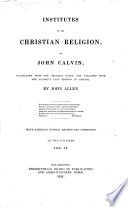
Socrates: Today, Eric, we are going to tackle Jean Calvin’s monumental work, the, but perhaps not in the way most people would expect. We want to look at it through the lens of modern education and leadership. We will dive deep into this from two perspectives. First, we will explore Calvin's view on the absolute necessity of education for self-realization and human dignity. Then, we will discuss how his revolutionary concept of "calling" can completely transform our approach to leadership and opportunity in underserved, rural communities. Tell me, Eric, when you first look at a text as deeply theological as Calvin's, what is the immediate connection you see to the dusty roads and vibrant, untapped minds of rural Rwanda?
Eric_Ntirenganya: You know, Socrates, it comes down to Calvin's very first premise in the. He writes that nearly all the wisdom we possess consists of two parts: the knowledge of God and the knowledge of ourselves. As an INFJ, and as someone studying entrepreneurial leadership, that phrase—the knowledge of ourselves—just leaps off the page. How can a young person in a rural, underserved community in Rwanda truly know themselves, their talents, their capacity, and their worth, if they are never given the tools to explore their own minds? Education is that mirror. Without it, we are asking them to navigate the world in complete darkness.
Deep Dive into Core Topic 1
SECTION
Socrates: The knowledge of ourselves. Calvin suggests that without knowing ourselves, we cannot truly understand our purpose or our relation to the world around us. But he also warns that the human mind, left entirely to itself, is a "factory of idols"—it distorts reality. He believed we need "spectacles," specifically the scriptures and proper instruction, to see clearly. If we translate this theological metaphor into the realm of secular and community development, what are the "spectacles" that a quality education provides to a child in a rural village?
Eric_Ntirenganya: That is a beautiful way to frame it, Socrates. The "spectacles" of education are literacy, critical thinking, and scientific inquiry. Without these spectacles, a child's view of the world is limited to their immediate, physical surroundings. They might have immense talent, but they cannot see the global landscape. They cannot see how their local agricultural challenges connect to global climate patterns, or how their community's economic struggles can be solved through entrepreneurial solutions. Education changes their vision from blurry and localized to sharp and global. It gives them the agency to say, "I see the problem, I understand the mechanics of it, and I have the capacity to change it."
Socrates: But let us look at the reality. In many rural communities, those spectacles are simply not available. The key to a better future is kept behind a locked door. Calvin was not just a writer; he was a practical reformer. In 1559, he founded the Geneva Academy, which was essentially a system of free public education. Why did a theologian care so much about setting up a school system for the public?
Eric_Ntirenganya: Because Calvin understood that for a community to govern itself, to resist tyranny, and to live lives of genuine purpose, the people had to be literate. They had to be able to read and think for themselves. He saw education as a public necessity, not a luxury for the elite. When we look at rural Rwanda, or any underserved community globally, the challenge we face is not a lack of talent or ambition. The talent is distributed equally across the world, but the opportunity is not. When we fail to provide quality education to rural areas, we are essentially saying that only the wealthy or the urban deserve to have those "spectacles." We are creating a spiritual and intellectual caste system, which is something Calvin fiercely opposed in his own context.
Socrates: It is a striking parallel. Calvin fought against a system where only the clergy held the keys to knowledge, leaving the masses in ignorance. Today, do we not see a similar dynamic, where quality education is hoarded by those with economic power, leaving rural communities intellectually marginalized?
Eric_Ntirenganya: Absolutely, Socrates. It is the exact same structural injustice, just wearing a modern, economic mask. In the 16th century, the barrier was Latin and the monopoly of the Church. Today, the barrier is the digital divide, underfunded rural schools, and a lack of trained teachers. As a project manager working in these spaces, I see the consequences of this monopoly every day. When a rural school lacks basic books, electricity, or trained educators, we are effectively locking those children out of the modern "priesthood" of technology, leadership, and economic self-determination. We are telling them that their minds do not matter as much.
Socrates: And yet, some might argue that in resource-constrained environments, we should focus purely on basic survival—food, clean water, healthcare—before worrying about advanced education or critical thinking. How would you, drawing from both Calvin's insistence on the mind and your own experience in project management, respond to that?
Eric_Ntirenganya: I would say that survival without agency is not fully living; it is merely existing. Calvin believed that human beings are created with a divine spark, an intellect that is meant to reflect the glory of creation. If we only feed the body but starve the mind, we are failing to recognize the full humanity of the person. Furthermore, from a practical, entrepreneurial leadership perspective, how do we solve the issues of clean water, food security, and healthcare in the long run? We do it by training the minds of the people who live in those communities! The sustainable solutions to rural Rwanda's challenges will not come from external aid forever; they will come from the rural youth who are educated, empowered, and equipped to design those solutions themselves. Education is the ultimate engine of self-reliance.
Socrates: So, the cultivation of the mind is not a secondary luxury, but the very foundation of sustainable life and community dignity. It is the starting point of self-knowledge.
Eric_Ntirenganya: Exactly. It is the foundation upon which everything else is built.
Deep Dive into Core Topic 2
SECTION
Socrates: Let us take this a step further. Calvin is famous—or perhaps infamous, depending on who you ask—for his deep focus on the sovereignty of God and the concept of "calling," or vocation. In the medieval period, a "calling" was something reserved almost exclusively for priests, monks, and nuns. But Calvin democratized this. He argued that every legitimate profession, whether you are a magistrate, a farmer, a shoemaker, or a mother, is a calling from God, carrying equal dignity and spiritual value. Eric, how does this radical view of vocation speak to your work in entrepreneurial leadership and your desire to uplift rural youth?
Eric_Ntirenganya: This is one of the most liberating concepts in the entire, Socrates. Think about the psychological impact on a young person growing up in a remote Rwandan village. Society often tells them that success means escaping the village, moving to Kigali, getting a corporate job, and leaving their community behind. But Calvin’s doctrine of vocation says: "No. Your work, right here, where you are, has immense, inherent dignity." If you are farming the land, if you are teaching in a local school, if you are starting a small cooperative, that is a noble calling. It shifts the narrative from "escaping the community" to "transforming the community."
Socrates: But here lies the paradox, Eric. If a young person has a calling to be a scientist, a doctor, or an entrepreneurial leader, but they are trapped in a system that denies them even basic secondary education, how can they ever realize that calling? Does the lack of educational equity not represent a systematic crushing of these callings?
Eric_Ntirenganya: It is a tragedy of cosmic proportions, Socrates. It really is. If we believe that every individual has a unique calling—a specific contribution they are meant to make to the human family—then every time we allow a school to fail, or every time we ignore a rural community, we are actively silencing a voice that was meant to contribute to our collective progress. We are depriving ourselves of their leadership. As an INFJ, I feel this deeply as an ethical failure. As a project manager, I see it as a massive systemic inefficiency. We are leaving our most valuable resource—human potential—unmined in the ground.
Socrates: How do we, then, as leaders, design the systems to mine this potential? If you were to apply your project management expertise to this Calvinist concept of stewardship and calling, what does the "scaffolding" look like that we must build for these students?
Eric_Ntirenganya: It starts with viewing educational project design not as a top-down charity, but as an act of stewardship. In the, Calvin emphasizes that whatever gifts we have—whether wealth, intellect, or leadership capacity—are not our own. We are merely stewards, holding them on behalf of others. So, as a project manager, my role is to design educational ecosystems that are sustainable, localized, and empowering. This means building schools that are not just concrete structures, but community hubs. It means integrating entrepreneurial leadership training into the curriculum from an early age, so students don't just memorize facts, but learn how to identify community problems and design projects to solve them. We have to build the bridge between their latent talent and the structural opportunities they need.
Socrates: You speak of stewardship, which is a powerful concept. In Calvin's view, the wealthy and powerful are held strictly accountable for how they use their resources to aid the common good. If we apply this to global educational inequality, what is the responsibility of those of us who have received quality education? Are we failing in our stewardship if we do not actively work to dismantle these inequalities?
Eric_Ntirenganya: We are absolutely failing, Socrates. There is no middle ground here. If we have been blessed with education, with analytical tools, with platforms like this podcast, and we use them solely for our own personal advancement or comfort, we are hoarding the "spectacles." Calvin wrote very harshly about those who consume the fruits of the earth but do not care for the poor and the ignorant. He saw it as a form of theft. I believe that those of us who have had the privilege of education have a moral debt to pay. Our education is not a trophy; it is a tool of stewardship. We must use it to build pathways for others, especially those in rural and underserved areas who are waiting for their chance to step into their calling.
Socrates: It seems, then, that entrepreneurial leadership is not merely about starting businesses or driving economic growth. It is about the ethical mobilization of resources to unlock human agency.
Eric_Ntirenganya: Yes, precisely! It is about creating the conditions under which others can flourish. It is about looking at a rural community not as a place of poverty and deficit, but as a reservoir of untapped leadership and divine callings, waiting for the right infrastructure to flow.
Synthesis & Takeaways
SECTION
Socrates: We have journeyed from the theological heights of 16th-century Geneva to the practical realities of educational development in rural Rwanda. We have seen how Calvin's insistence on the "knowledge of self" demands that we provide the "spectacles" of education to every human mind, and how his doctrine of "vocation" imbues every individual's potential with sacred dignity. Eric, as we begin to wrap up our conversation, how would you synthesize these profound ideas for our listeners? What is the core message we should carry away?
Eric_Ntirenganya: I think the core message is that educational equity is not a charitable option; it is a fundamental requirement of human justice and stewardship. When we look at a child in a rural, underserved community, we are looking at someone who possesses a unique calling, a divine spark. If we deny them education, we are extinguishing that spark. We must shift our mindset from seeing rural communities as passive recipients of aid, to seeing them as active partners in leadership. We need to design educational systems that empower them to know themselves, discover their callings, and lead their own communities forward.
Socrates: A powerful synthesis indeed. To close, Eric, let us leave our listeners with a practical challenge. For the project managers, the educators, the leaders, and the everyday citizens listening to us today—what is one concrete action, one shift in perspective, they can implement immediately to help bridge this gap?
Eric_Ntirenganya: I would challenge everyone to look at their own education and professional skills through the lens of Calvinist stewardship. Ask yourself: "How am I using my 'spectacles' to help others see? How can I use my project management, my business acumen, my resources, or my voice to support educational initiatives in underserved areas?" Whether it is mentoring a young person from a rural background, supporting organizations that build educational infrastructure, or advocating for policy changes that distribute educational resources more equitably—do not let your knowledge stop with you. Use it as a bridge. Because when we unlock the potential of a single child in a rural village, we are not just changing one life; we are unlocking a leader who might just change the world.
Socrates: To know ourselves, to find our calling, and to steward our gifts for the uplifting of others. Eric Ntirenganya, thank you for sharing your profound insights, your passion, and your leadership with us today. You have shown us that ancient wisdom can indeed light the path to a more equitable future.
Eric_Ntirenganya: Thank you, Socrates. It has been an honor. Let us keep building those bridges.
Socrates: And to our listeners, thank you for joining us. Until next time, keep asking questions, keep seeking knowledge, and remember to steward the light you have been given.