

Unlocking Product-Led Growth: The Systems Approach
Golden Hook & Introduction
SECTION
Nova: Alright, Atlas, rapid-fire word association. I say a product term, you hit me with the first thing that pops into your head, but make it… insightful. Ready?
Atlas: Insightful? Oh, I love a challenge! Lay it on me, Nova.
Nova: Features.
Atlas: Hmm, features… noise.
Nova: Engagement.
Atlas: Fleeting.
Nova: Growth.
Atlas: Illusion.
Nova: Ooh, illusion! That’s a bold one. You know, it perfectly sets the stage for what we’re diving into today. Because for many, product growth an illusion, a chasing of metrics that don’t quite capture the true picture. We're talking about genuinely by taking a systems approach, moving beyond those surface-level ideas.
Atlas: That’s going to resonate with anyone who keeps pouring resources into a product only to see fleeting gains. So, what’s the foundational text for dismantling this illusion?
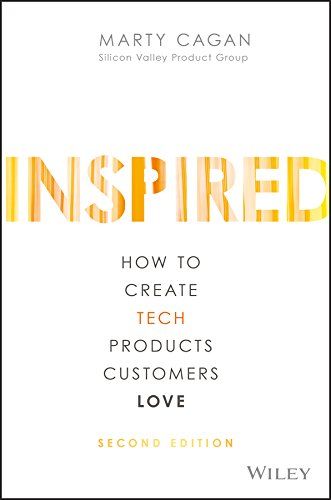
Nova: We’re drawing heavily from a few titans today, but let's kick off with by Marty Cagan. Cagan is a legend in the product world, a Silicon Valley executive who’s been at the forefront of building groundbreaking tech products for decades. His insights aren't just theory; they're hard-won wisdom from the trenches of companies like Netscape and eBay.
Atlas: Ah, so this isn't just an academic take; it's coming from someone who’s actually built things and seen what works and what doesn't. That immediately adds a layer of credibility, especially for our listeners who are deep in the strategy and architecture of their own businesses.
Nova: Exactly. Cagan’s work emphasizes something critical: true product growth isn't about haphazardly throwing features at a wall and seeing what sticks. It’s about continuous discovery and delivery, building products that genuinely solve customer problems and drive adoption. It's about intentionally designing an ecosystem where value creation and user engagement feed into a self-reinforcing loop.
The Product-Growth Ecosystem: Beyond Features to Self-Reinforcement
SECTION
Atlas: Okay, so you’re saying it’s not just about the shiny new button, but the entire environment that button lives in, and how it interacts with the user. How do we even begin to architect such an ecosystem?
Nova: Well, Cagan’s framework in gives us the blueprint for the 'discovery' and 'delivery' part. It’s about understanding your users so deeply that you’re building solutions to problems they might not even articulate yet. But here's where it gets really powerful: once you've built that valuable solution, how do you ensure people using it? That’s where Nir Eyal’s comes into play.
Atlas: Oh, Hooked. That title alone makes me think of apps I can't put down. But wait, some might hear 'habit-forming' and immediately jump to concerns about manipulation. How do we ensure we're talking about ethical engagement here?
Nova: That’s a crucial distinction, Atlas. Eyal himself addresses this. The 'Hook Model' isn't inherently good or bad; it’s a framework. It becomes manipulative if you're hooking people into something that doesn't genuinely provide value. The ethical application, which is what we champion, is about building products that solve real problems, enrich lives, and then designing them so users naturally return because they find continued value. It’s about positive reinforcement, not coercion.
Atlas: I can see that. It’s like a well-designed tool. It can build a house or… something less constructive. So, how does this 'Hook Model' actually work? Give us the anatomy of a habit.
Nova: The Hook Model is a four-step process: Trigger, Action, Variable Reward, and Investment. Let’s imagine a fitness tracking app. The could be an internal one, like feeling tired or wanting to be healthier, or an external one, like a notification reminding you to move. The is the simplest behavior done in anticipation of a reward—opening the app, logging your steps.
Atlas: Right, so minimal effort. You don't want a huge barrier to entry for the action.
Nova: Precisely. Then comes the, and this is key. It’s not always the same. Maybe one day you hit a new step goal and get a virtual badge, another day you see a friend's encouraging comment, or you discover a new workout class recommendation. This variability keeps you engaged; it makes you wonder what you’ll get next. It taps into our innate human desire for novelty and anticipation.
Atlas: That’s actually really inspiring. It's not just about a dopamine hit, it's about the unpredictable nature of it. It’s like why people love mystery boxes or surprise gifts.
Nova: Exactly! And finally, the. This is where users put something into the product that increases the likelihood of future engagement. For our fitness app, it could be logging your meals, connecting with friends, customizing your profile, or even paying for a premium feature. These investments load the next trigger, making the product more valuable to the user over time, and harder to leave.
Atlas: So, it's a self-perpetuating cycle. The more you put in, the more value you get, and the more likely you are to be triggered again. What’s fascinating is how Cagan’s continuous discovery and Eyal’s habit formation aren't just separate strategies; they’re two sides of the same coin when you’re building an ecosystem. You discover what problems to solve, then you design the solution to be so engaging and valuable that it becomes a habit.
Nova: You've hit the nail on the head, Atlas. It's the synergy. Cagan ensures you're building the thing, and Eyal provides a framework for making that right thing effortlessly integrated into users' lives. But to truly understand how these pieces interact, and where you can make the most significant impact, we need to zoom out even further.
Systems Thinking for Product Growth: Unlocking Leverage Points
SECTION
Atlas: Okay, so we’ve got the individual components—discovery, delivery, habit formation—all working together in an ecosystem. But how do we, as strategists and architects, optimize this entire ecosystem? How do we find the spots where a small change creates a massive ripple effect? Because that’s what we’re really after, isn't it? Lasting impact.
Nova: Absolutely. And for that, we turn to a foundational text that transcends product, business, almost any field: by the brilliant Donella H. Meadows. Meadows was a pioneering environmental scientist and systems thinker whose work has profoundly influenced how we understand complex interconnectedness. Her book, published posthumously, distills decades of her research into accessible principles for understanding how systems work and, crucially, where to find "leverage points" for change.
Atlas: That sounds a bit abstract. What exactly do we mean by a 'system' in the context of product growth? And how does one identify these 'leverage points' without getting lost in theory?
Nova: A system, in Meadows' view, is simply a set of interconnected elements that are coherently organized in a way that achieves something. In product growth, your system includes your product features, your users, their behaviors, your marketing efforts, your customer support, the feedback loops between them, and your underlying business model. Everything is connected.
Atlas: Right, like a complex machine where turning one knob affects five other things you didn't even realize were related.
Nova: Precisely. Now, a 'leverage point' is a place in the system where a small shift can lead to large changes in behavior or outcomes. Meadows identified several types of leverage points, from changing constants and parameters to altering the goals of the system itself.
Atlas: Give me an example in the product world, because I imagine many product teams are constantly tweaking things, thinking they're making a big difference, but they're really just moving deck chairs on the Titanic.
Nova: That’s a perfect way to put it. Imagine a product team struggling with user retention. They might try adding more features, running aggressive re-engagement campaigns, or even redesigning the UI. These are often low-leverage changes. A systems thinker, inspired by Meadows, would ask: why are users leaving in the first place? They might discover that the core problem isn't the features, but the onboarding process. New users are overwhelmed, don't understand the product's core value, and churn within days.
Atlas: So, they're pouring water into a leaky bucket, and the leverage point isn't the water, it’s the hole in the bucket.
Nova: Exactly! Improving the onboarding flow—making it intuitive, highlighting core value early, guiding users to their first "aha!" moment—is a high-leverage change. It's a small shift in one part of the system that dramatically improves retention, which then feeds into higher engagement, better word-of-mouth, and ultimately, sustainable growth. It's not about adding more; it's about fixing the fundamental flow.
Atlas: That makes me wonder, how does a visionary leader, someone who’s always looking at the big picture, actually apply this? Because it sounds like it requires a deep dive into the mechanics, not just the vision.
Nova: It requires both, actually. The visionary sets the goal for the system, and the systems thinker understands how to get there efficiently. For our visionary leader, it’s about stepping back and asking: what are the underlying structures, the feedback loops, the mental models that are driving our product's behavior? Instead of reacting to symptoms, they seek to identify and influence the fundamental 'rules' of their product ecosystem. It’s about understanding the cause-and-effect chains, the delays, and the non-obvious connections.
Synthesis & Takeaways
SECTION
Atlas: This has been incredibly insightful, Nova. We started with Cagan showing us how to build products customers love, then Eyal revealed how to make them habit-forming, and now Meadows gives us the overarching framework to understand how all these pieces fit into a dynamic, interconnected whole.
Nova: That’s the beautiful synthesis. Cagan provides the 'what'—build the right product through continuous discovery. Eyal provides the 'how'—design it for engaging, habitual use. But Meadows provides the 'why' and the 'where'—the understanding of the entire system, allowing us to find the most impactful leverage points to achieve sustainable, self-reinforcing growth. It’s about moving from simply building features to truly architecting a living, breathing product ecosystem.
Atlas: And for our listeners, the architects and strategists out there, this isn’t just theoretical. It’s about creating lasting value, not just chasing temporary wins.
Nova: Precisely. It’s about designing for enduring impact. So, for your tiny step this week, we challenge you to map out your current product's user journey. Identify three to five potential 'triggers' and 'rewards' that could be amplified or introduced to create more habitual engagement. Then, consider a small, measurable experiment to test just one of those.
Atlas: And think about how that one small experiment could create a ripple effect through your entire system. That’s the power of thinking systemically.
Nova: This is Aibrary. Congratulations on your growth!