

The Mindset of Massive Scale
Golden Hook & Introduction
SECTION
Nova: What if your business's biggest strength is actually its biggest roadblock to massive growth? We're diving into the hidden bottlenecks that a sudden 10x jump would expose, and why the 'product' might not be the problem.
Atlas: Oh boy, that's a provocative start, Nova. It sounds like we're about to peel back some layers on what truly drives exponential growth, rather than just incremental steps.
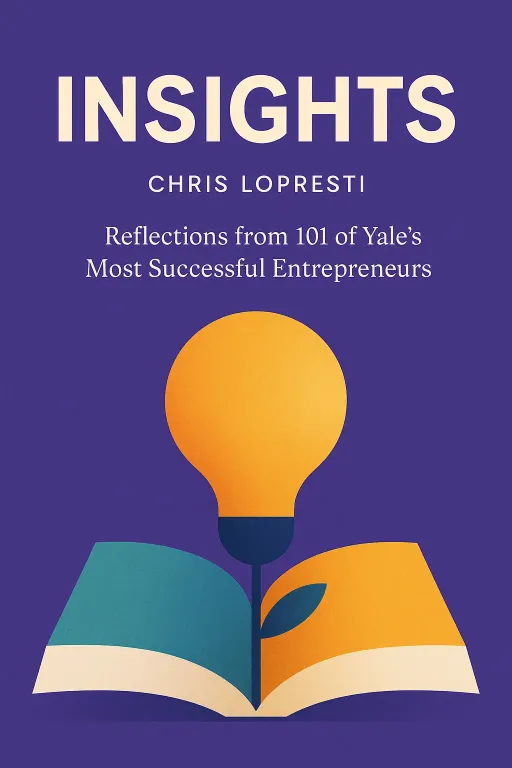
Nova: Exactly, Atlas. Today, we're exploring the mindset of massive scale, drawing insights from two fascinating perspectives. First, we're looking at Chris LoPresti's curation of 101 lessons from Yale entrepreneurs, which highlights a rather counter-intuitive truth for early-stage ventures.
Atlas: And I imagine the second perspective comes from someone who's actually navigated this scaling journey themselves?
Nova: You got it. We're also diving into Brandon Dawson's "Nine-Figure Mindset," where he makes a powerful argument about the founder's essential transition. LoPresti, through years of deep dives with over a hundred innovators from a top institution, has distilled the wisdom that often, the is the foundational pillar long before the product solidifies.
Atlas: That makes me wonder, how can a be more important than, say, a revolutionary app idea or a groundbreaking piece of technology? For someone driven by clarity and mastery, the product often feels like the tangible manifestation of that vision.
Nova: It's a great question, and it gets to the heart of early-stage resilience. LoPresti's work suggests that a stellar team can actually a successful product, or pivot a mediocre one, through sheer adaptability, resourcefulness, and collective drive. Think of it like a world-class orchestra versus a solo virtuoso playing a simple melody. The orchestra, even with a less complex piece, can create a richer, more dynamic experience and can learn and perform vastly more intricate symphonies.
Atlas: So, the team is the engine that can adapt and learn, whereas a perfect product without the right people is just… static potential? That’s a powerful reframing. I imagine for listeners who are deeply focused on their craft, their product, their unique offering – the idea of 'team' first might feel like a distraction from perfection.
Nova: It can, but it’s about building a resilient foundation. A brilliant product can be easily replicated or out-innovated. A cohesive, driven team, however, possesses the collective intelligence and motivation to continuously adapt, improve, and even pivot their product as the market demands. They are the human capital that can weather storms, seize opportunities, and ultimately, bring any vision to life. LoPresti’s research points to this human element as the primary differentiator for ventures that go from zero to something significant. It’s about the to build, not just the initial blueprint.
Atlas: And this is particularly crucial for those of us driven by impact, right? Because a strong team can ensure that impact is sustainable and adaptable, rather than tied to one specific iteration of a product. But what if you're a solo founder? Does this mean you're doomed until you find co-founders? How do you apply this 'team-first' philosophy when you're the sole architect?
Nova: That's a very common and valid concern. The spirit of 'team-first' doesn't necessarily mean you have multiple co-founders from day one, though that's often ideal. It means prioritizing the of a great team: shared vision, complementary skills, trust, and a collective commitment to solving the problem. For a solo founder, it might mean actively seeking advisors, mentors, or even early contractors who embody these team-like qualities. It's about building a 'virtual team' or a support network that functions with that same collaborative energy and shared purpose, even if formal roles aren't yet defined. It’s about recognizing that even the most brilliant solo vision needs external input, validation, and execution support to truly scale. It’s the of collaborative creation that matters from the outset.
Atlas: That’s a helpful distinction. It’s about cultivating that collaborative spirit and seeking out those complementary energies, whether they’re formal partners or an extended network. It’s less about the org chart and more about the collective horsepower and shared direction.
Nova: Precisely. And this leads us beautifully into Brandon Dawson's perspective from "Nine-Figure Mindset." Because once you that core team, or at least that core spirit, the next hurdle to massive scale is how you, as the founder, operate within that structure. Dawson argues that to truly scale, a founder must transition from 'doing' to 'leading.'
Atlas: Ah, the classic founder's dilemma. This is where I think a lot of our listeners, especially those driven by purpose and impact, might hit a wall. They the engine. Their personal effort, their direct involvement, feels like the only way to achieve that profound impact they're striving for. How do you shift from 'doing' to 'leading' when your personal effort feels like the only guarantee of quality or progress?
Nova: Dawson's core argument is that your personal capacity to 'do' is finite. It's a bottleneck. If you want to grow 10x, 100x, or a thousand times over, you cannot be the one doing all the critical tasks. You have to create systems that allow the business to function, and even grow, without you being directly involved in every single decision or execution step. It’s about building repeatable processes, frameworks, and structures that empower your team to operate effectively and autonomously.
Atlas: So, the bottleneck isn't necessarily a lack of talent in the team, but a lack of that allows that talent to be leveraged optimally? That feels counter-intuitive to someone who believes scale is primarily about finding more brilliant people.
Nova: It is, and that's why it's such a crucial shift. Dawson emphasizes that 'leading' in this context means designing and implementing these systems. It's about creating the operating manual for your business. Think of it like a master chef versus a global restaurant chain. The master chef is incredible at 'doing' – creating exquisite dishes. But to scale that experience to a thousand restaurants worldwide, you need a system: standardized recipes, training protocols, supply chain management, quality control checks. The founder shifts from being the chef to being the architect of the restaurant chain.
Atlas: That analogy really clicks. So, this is where Dawson's "Deep Question" comes into play, right? If your business grew 10x overnight, which part of your current process would break first? That's the diagnostic tool.
Nova: Exactly. That question forces you to confront the fragility in your current operations. Is it customer service? Sales onboarding? Product delivery? Financial reporting? Whatever breaks first is the area screaming for a repeatable system. It’s the friction point that will halt any rapid expansion. Identifying that bottleneck is your first, most critical step toward building a truly scalable system. It’s not about finding more ‘doers’; it’s about building the framework that enables many ‘doers’ to operate with precision and consistency.
Atlas: And this transition from 'doing' to 'leading' through systems isn't just about efficiency; it's about amplifying impact, which ties back to that core purpose many founders feel so strongly about. When you build systems, you're not just making your business bigger; you're creating a vehicle that can carry your vision further than your own two hands ever could.
Nova: Absolutely. It allows you to move from being a craftsman to being a curator of craftsmanship. You can focus on the strategic vision, the long-term purpose, the innovation that truly moves the needle, rather than getting bogged down in the day-to-day execution. For someone driven by mastery, this shift is about mastering the art of leverage. For someone driven by purpose, it's about maximizing the reach and depth of that purpose. It’s the difference between being a brilliant lightbulb and building a power grid.
Atlas: That’s such a vivid image. So, if we’re looking at this journey – from the team being paramount in the early days, to the founder needing to evolve from doer to system-builder – it’s about building both the human architecture and the operational infrastructure for growth.
Nova: Precisely. It’s a dual focus. You need the right people who are aligned with your vision and capable of executing it with passion. And you need the robust, repeatable systems that allow those people to perform at their best, consistently, even under immense pressure. The evidence from LoPresti and the mindset from Dawson converge on this: massive scale isn't built on a single brilliant idea or a solo effort. It's built on a foundation of strong, adaptable human capital, orchestrated by intelligent, scalable systems.
Atlas: It’s about creating a business that can outgrow even your own direct involvement, allowing you to focus on the that drives you, the larger vision you want to manifest. It’s the ultimate expression of mastery and impact.
Nova: And for listeners who are driven by growth, seeking mastery, and aiming to make a real difference, this is the path. The journey of building a business that can scale isn't just about financial metrics; it's about building a more capable, resilient, and impactful organization.
Atlas: So, the takeaway is clear: don't just build a product, build a team. And don't just do the work, build the systems that allow the work to be done by many. Your immediate action? Spend 20 minutes today mapping out one process in your business. What's the first step? What's the second? Just start building that map.
Nova: That’s a perfect actionable step.
Atlas: This is Aibrary. Congratulations on your growth!