

The Invisible Architects: Decoding Insect Biochemistry for a Greener World
Golden Hook & Introduction
SECTION
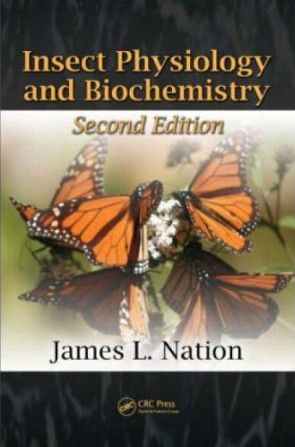
Nova: Imagine you're a tiny moth, and your one mission in life is to find a mate who is miles away, across a landscape of forests and fields. You can't see them, you can't hear them. How do you do it? You follow an invisible chemical trail, a single molecule at a time. This isn't magic; it's biochemistry. And understanding this hidden world, as detailed in James L. Nation's book, is completely changing how we approach agriculture and protect our environment.
Nova: Welcome to the show, seji. It's so great to have you here.
seji: It's great to be here, Nova. That image of the moth is perfect. It's something we think about all the time in my studies: how do we manage pests without just carpet-bombing a field with chemicals? Understanding their own language, their own biology, seems like the real key.
Nova: Exactly! And that's what we're exploring today, using this incredible book as our guide. We're going to dive deep into this from two perspectives. First, we'll explore how insects 'see' and 'smell' the world through that amazing chemical lens. Then, we'll investigate their incredible internal biochemistry that makes them the ultimate survivors, and what that means for our environment.
seji: I'm ready. This is the stuff that connects the textbook to the real world, which is what I'm most curious about.
Deep Dive into Core Topic 1: The World Through a Chemical Lens
SECTION
Nova: Fantastic. So let's start with that moth. How on earth does it work? The book explains it all comes down to a concept called chemoreception. It's basically taste and smell, but on a level that is almost impossible for us to comprehend.
seji: So it's not just a stronger sense of smell, it's fundamentally different?
Nova: Completely. Let's paint the picture. A female moth, ready to mate, releases a specific chemical cocktail into the air. We call this a pheromone. The book describes it as her unique chemical signature. The wind carries these molecules, creating what's called a 'pheromone plume' that can stretch for miles.
seji: Like a trail of breadcrumbs, but invisible and made of scent.
Nova: Exactly. Now, enter the male moth. His antennae aren't just feelers; they are incredibly sophisticated chemical detectors, covered in thousands of tiny, hollow hairs called sensilla. As he flies through the air, a single molecule of that specific pheromone can drift into one of these hairs and bind to a receptor protein inside. It fits perfectly, like a key into a lock.
seji: And that one single molecule is enough to get his attention?
Nova: That's the mind-blowing part. Yes. That single 'key in lock' moment triggers a nerve impulse. It's an electrical signal that zips to his brain and says, "GO!" It doesn't just tell him a female is nearby; it compels him to start flying, and to fly in a specific zigzag pattern upwind, constantly moving in and out of that plume to zero in on the source. He is a biological machine, programmed to follow that chemical signal.
seji: Wow. So when we see moths fluttering around a light, we're seeing a simple behavior. But this is a hidden, much more complex behavior that's happening all around us. And that makes me think... if we know the exact 'key' for that 'lock,' we can manipulate it, right?
Nova: You've jumped right to the application! That is precisely the foundation of modern, integrated pest management. Tell me, from your perspective in agriculture, what does that look like?
seji: Well, this is the science behind pheromone traps. For something like the codling moth, which is a major pest in apple orchards, we don't have to spray insecticide everywhere. Instead, we can synthesize the female's exact pheromone in a lab. We put a tiny amount of it on a sticky trap and hang it in the orchard.
Nova: So you're creating a fake signal to lure the males.
seji: Exactly. The males detect this super-concentrated signal, think they've found a female, and fly right into the trap. It does two things: one, it removes males from the population so they can't mate, reducing the next generation of caterpillars. And two, it's a monitoring tool. If we suddenly start catching a lot of moths, we know it's time to act. It's targeted, it's precise, and it doesn't harm beneficial insects.
Nova: It's like speaking their language to trick them, instead of just shouting at them with poison. The book also mentions aggregation pheromones, which is another layer. It's not about mating, but about calling all your friends to a feast.
seji: Oh, like with bark beetles. One beetle finds a stressed pine tree, and it releases a chemical that says, "Hey everyone, dinner is served, and this tree's defenses are down!" And then thousands of them show up and overwhelm the tree. It's a huge problem for forestry.
Nova: Right. And again, by understanding that specific chemical signal, we can try to manage them. But this brings up a really important question, one you hinted at earlier. Can the insects get 'wise' to our tricks? Can they adapt?
seji: That's the million-dollar question in my field. We're always wondering about resistance. Can they learn to ignore our traps? Can they evolve to change their own chemical signals? It feels like we're in a constant chess match with them.
Deep Dive into Core Topic 2: The Ultimate Survivors
SECTION
Nova: That is the perfect transition, seji. Because that chess match, that idea of them getting 'wise' to us, leads us straight into our second topic: what happens the insect. Their ability to adapt, especially to things designed to kill them, is staggering. It’s a biochemical arms race.
seji: And this is where it gets really challenging from an environmental and agricultural standpoint. We can have the perfect chemical, and then a few years later, it's like we're just spraying water on them.
Nova: Let's break down why, because the book explains this beautifully at a molecular level. It's all about metabolism and detoxification. Imagine a field of crops, and it gets sprayed with a new pesticide for the first time. The chemical works by, say, attacking the insect's nervous system. And for 99.9% of the pest population, it's lethal. They die.
seji: A success, from the farmer's point of view.
Nova: Initially, yes. But here's the key: within that huge population, there's natural genetic variation. Just like some humans can metabolize caffeine faster than others. A tiny fraction of those insects, maybe just one in a million, might have a slightly different version of an enzyme in their gut. The book focuses on a family of enzymes called cytochrome P450s. Think of them as the body's cleanup crew.
seji: So these P450 enzymes can break down toxins?
Nova: Precisely. And in that one-in-a-million insect, its P450s happen to be just a little bit better at breaking down this new pesticide molecule. It might grab onto the pesticide, add an oxygen atom, and change its shape just enough so it's no longer toxic. That one insect survives the spraying.
seji: And it's surrounded by a field of dead competitors and a ton of food.
Nova: You got it. So what does it do? It eats and it reproduces. And it passes on that gene for the slightly-more-effective P450 enzyme to its offspring. Now, in the next generation, maybe a few dozen insects have this trait. When the field is sprayed again, they survive. A few generations later, the entire pest population in that field is descended from that one lucky survivor. They all carry the resistance gene. The pesticide is now useless.
seji: This is the core of it. It's not that the pesticide the resistance. The resistance was already there, randomly, in the population. The pesticide just acted as a massive filter, killing everything the resistant ones. It's evolution in hyper-speed, happening in our own backyards.
Nova: It's natural selection in action. And we are the force of selection. It's a powerful and humbling realization, isn't it? We think we're controlling nature, but we're actually just accelerating its adaptive processes.
seji: It's why the old model of "find a pest, spray a chemical" is failing. We are fighting a 400-million-year-old biochemical system with brute force, and their system is just more creative and resilient than ours. So, knowing this, what's the path forward? How does this deep knowledge from a book like Nation's help us design a better strategy?
Nova: That's the critical question. It suggests we need to be as clever as the insects are. Maybe it's about finding chemicals that block their P450 enzymes, so our original pesticide works again. Or maybe it's about rotating different types of pesticides so they can't adapt to just one. Or, even better, moving away from lethal chemicals altogether.
Synthesis & Takeaways
SECTION
seji: It seems to all connect back to the first topic. If we can use their sensory system against them with pheromones, we don't even have to engage in that biochemical arms race in the first place.
Nova: That's a brilliant synthesis, seji. You're absolutely right. We've talked about two incredible, intricate systems. First, their external sensory system—the chemical lens they use to see the world—which we can 'hack' to communicate with them and modify their behavior. And second, their internal metabolic system—that inner laboratory—which is constantly adapting to our chemical attacks.
seji: And the two are in a delicate balance. The more we rely on the brute-force attack on their internal system, the more we force them to adapt and the faster our tools become obsolete.
Nova: So, as we wrap up, what's the big takeaway for you? For someone who is studying to build a career in this space, how does this change your perspective?
seji: It really changes everything. You stop seeing an insect pest as just a 'bug' to be squashed, and you start seeing it as a highly sophisticated biochemical system, an elegant product of millions of years of evolution. Even the ones we don't like, you have to respect the artistry of their biology.
Nova: The artistry of their biology, I love that. It really speaks to the ISFP in you, finding the beauty in the system.
seji: It's true! And the real takeaway for me, and I think for anyone in agriculture or environmental science, is that the solution isn't a bigger hammer. The solution is a better key. We have to use this deep physiological knowledge, the kind of knowledge in this book, to design smarter, more targeted, and ultimately more sustainable ways to manage our ecosystems. It’s about out-thinking them, not just trying to overpower them.
Nova: A better key, not a bigger hammer. That is the perfect place to end. Seji, thank you so much for bringing your perspective and connecting this deep science to the world we all live in.
seji: Thanks for having me, Nova. This was fascinating.