

The Mechanics of Influence and Connection
Golden Hook & Introduction
SECTION
Nova: Atlas, five words. Describe the difference between someone what to do and actually them to do it.
Atlas: Influence: a whole different ballgame.
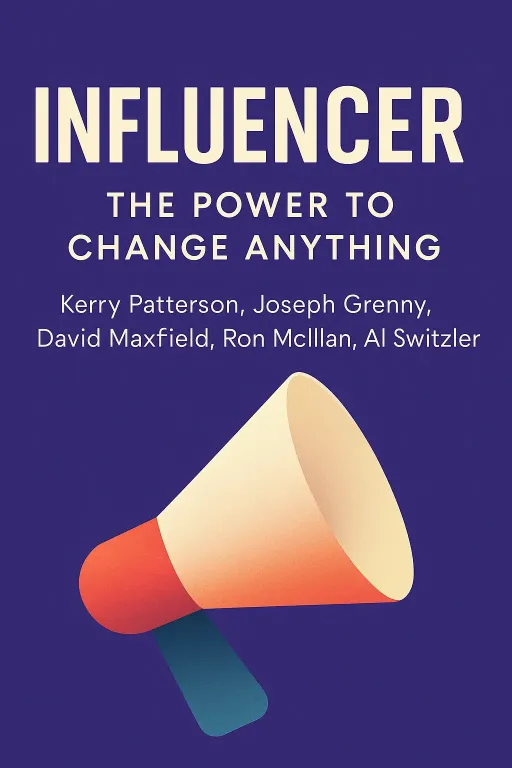
Nova: Exactly! Because it's not just about convincing; it's about changing the very structure of how we operate, how we think, and how we interact. That's what Kerry Patterson and his co-authors unpack in their groundbreaking work, "Influencer: The Power to Change Anything." It really shifted the conversation in leadership development, showing how true influence is systemic, not just persuasive. It's a book that's widely regarded as essential for anyone serious about driving meaningful change in organizations.
Atlas: And it’s a conversation that often feels incomplete without understanding the bedrock of all human interaction: connection. That’s where Rick Hanson, a renowned neuroscientist and psychologist, comes in with his book, "Making Great Relationships." He distills complex brain science into fifty incredibly simple ways to build trust and safety. He’s known for making deep psychological and neurological insights incredibly accessible, which is why his work resonates so widely.
Nova: Precisely. Today, we're diving into these two powerful frameworks to give you a toolkit for making a real impact, whether you're trying to shift a team's culture, boost productivity, or simply foster more authentic bonds.
The Mechanics of Influence: Beyond Persuasion
SECTION
Atlas: I'm curious, Nova, when we talk about "influence," most people probably think about persuasion, right? Like, a great speech, a compelling argument. But Patterson says it goes beyond that. How so?
Nova: That's the common misconception, isn't it? We often default to trying to someone with logic or emotional appeals. But Patterson and his team, through extensive research, discovered that sustainable behavior change – the kind that sticks – requires addressing six distinct sources of influence. They found that if you only rely on one or two, your efforts are likely to fail.
Atlas: Oh, I like that. So, it’s not just about turning up the volume on your argument. What are some of these sources? Give us a taste.
Nova: Let's focus on two powerful ones today that are often overlooked. The first is about. It's about helping people connect the desired behavior to something they genuinely care about, something personally rewarding. Think about a manager who wants their team to adopt a new, more efficient project management software. Just them it's better isn't enough.
Atlas: Right, because their current system, however clunky, is familiar. It’s comfortable.
Nova: Exactly. So, for personal motivation, the manager might highlight how the new software will free up 30 minutes a day for each team member, giving them more time for creative tasks, or even just a longer lunch break. It's about showing them the direct, personal benefit, not just the company's benefit. It makes the "why" personal.
Atlas: That makes sense, but what if they still resist? What if they're just to the old way, or they've had bad experiences with new software before?
Nova: That's where the second source comes in:, or what they call "Structural Ability." This is about changing the environment, making the desired behavior easier and the undesired behavior harder. It's about removing obstacles and adding enablers.
Atlas: Okay, so how would that look with the new software example?
Nova: Well, instead of just them to use the new software, you might ensure the old software is completely decommissioned. You might pre-load all existing projects into the new system. You could even create a dedicated "New Software Champion" within the team – someone who's already proficient and can offer immediate, on-the-spot support.
Atlas: Ah, I see. You're not just hoping they'll switch; you're making the switch almost inevitable and frictionless. You're setting them up for success.
Nova: Precisely. It's about designing the path of least resistance the desired behavior. Patterson’s research showed that the most successful change initiatives leverage multiple sources of influence simultaneously. It's like having six levers to pull, and the more you pull, the more likely you are to shift something big.
Atlas: That gives me chills. Thinking about it from a team perspective, for anyone trying to implement a new process or even just encourage better communication, it means looking beyond the "pep talk" and really examining the system. It's about asking, "How can I make it for them to do the right thing, and for them to continue?"
The Neurology of Connection: Cultivating Trust and Safety
SECTION
Nova: And yet, Atlas, even with the most brilliant influence strategies, if people don't feel safe, if there's no underlying trust, those levers become incredibly heavy to pull. That's where Rick Hanson's work becomes absolutely indispensable.
Atlas: So, it's like a prerequisite, then? All the best influence tactics in the world won't work if people are operating from a place of fear or distrust?
Nova: Exactly. Hanson, with his neuroscience background, explains that a feeling of safety isn't just a warm, fuzzy emotion; it's a fundamental neurological state. Our brains are constantly scanning for threats. If we perceive danger – whether it's physical, social, or emotional – our amygdala goes into overdrive, shutting down the prefrontal cortex, which is responsible for rational thought, creativity, and connection.
Atlas: Wow. So, if someone on my team feels unsafe, even if they can't articulate why, they're literally less capable of engaging, learning, or collaborating effectively?
Nova: That’s it. They're in "fight, flight, or freeze" mode. Hanson offers simple, practical ways to create that sense of safety, often by understanding these neurological triggers. One of his key insights is the power of. It sounds simple, but when someone feels heard and understood, it instantly downregulates their threat response.
Atlas: Can you give an example of how that might play out in a team setting? For a leader who’s trying to navigate a challenging conversation or deliver tough feedback?
Nova: Absolutely. Imagine a team member who is clearly frustrated with a new deadline. Instead of immediately jumping to problem-solving or defending the deadline, you might start by saying, "I can see this new deadline is really frustrating for you, and it feels like a lot of pressure right now."
Atlas: Oh, I know that feeling! It’s like someone just gave you permission to feel what you’re feeling, and suddenly you can breathe a little.
Nova: Precisely. That simple acknowledgement validates their experience, sends a signal to their brain that they are seen, and that you're not a threat. Another powerful technique is creating a sense of. Hanson emphasizes that when we feel like we're on the same page, even about small things, it builds connection. It could be as simple as saying, "We're both looking at this problem from the same angle," or "It sounds like we both agree on the importance of getting this right."
Atlas: So, it’s about finding those common threads, those small moments of alignment, especially when things feel contentious. It's not about avoiding conflict, but building a solid ground you tackle the conflict.
Nova: You've got it. These aren't grand gestures; they're micro-moments of connection that, over time, build a robust foundation of trust and psychological safety. It makes people feel seen, valued, and fundamentally, safe enough to engage with those influence strategies Patterson talks about. Because if people don't feel safe, they won't open themselves up to new ways of doing things, no matter how logical or personally beneficial they might seem.
Synthesis & Takeaways
SECTION
Nova: So, bringing these two giants together, we see that true influence, the kind that creates lasting positive change, isn't just about the external levers of motivation and structure, but also about the internal landscape of trust and safety.
Atlas: It's a powerful combination. It sounds like you need Patterson to understand to change behavior, and Hanson to understand where that change is even possible.
Nova: Exactly. Imagine you want to implement a new, more collaborative approach to problem-solving in your team. Patterson would tell you to make it personally rewarding – perhaps link it to career growth or recognition – and structurally easy – provide the right tools, training, and meeting formats.
Atlas: And Hanson would remind you that before any of that can truly take root, you need to ensure everyone feels safe to speak up, to share half-formed ideas, and even to make mistakes without fear of judgment. You'd use those simple ways to acknowledge feelings, find shared reality, and build those micro-moments of trust.
Nova: The synergy is profound. It’s about building the bridge making sure the ground on both sides is solid. For our listeners who are constantly seeking to grow, make an impact, and navigate complex team dynamics, this is your blueprint.
Atlas: So, the big takeaway is this: pick one specific behavior you want to change in your team. Maybe it's improving meeting engagement or fostering more proactive problem-solving. Then, choose one of Patterson's sources of influence – perhaps making it personally rewarding or structurally easier.
Nova: And as you embark on that, remember Hanson's insights. Approach every conversation, every interaction, with the intention of cultivating trust and safety. Acknowledge feelings, validate experiences, and find those small points of shared understanding. It’s about leading with empathy, creating that secure foundation, and then leveraging those strategic levers of influence.
Atlas: That’s a practical, powerful approach. What's one small step someone can take this week to start applying this?
Nova: Just one. In your next team interaction, simply focus on person. Listen to truly understand their feelings about a situation, and then articulate what you hear back to them. "It sounds like you're feeling X about Y." See how that simple act changes the dynamic.
Atlas: That’s something anyone can do, starting today. It’s about making a difference, one thoughtful interaction at a time.
Nova: This is Aibrary. Congratulations on your growth!









