Unlocking Hidden Potential: Mastering the Art of Influence and Persuasion
8 minGolden Hook & Introduction
SECTION
Nova: Most people think influence is about clever tactics, elaborate pitches, or smooth talk. What if I told you it's less about convincing someone to do something they don't want to do, and more about uncovering what they value and aligning with it?
Atlas: Whoa, that's a bit of a mind-bender. So, you're saying it's not about magic words, but more like... social archaeology? Digging up pre-existing motivations?
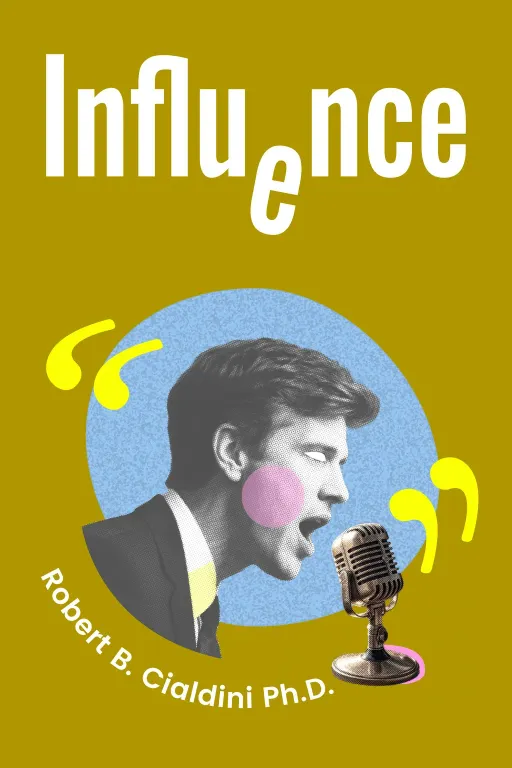
Nova: Exactly! It's less about conjuring and more about connecting. And today, we're dissecting 'Influence: The Psychology of Persuasion' by Robert B. Cialdini. What's truly fascinating, Atlas, is that Cialdini didn't just theorize about persuasion from an ivory tower. He went undercover for years, immersing himself in sales trainings, fundraising organizations, and advertising agencies. He observed influence tactics firsthand, giving his work an unparalleled, boots-on-the-ground grounding.
Atlas: Oh, I love that! That's the kind of concrete solution an architect building robust systems needs—something proven in the real world, not just theoretical. It makes me wonder, how does that unique approach translate into actionable insights for leaders seeking to foster genuine collaboration?
The Six Pillars of Ethical Influence
SECTION
Nova: Well, it leads directly to his six universal principles of persuasion. They're like the fundamental laws of social physics. Let's start with Reciprocity. It's simple: we feel indebted to those who give us something first. Think about the classic free sample in a grocery store.
Atlas: Right, like those tiny cups of yogurt. But how do we ensure that builds genuine connection and collaboration, rather than just a transactional debt? Because for anyone cultivating a community, we're aiming for lasting value, not just a one-off exchange.
Nova: That's the ethical pivot. Instead of a trick, think of it as a genuine act of service. A leader who consistently offers support, shares valuable insights, or genuinely helps team members solve problems, builds up a reservoir of goodwill. When they then ask for extra effort on a critical project, it’s not an imposition; it’s a natural reciprocation. It fosters a culture of mutual support.
Atlas: That makes sense. It’s like, if you consistently invest in your team's growth, they're more likely to invest in the company's mission. What’s the next pillar?
Nova: Commitment and Consistency. Once we make a small commitment, we feel internal and external pressure to behave consistently with that commitment. Cialdini gives an example of researchers asking residents to sign a petition supporting safe driving. A few weeks later, they were asked to put a large, ugly 'Drive Carefully' sign in their front yard.
Atlas: Oh, I can see where this is going. Not many would agree to the ugly sign initially, but after signing the petition…
Nova: Exactly! Far more agreed to the sign after signing the petition, because they had already committed to the idea of safe driving. For a leader, this means starting with small, public agreements. Get team members to verbally commit to a small, achievable goal first.
Atlas: So, if we're trying to build robust systems or implement a new process, we shouldn't just drop a massive change on everyone. We should get buy-in on smaller, foundational steps first, building momentum. It helps cultivate that consistency.
Nova: Precisely. The other four—Social Proof, Authority, Liking, and Scarcity—all operate on similar psychological triggers. Social proof: we look to others to determine appropriate behavior. Authority: we defer to credible experts. Liking: we say yes to people we know and like. And Scarcity: we value things more when they're limited. The ethical application is always about transparency and genuine value. Don't fake scarcity; highlight unique opportunities. Don't fabricate authority; demonstrate expertise. These aren't about manipulation; they're about understanding the pathways to human decision-making.
Atlas: It sounds like the core message here is that true influence, the kind that leads to sustainable growth and human connection, isn't about overriding someone's will. It's about intelligently guiding them by understanding their inherent psychological wiring.
Navigating the Minds: Fast vs. Slow Thinking in Persuasion
SECTION
Nova: And speaking of how people make decisions, that brings us to another foundational text that truly complements Cialdini: Daniel Kahneman's 'Thinking, Fast and Slow.' Kahneman introduces us to two systems that drive our thinking: System 1 and System 2.
Atlas: Okay, so what exactly do you mean by 'systems'? Are these like two different brains?
Nova: Not literally, think of them as two modes of thought. System 1 is fast, intuitive, emotional, and automatic. It's what kicks in when you instantly recognize a friend's face or slam on the brakes. System 2 is slow, deliberate, logical, and effortful. It's what you use for complex math problems or deciding on a major life investment.
Atlas: Can you give me a real-world example where these two systems clash, especially in a leadership or product development context? For someone trying to understand user motivations beyond the surface, this is critical.
Nova: Absolutely. Imagine you're launching a new software feature. System 1 in your users might react to the sleek design, the vibrant colors, the immediate 'feel' of it. They instinctively like it. But System 2 kicks in when they try to actually it for a complex task. If the workflow is clunky, if it requires too much mental effort, System 2 overrides System 1's initial positive impression. Or, a leader might present a new strategy with compelling emotional language—System 1 engages. But if the data behind it is weak, System 2 eventually raises red flags.
Atlas: That's a perfect example. So, if we're trying to build robust systems or cultivate communities, how does knowing about these two systems help us craft messages that resonate deeply, rather than just scratching the surface? Because we want to move people towards shared objectives, not just fleeting compliance.
Nova: It means tailoring your message. For System 1, you need simplicity, clear framing, emotional resonance, and visual appeal. Make it easy to grasp, make it feel good. For System 2, you need data, logical arguments, clear benefits, and a coherent narrative that withstands scrutiny. Nova's take here is crucial: understanding these mechanisms allows you to build trust. If you only appeal to System 1 with flashy promises, System 2 will eventually call you out. But if you can engage both—an exciting vision solid logic—you've got a powerful, ethical persuasive approach.
Atlas: So, it's about knowing when to tap into the gut feeling and when to present the detailed spreadsheet. And for someone who trusts intuition data, like our listeners, this is incredibly valuable. It helps avoid those cognitive biases that can derail even the most brilliant ideas.
Synthesis & Takeaways
SECTION
Nova: Exactly. What Cialdini gives us are the 'levers' of influence—the principles that move people. Kahneman explains those levers work, by revealing the underlying psychological machinery. Together, they offer a holistic view of ethical persuasion. It’s about understanding human nature so deeply that you can guide decisions and foster collaboration, not manipulate.
Atlas: I guess that makes sense. For anyone building a team or a product, this isn't just about selling; it's about truly understanding and guiding. It's about building enduring trust and making sure your ideas, no matter how brilliant, actually take root and grow in the real world. That pragmatic clarity is what keeps people coming back.
Nova: Absolutely. It’s the difference between a fleeting transaction and a lasting connection. So, for our tiny step this week, we want you to observe a recent successful negotiation or conversation you had. Then, identify which of Cialdini's principles—reciprocity, commitment, social proof, authority, liking, or scarcity—were at play, consciously or unconsciously.
Atlas: And maybe even reflect on whether it tapped into System 1 or System 2 thinking. That's a great way to process the wins and the lessons, just like our listeners are always looking to do. It brings it all home.
Nova: It truly does. This is Aibrary. Congratulations on your growth!