The Subtle Art of Influence: Mastering Persuasion Without Force
11 minGolden Hook & Introduction
SECTION
Nova: Atlas, I've been pondering something. If you had to describe the concept of "influence without force" in precisely five words, what would they be?
Atlas: Oh, I love a good word challenge! Hmm... "Connect, inspire, empower, not manipulate." Is that five?
Nova: Nailed it! And you perfectly captured the essence of what we're dissecting today. We often hear about "influence," but it's usually shrouded in a bit of a dark cloud, isn't it?
Atlas: Absolutely. It conjures images of slick salespeople or political spin doctors. It feels... tactical, maybe a little shady.
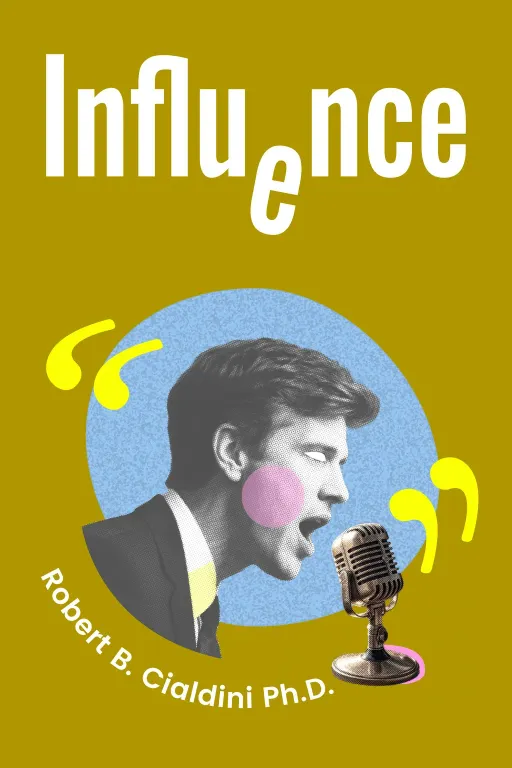
Nova: Exactly! But what if influence wasn't about imposing your will, but about inspiring others to genuinely embrace an idea? That's the profound shift we explore when we dive into "The Subtle Art of Influence: Mastering Persuasion Without Force." We're pulling insights from two titans in the field: Robert Cialdini, with his groundbreaking work, "Influence: The Psychology of Persuasion," and Simon Sinek, who famously urged us to "Start with Why."
Atlas: Oh, I know Cialdini! Isn't he the guy who basically spent years going undercover, infiltrating sales organizations and advertising firms, to figure out what makes people tick? Talk about field research.
Nova: He literally did! He immersed himself in the tactics of compliance professionals to understand the universal triggers. It's what gives his work such a raw, undeniable truth. And Sinek, of course, rocketed to global recognition with his TED Talk on the Golden Circle, challenging leaders everywhere to rethink their approach to motivation.
Atlas: That makes me wonder, then, how do these seemingly different approaches—Cialdini's psychological triggers and Sinek's purpose-driven leadership—actually fit together? Are they two sides of the same coin, or entirely different currencies?
Nova: That's the million-dollar question, and it's where the subtle art truly lies. We're going to start with Cialdini, because his work gives us the fundamental building blocks of human decision-making. Think of them as the universal psychological levers.
The Six Pillars of Ethical Influence: Beyond Manipulation
SECTION
Nova: So, Cialdini identified six universal principles of influence. They’re not tricks; they’re deeply ingrained shortcuts our brains use to make decisions. The first is. It’s simple: we feel indebted to those who give to us.
Atlas: Oh, I've been there. Like when someone does you a favor, and you feel obligated to return it, even if you weren't planning to?
Nova: Precisely. It’s why free samples work, or why restaurants offer a small mint with the bill. It creates a feeling of obligation. A leader might use this by genuinely investing in their team's development or well-being, fostering a sense of mutual commitment.
Atlas: That makes sense. It's not about giving to, but giving to that naturally leads to wanting to reciprocate.
Nova: Exactly. Then there's. Once we’ve made a choice or taken a stand, we feel internal and external pressure to behave consistently with that commitment.
Atlas: You mean like when you publicly declare you're going to run a marathon, suddenly you to train?
Nova: You got it. For leaders, this means getting small, voluntary commitments first. If you want someone to take on a big project, start by asking them to agree to a small, related task. Build that consistent agreement.
Atlas: I can see how that could be powerful, but also, how it could be used for manipulation if you're not careful. Like getting someone to agree to a tiny request, and then escalating it.
Nova: That’s the critical distinction. Ethical influence uses these principles transparently and for mutual benefit. Manipulation exploits them for selfish gain. The third principle is. We look to others to determine appropriate behavior, especially when we’re uncertain.
Atlas: So, like seeing a crowd outside a restaurant and assuming it must be good?
Nova: Spot on. If a leader wants to introduce a new, potentially risky idea, showcasing others within the organization who have already adopted it successfully can be incredibly powerful. It normalizes the behavior.
Atlas: That's actually really inspiring. I imagine a lot of our listeners, especially aspiring leaders, struggle with getting buy-in for new initiatives. If you can show that others are already doing it successfully, it lowers the perceived risk.
Nova: Absolutely. Then we have. We’re more likely to be influenced by people we like. This isn’t about being everyone’s best friend, but about finding common ground, offering genuine compliments, and cooperating towards shared goals.
Atlas: That seems almost too simple. Just be likeable?
Nova: Not just likeable, but genuinely connecting. Showing empathy, listening actively, and highlighting similarities. People are more open to ideas from those they perceive as similar or trustworthy. And then,. We tend to defer to credible experts.
Atlas: Like doctors in white coats? Or someone with a string of impressive credentials?
Nova: Precisely. For leaders, this means demonstrating expertise, experience, and integrity. It's about earning respect through competence, not just demanding it through position.
Atlas: Okay, so that's five. What's the sixth?
Nova: The last one is. Opportunities seem more valuable when they are less available.
Atlas: Ah, the classic "limited time offer!"
Nova: Exactly! In a leadership context, it might be framing an opportunity as unique, or highlighting the rare window to capitalize on a particular market trend. It's about conveying genuine value and urgency.
Atlas: So, basically you’re saying that understanding these six principles gives leaders a toolkit to ethically guide people towards a shared vision, rather than forcing them. But wait, how do you make sure you're not just being a clever manipulator? That line feels blurry.
Nova: It’s a crucial point. Cialdini himself emphasizes that these principles work best and longest when used ethically. If you use scarcity to lie about availability, or reciprocity to guilt-trip someone, it erodes trust. Genuine influence is built on trust, which these principles can foster if applied with integrity.
Leading with 'Why': Inspiring Action Through Purpose
SECTION
Nova: And that naturally leads us to the second key idea we need to talk about, which often acts as a foundational counterpoint to the tactical principles we just discussed: Simon Sinek’s "Start with Why." While Cialdini gives us the of influence, Sinek gives us the.
Atlas: Okay, so Cialdini's principles are like the mechanics of a car, and Sinek's "Why" is the destination or the reason for the journey?
Nova: That’s a brilliant analogy, Atlas! Sinek argues that most organizations and leaders communicate from the outside-in: they tell us they do, then they do it, and rarely they do it. But truly inspiring leaders and companies communicate from the inside-out, starting with their core belief, their purpose.
Atlas: So, instead of saying, "We make great computers", they say, "We believe in challenging the status quo and thinking differently", and then "We do this by making beautifully designed, user-friendly products", and "Oh, by the way, we make computers."
Nova: Perfect example! That's how Apple, in its early days, built a cult-like following. People weren't just buying a product; they were buying into a vision, a belief system. Sinek’s "Golden Circle" illustrates this: the 'Why' is the innermost circle, surrounded by 'How,' and then 'What.'
Atlas: That’s actually really inspiring. I can see how that bypasses the need for manipulation entirely. If people believe in your 'Why,' they don't need to be persuaded with tricks; they’re already on board.
Nova: Exactly. It taps into the limbic brain, the part responsible for feelings, trust, and loyalty. When you communicate your 'Why,' you're speaking directly to people's emotions and values, not just their logical processing center.
Atlas: But how does an aspiring leader, or even an established one, their 'Why'? It sounds a bit abstract. Like, if I'm leading a sales team, is my 'Why' just to hit targets?
Nova: That’s a common misconception. Hitting targets is a 'What,' or maybe a 'How.' Your 'Why' is the deeper purpose behind that. It could be "to empower businesses to grow," or "to connect people with solutions that genuinely improve their lives." It requires deep introspection, asking not just you do, but it matters, you want to make beyond the immediate task.
Atlas: That makes me wonder, it sounds like Sinek's philosophy is more about long-term, sustained influence, whereas Cialdini's principles could be applied in shorter, more transactional situations. Is that fair?
Nova: That's an insightful distinction. Cialdini's principles are powerful for immediate compliance or specific decisions. Sinek's 'Why' is for building lasting loyalty, fostering intrinsic motivation, and creating a movement. A truly influential leader masters both: they understand the psychological levers for specific moments, but they those levers in an overarching, compelling purpose.
Atlas: So, Cialdini's principles are the tools, and Sinek's 'Why' is the blueprint for the ethical and impactful house you're trying to build with them.
Nova: You've encapsulated it beautifully! Without a clear 'Why,' Cialdini's principles can easily devolve into manipulation. But with a strong 'Why,' they become powerful amplifiers for genuine inspiration.
Synthesis & Takeaways
SECTION
Nova: So, bringing it all together, the subtle art of influence isn't about choosing between Cialdini's psychology and Sinek's purpose. It’s about integrating them. It’s understanding the human code, but using that understanding to uplift and inspire, not to coerce.
Atlas: That’s actually really inspiring. It redefines leadership from simply managing tasks to truly inspiring people. It feels less like a burden and more like an opportunity to make a real impact.
Nova: Exactly! It's about moving from short-term compliance, which often requires constant external pressure, to long-term commitment, which comes from internal alignment and shared purpose. That's the difference between someone doing what you ask because they to, and doing it because they to.
Atlas: That gives me chills, honestly. For our listeners who are aspiring leaders, always looking to grow and make a real-world impact, what’s one tiny step they can take this week to start applying this subtle art?
Nova: Here's my challenge: In your next significant conversation, whether it's with a team member, a client, or even a family member, consciously identify one of Cialdini's principles at play. Did you see reciprocity at work? Or social proof? Then, ask yourself: how could I have applied this principle or to connect with their underlying 'Why'?
Atlas: I love that. It turns every interaction into a learning opportunity, a chance to refine your influence, not as a manipulator, but as an inspirer.
Nova: Precisely. It’s about becoming a leader who not only has the best ideas but can inspire others to embrace them wholeheartedly.
Atlas: That’s fantastic advice. And it really brings home the idea that influence is a skill to be honed, ethically and strategically.
Nova: Absolutely. It's a journey of continuous learning and application.
Atlas: This is Aibrary. Congratulations on your growth!