The 'Power Paradox' is a Trap: Why True Influence Comes from Giving, Not Taking.
8 minGolden Hook & Introduction
SECTION
Nova: What if everything you thought about power and influence was completely backward? What if the most effective way to get what you want, to lead, to innovate, isn't about being the smartest or the toughest, but about being the most… generous?
Atlas: Generous? In the competitive world of tech, especially with Agent systems, that sounds almost naive, Nova. I mean, we're taught to negotiate hard, protect our intellectual property, assert dominance.
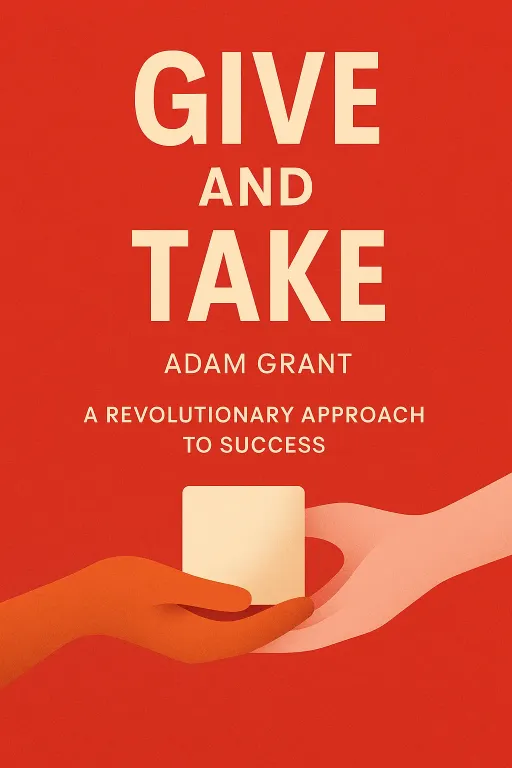
Nova: Exactly the blind spot we're tackling today! We're diving into a paradigm shift, inspired by two foundational books: Adam Grant's and Robert Cialdini's. Grant, a Wharton professor who became one of the youngest tenured there by studying this very topic, showed us the surprising power of giving.
Atlas: Wow, one of the youngest tenured professors at Wharton, studying generosity? That's quite a contrast to the typical image of business schools.
Nova: Absolutely. And then there's Cialdini, who literally went undercover—immersing himself in various industries from car dealerships to fundraising—to observe and understand the real-world tactics of influence firsthand. His dedication to practical observation is incredible.
Atlas: Undercover? That’s dedication. But how does this 'giving' philosophy actually translate into tangible influence, especially for architects and engineers building complex Agent systems? It still feels a bit abstract.
Nova: That's our first deep dive, Atlas: The Giver's Advantage.
The Giver's Advantage: Why Generosity Fuels Influence
SECTION
Nova: Grant's core insight is that there are three types of people in the workplace: Takers, Matchers, and Givers. Takers try to get as much as possible from others. Matchers aim for an even exchange. Givers, however, help others without expecting anything in return. Counter-intuitively, givers often end up at the of the success ladder, not the bottom.
Atlas: Wait, so you're saying the people who are constantly offering to help, sharing their code, debugging issues for others – they're actually more successful in the long run? I imagine a lot of our listeners, especially those in fast-paced development cycles, feel like they'd just get walked all over.
Nova: That's the paradox! Grant found that while some givers do burn out and end up at the bottom, the people are also givers. The difference? Smart givers protect their energy and time, but fundamentally operate from a place of contribution. They're strategic about their generosity, not indiscriminate.
Atlas: Okay, but how does that apply in a high-stakes Agent project? For an architect or a lead engineer, where do I start 'giving' without just adding to my already overflowing plate? It sounds like it could easily become a time sink.
Nova: Think about sharing knowledge proactively, Atlas. That could mean mentoring junior developers, openly distributing useful tools or frameworks you’ve built for Agent orchestration, or even just connecting people who can benefit from knowing each other's expertise. It’s about building a reputation as someone who elevates the collective, someone who makes the entire system better.
Atlas: I see what you mean. The 'architect' part of me thinks about system-wide optimization, not just my own component. So, giving could be seen as optimizing the entire human-agent ecosystem, improving overall flow and efficiency.
Nova: Exactly. Imagine an Agent engineering team where everyone hoards their best algorithms or system designs, or keeps their debugging tricks to themselves. Collaboration would grind to a halt. Grant's research shows that this kind of proactive contribution builds social capital, fosters trust, and expands a wider network of reciprocity. People genuinely want to work with you, help you, and support your initiatives because you've consistently shown up for them. It’s a powerful, subtle force.
Atlas: That makes perfect sense. It’s not just about being nice; it’s about creating an environment where everyone thrives, including yourself.
Reciprocity as a Strategic Lever: Cialdini's Ethical Influence
SECTION
Nova: And that naturally leads us to the second key idea, which often acts as the psychological engine behind Grant's 'giver' success: Cialdini's principle of reciprocity. He explains how this deep-seated human tendency for us to feel obligated to return favors is a powerful, almost automatic, trigger for influence.
Atlas: The obligation to return a favor? So, if I spend an hour helping a colleague debug their Agent's decision logic, they'll feel compelled to help me when my system hits a snag? That sounds almost manipulative if not done right.
Nova: That's the ethical dilemma Cialdini addresses, and it's a critical distinction. It's not about manipulation; it's about understanding a fundamental aspect of human interaction and using it ethically. When you genuinely offer value first, without immediate expectation, you activate this principle. People genuinely to reciprocate because it creates a sense of social indebtedness, but in a positive way. It builds authentic goodwill.
Atlas: Can you give a concrete example from Cialdini's research? Something that really highlights how automatic this is, even when we don't realize it?
Nova: Absolutely. Cialdini recounts a fascinating study where a researcher sent Christmas cards to a randomly selected group of complete strangers. These people had never met the sender, had no prior connection. Yet, a significant number of them sent cards back. It wasn't about personal connection or friendship; it was the sheer act of receiving a gift, however small, that triggered the reciprocal response. It’s almost hardwired into us.
Atlas: That's wild. So, if I share a particularly elegant solution for a common Agent problem with the wider team, even if they didn't explicitly ask for it, they're more likely to be receptive to my architectural proposals down the line? Or even volunteer to test my next big feature because of that initial act of giving?
Nova: Precisely. It builds a reserve of goodwill. It shows you're invested in collective success, not just personal gain. This is especially crucial for an architect who needs buy-in from diverse teams, from stakeholders, from product managers. Your influence isn't just about the technical merit of your designs; it's about the social fabric you've woven, the trust you've built. Cialdini emphasizes that this principle is universal, cutting across cultures and contexts. It's a powerful tool for ethical persuasion.
Atlas: I can definitely see how understanding this could make a huge difference in getting complex Agent projects off the ground. It’s about building bridges, not just code.
Synthesis & Takeaways
SECTION
Nova: So, bringing it all together: the 'power paradox' is the trap of thinking influence comes from taking, from asserting dominance. True, lasting influence, especially in a complex, collaborative field like Agent engineering, emerges from a consistent pattern of giving.
Atlas: It's a fundamental shift, really. From "what can I get?" to "what can I contribute?" And not just for altruism's sake, but understanding that generosity is a strategic investment in influence, in building a more effective team and better systems.
Nova: Exactly. It’s about building social capital, fostering trust, and expanding that network of reciprocity. It's about being the person others want to collaborate with, the one whose ideas get adopted because they've consistently added value to the system, to the team, to the project. It's a proactive, positive approach to leadership.
Atlas: For our listeners, especially the full-stack engineers and architects out there, this isn't just theory. It's a call to action. Think about it: where in your current Agent projects could you offer more 'giving' to build stronger alliances and increase your influence? Is it sharing a useful library you've built, mentoring a new team member, or documenting a complex system design more thoroughly than strictly required?
Nova: Think about it. The most influential Agent systems are those built on robust, collaborative foundations. And the most influential engineers are often the generous ones, those who understand the true power paradox.
Atlas: That’s actually really inspiring. It redefines what 'power' means in a way that feels sustainable and ethical, and ultimately, more effective.
Nova: Absolutely. It moves beyond a zero-sum game, creating a win-win scenario for everyone involved. And that, I think, is a powerful thought to leave you with.
Atlas: A truly profound insight for anyone looking to make a lasting impact in their field.
Nova: This is Aibrary. Congratulations on your growth!