The Power of Subtle Influence: Mastering the Art of Connection and Persuasion
9 minGolden Hook & Introduction
SECTION
Nova: Most of us walk around believing we're rational beings, making logical choices, meticulously analyzing every piece of data. But what if I told you that's largely a comforting fiction, and you're being subtly influenced in almost every decision you make, every single day, often without realizing it?
Atlas: Whoa, hold on. Are you saying my morning coffee choice, or even my political leanings, aren't entirely my own? That's a pretty bold claim, Nova, especially for someone who prides themselves on objective thought.
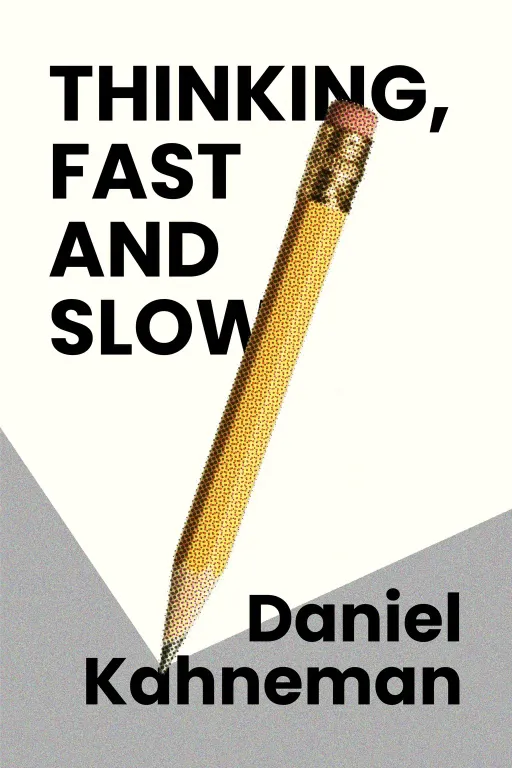
Nova: Absolutely, Atlas. It's a revelation that can be unsettling, but also incredibly empowering. Today, we're diving into the hidden architecture of human decision-making, exploring the powerful, often unseen forces that shape our choices and interactions. We're drawing heavily from two foundational works: "Thinking, Fast and Slow" by Daniel Kahneman, and "Influence: The Psychology of Persuasion" by Robert Cialdini.
Atlas: Those are heavy hitters. Kahneman, if I recall, is the psychologist who won a Nobel Memorial Prize in Economic Sciences, which is fascinating for someone outside the traditional economics field. What did his groundbreaking work reveal that's so relevant to these subtle influences?
Nova: Exactly! Kahneman's work, particularly on prospect theory, fundamentally changed how we understand human judgment and decision-making. He showed that our minds operate on different speeds, and that our 'rational' side often takes a backseat to much older, more intuitive systems. And Cialdini, well, he gave us the playbook for how those intuitive systems are tapped into.
Atlas: A playbook for influence? That sounds like something every historian, every analyst, should be intimately familiar with. How do these insights, from a Nobel laureate and a titan of psychology, connect to our everyday lives and the evolution of systems we care about?
The Invisible Hand of Bias: Unmasking Non-Rational Influence
SECTION
Nova: Well, let's start with Kahneman. He introduced us to two systems of thinking: System 1, which is fast, intuitive, emotional, and largely unconscious; and System 2, which is slow, deliberate, logical, and conscious. The problem is, System 1, for all its efficiency, loves shortcuts. And those shortcuts are what we call cognitive biases.
Atlas: So, you're saying our quick, gut reactions, the ones that feel so natural, are actually leading us astray? Give me a concrete example. How does this play out, say, in historical analysis or understanding complex political events?
Nova: Let's take confirmation bias. Imagine a historian deeply invested in a particular interpretation of, say, the causes of a major war. Their System 1, trying to be efficient, will subconsciously seek out and give more weight to documents, memoirs, and narratives that support their existing theory. It'll filter out, or downplay, anything that contradicts it.
Atlas: Wow. So, they're not even to be biased; their brain is just doing its job, but that job involves confirming what they already believe? That's... unsettling for anyone who prides themselves on objective, rigorous thought. It sounds like our 'rational' analysis is just a fancy way of reinforcing our initial assumptions.
Nova: Precisely. The cause is System 1's drive for efficiency and coherence. The process is selective attention and interpretation of data. And the outcome is a skewed understanding of the past, or a policy decision based on an incomplete picture. It's not a deliberate deception; it's a fundamental operating principle of the human mind.
Atlas: That's fascinating. And it makes me wonder, how does this 'blind spot' affect not just individual analysis but collective decision-making in, say, geopolitics or even the evolution of political systems? If leaders are prone to confirmation bias, how does that shape international relations?
Nova: It can profoundly shape them. Think of a nation's intelligence apparatus during a crisis. If there's an existing belief about an adversary's intentions, analysts might inadvertently prioritize intelligence that confirms those suspicions, potentially overlooking crucial dissenting information. This isn't just about individual error; it's about how deeply ingrained these cognitive shortcuts are in the systems we build. It sets the stage for how easily we can be influenced.
The Architect of Persuasion: Cialdini's Six Principles in Action
SECTION
Nova: And that naturally leads us to Robert Cialdini. If Kahneman shows us we're susceptible to these mental shortcuts, Cialdini gives us the playbook for that susceptibility is exploited, often entirely ethically, but sometimes less so. He outlines six universal principles of influence.
Atlas: Okay, a playbook for influence? That sounds incredibly powerful, and potentially dangerous. Give me one or two of his principles that are particularly insidious, or at least common, something we might encounter in, say, a negotiation, a public debate, or even just trying to build connections.
Nova: Let's start with Reciprocity. It's simple: we feel compelled to return favors. If someone gives us something, we feel obligated to give something back, often something larger. Imagine a political lobbyist. They might offer a small 'favor' – perhaps a beautifully researched, objective policy brief on a complex issue to a busy legislator, or even just a personal introduction to a key stakeholder.
Atlas: So, the lobbyist isn't directly asking for anything yet, just providing value?
Nova: Exactly. Later, when that lobbyist asks for a meeting, or support for a specific bill, the legislator feels an unconscious obligation to reciprocate, even if it's not entirely in their best interest or the public's. The cause is the universal human tendency to repay debts, the process is the initial gift creating an obligation, and the outcome is influence over the legislator's actions, all without a direct request. It's incredibly subtle.
Atlas: That reciprocity one is tricky! It's not necessarily a bad thing – it builds trust – but it can be weaponized if you're not aware of it. What's another one that really stands out?
Nova: Social Proof. This is our tendency to look to others for cues on how to think, feel, and act. If everyone else is doing it, it must be right. Think about a market downturn. Investors might see others selling off assets, and despite their own rigorous analysis suggesting they should hold, they succumb to the 'social proof' that everyone else is selling. They join the herd, leading to a cascade effect.
Atlas: So, our historical narratives can be shaped by what everyone believes, even if the primary sources suggest otherwise? It’s like the collective unconscious shaping our understanding of the past, rather than individual critical thought. That's a powerful force when you're trying to understand the evolution of systems.
Nova: Absolutely. The cause is our ingrained need for social validation and efficiency in decision-making. The process is observing collective behavior, and the outcome is conforming to the perceived 'right' action. These aren't overt commands; they're whispers, nudges, and subtle pressures that our System 1 thinking readily accepts. Understanding these principles allows us to both identify when we're being influenced and to wield them ethically for positive connection and clear communication.
Synthesis & Takeaways
SECTION
Nova: So, bringing Kahneman and Cialdini together, we see this incredible interplay. Kahneman shows us the inherent biases and mental shortcuts that make us human, creating the fertile ground for influence. Cialdini then gives us the specific levers that can activate those biases and guide behavior.
Atlas: It truly highlights that 'deep question' from our analysis: "Where in your daily interactions might you be overlooking the subtle, non-rational levers of influence, both in yourself and others?" It's not just about what we say, but how we say it, and what unconscious triggers we're hitting. For someone who values rigorous analysis, how can we begin to 'see' these invisible forces at play?
Nova: It starts with self-awareness. Begin by observing your own knee-jerk reactions, your gut feelings, and asking 'why' you feel compelled to do something. Is it because someone offered you a small favor? Is it because 'everyone else' is doing it? For those who delve into complex systems, it's about adding a 'human element' lens to their analysis. Look beyond the stated policies and ask what subtle influences might be guiding the actors involved.
Atlas: That's a profound shift in perspective. It's about becoming a more discerning historian of your own mind and the world around you, recognizing that the human story, the evolution of systems, is as much about these invisible currents as it is about grand, rational decisions.
Nova: Precisely. True power isn't just knowing the facts; it's understanding the whispers that guide the facts' interpretation and acceptance. It's about mastering the art of connection and persuasion, not through manipulation, but through profound understanding of the human condition.
Atlas: That's actually really inspiring. I imagine a lot of our listeners, especially those who seek to understand patterns and the evolution of systems, will find immense value in reflecting on these principles. We encourage you to share your own 'blind spot' moments or times you've seen these principles of influence in action.
Nova: This is Aibrary. Congratulations on your growth!