The Art of Persuasion: Influencing Minds and Shaping Futures
12 minGolden Hook & Introduction
SECTION
Nova: Atlas, if I say 'persuasion,' what's the first thing that pops into your head?
Atlas: Oh, Nova. Usually a used car salesman, a terrible online ad, or my own kids explaining why they that new video game. It’s rarely a glowing endorsement.
Nova: That’s a fair assessment, and honestly, a common reaction. But what if I told you that understanding persuasion is less about those caricatures and more about unlocking a deeper understanding of human connection and guiding outcomes with integrity?
Atlas: Now that’s intriguing. Because for anyone who's trying to build something, lead a team, or simply get their point across in a meaningful way, genuine influence feels like a superpower.
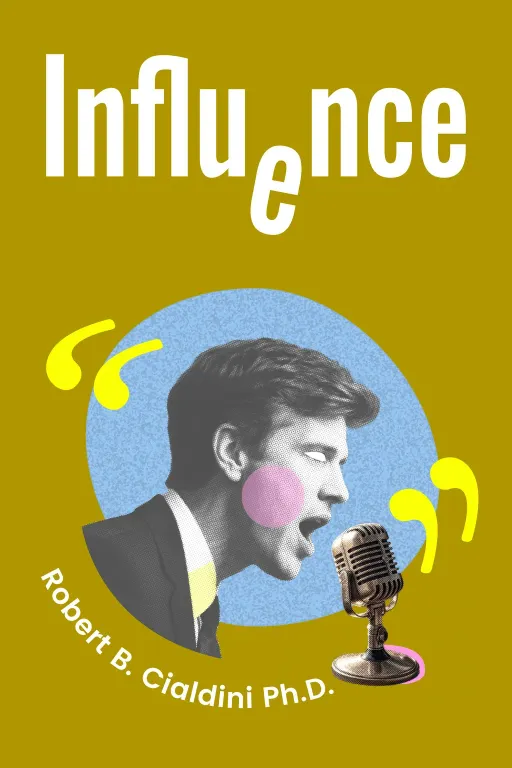
Nova: It absolutely is. And today, we're diving into the profound insights of two titans who cracked the code on human behavior: Robert Cialdini’s seminal work,, and Daniel Kahneman’s Nobel-winning masterpiece,.
Atlas: Cialdini… he's the one who didn't just theorize about influence, right? He actually went out into the trenches?
Nova: Exactly! What's truly fascinating is that Cialdini wasn't content to just sit in an ivory tower. He spent years going undercover—embedding himself in car dealerships, telemarketing firms, even cults—to observe real-world persuasion tactics firsthand. This hands-on, almost street-smart credibility gives his principles a grounded power that few academic works achieve. And Kahneman, a psychologist winning a Nobel Prize in economics, completely reshaped our understanding of decision-making.
Atlas: So we're talking about insights that are both academically rigorous and battle-tested in the real world. That sounds like the perfect blend for anyone who wants to understand the big picture and make a real impact.
Nova: Precisely. Today, we'll unravel Cialdini's six universal principles of persuasion, then discuss Kahneman's revolutionary insights into our dual thinking systems, and finally, we'll focus on how these insights empower us to connect and lead more effectively. Let's start with Cialdini.
Deep Dive into Core Topic 1: Cialdini's Six Principles of Persuasion
SECTION
Nova: So, Cialdini identified six universal principles that consistently trigger compliance and influence human behavior. These aren't sneaky tricks; they're deeply ingrained psychological shortcuts we all use. Understanding them isn't about manipulation; it's about navigating human connection and guiding conversations towards shared goals.
Atlas: I like that framing. Because for many of our listeners, influence isn't about winning an argument, it's about fostering collaboration and moving towards a shared vision. What's the first one?
Nova: The first is. It’s simple: we feel compelled to return favors. If someone does something for us, we feel a natural, often unconscious, urge to do something back.
Atlas: Oh, I know that feeling. It's like when a colleague helps you out with a tight deadline, and suddenly you're looking for ways to return the favor, even if it's just buying them coffee.
Nova: Exactly. Cialdini gives a brilliant example of this, almost a classic. Imagine a server in a restaurant. When they bring the bill, some servers will bring a small, unsolicited mint. Just one mint. And studies show this can increase tips by about 3%. But what happens if they bring two mints? Tips jump to 14%. And if they bring one mint, start to walk away, then turn back, smile, and say, "For you nice people, here's an extra mint," tips can skyrocket by 23%.
Atlas: Wow. That's incredible. It's such a tiny gesture, but the personalized attention, the feeling of getting something extra, it just hits different.
Nova: It does. It triggers that deep-seated sense of obligation. Then there's. We have a strong need to be consistent with what we have already said or done. Once we make a small commitment, we're more likely to agree to larger, consistent requests later.
Atlas: So, getting someone to agree to a small step first makes them more likely to take a bigger leap? Like asking a team member to just 'think about' a new process, before asking them to fully implement it?
Nova: Precisely. The third is. We tend to look at what other people are doing to determine what is correct. If everyone else is doing it, it must be right. Think about seeing a crowded restaurant versus an empty one.
Atlas: Right, like how online reviews work. If a product has thousands of five-star reviews, I’m much more inclined to trust it, even if I haven't tried it myself.
Nova: Absolutely. Then there’s. We tend to obey authority figures, or those perceived as experts. This is why doctors wear white coats or why credentials are so important.
Atlas: That makes sense. For someone leading a project, their experience and expertise naturally lend weight to their suggestions. But it’s not just about job title, is it? It’s about demonstrated knowledge.
Nova: It's about perceived expertise and trustworthiness. Fifth,. We are more likely to be influenced by people we like. This can be due to similarity, compliments, cooperation, or physical attractiveness.
Atlas: That’s a powerful one. If you genuinely like someone, you’re far more open to their ideas. It’s hard to build rapport if there’s no genuine connection.
Nova: And finally,. Opportunities seem more valuable when their availability is limited. "Limited time offer!" or "Only X left in stock!"
Atlas: That’s the one that always gets me when I'm online shopping. The little countdown timer. It creates a sense of urgency that bypasses rational thought.
Nova: It really does. So, Atlas, when you hear these six principles—Reciprocity, Commitment & Consistency, Social Proof, Authority, Liking, and Scarcity—do they still feel like manipulative tricks, or do you see a path to ethical application?
Atlas: Honestly, when you break them down, they feel less like tricks and more like fundamental aspects of human interaction. The distinction, I imagine, comes down to intent. If you're using them to genuinely guide someone towards a mutually beneficial outcome, that's one thing. If it's just about getting your way, that's another.
Nova: Exactly. Ethical and effective influence stems from a deep understanding of these psychological principles, allowing you to build rapport and guide others toward shared goals. It’s about leveraging these natural human tendencies with integrity.
Deep Dive into Core Topic 2: Kahneman's Dual Systems of Thinking
SECTION
Nova: And that naturally leads us to the second key idea we need to talk about, which often acts as a counterpoint to what we just discussed: how our brains actually process all this incoming information and make decisions. This is where Daniel Kahneman’s becomes indispensable.
Atlas: I’ve heard of System 1 and System 2 thinking, but I’ve always found it a bit abstract. How does it connect to these persuasion principles?
Nova: Kahneman revealed that our minds operate with two distinct systems. is fast, intuitive, emotional, and automatic. It’s what makes us jump when we hear a loud noise, or instantly recognize a face. It’s our gut reaction. is slow, deliberate, logical, and effortful. It kicks in when we’re solving a complex math problem or contemplating a difficult decision.
Atlas: So, System 1 is basically our brain on autopilot, and System 2 is when we’re actually putting in mental effort?
Nova: That’s a perfect way to put it. System 1 is constantly running in the background, generating impressions, intuitions, and feelings. System 2 is lazier; it prefers to conserve energy and only gets engaged when System 1 can't handle a situation, or when it senses something is off.
Atlas: That makes me wonder, how does this play out in real-world scenarios, especially when someone is trying to influence us?
Nova: Let’s take the example of buying a new gadget, say a smartphone. Your System 1 might be instantly drawn to its sleek design, the vibrant colors, the celebrity endorsement you saw in an ad. That’s Liking, Social Proof, and maybe even Authority hitting your fast, emotional brain. You get an immediate positive feeling.
Atlas: Right, that initial "ooh, shiny!" feeling.
Nova: Exactly. But then, if you're an "Architect" who values understanding the big picture and making informed decisions, your System 2 might kick in. You'd start comparing specs, reading in-depth reviews, looking at battery life, considering the long-term value, and perhaps even checking if it aligns with your existing ecosystem. This is your slow, deliberate thinking at work, trying to override that initial System 1 impulse.
Atlas: So, Cialdini's principles often target System 1, those automatic, intuitive responses?
Nova: Often, yes. Think about the Scarcity principle. "Only two left!" That triggers an immediate System 1 alarm: "Act fast or miss out!" It doesn't give your System 2 much time to deliberate whether you truly need that item.
Atlas: That’s a bit rough, but it makes sense. So, if you're trying to communicate effectively or persuade someone ethically, how do you engage both systems?
Nova: The key is to speak to both. To engage System 1, you use vivid stories, emotional appeals, strong visuals, and relatable analogies. You tap into those immediate feelings. For System 2, you provide data, logical arguments, detailed explanations, and give people time to process.
Atlas: So, for our listeners who are "Storytellers" and "Connectors," this means balancing the compelling narrative with the solid facts. It's not just about making people something, but also giving them the to agree.
Nova: Absolutely. Imagine you're trying to convince your team about a new strategy. You might start with a compelling story about a competitor’s success or failure, painting a vivid picture of the potential impact. Then, you back it up with market data, financial projections, and a clear step-by-step implementation plan.
Atlas: That’s a perfect example. It sounds like understanding these dual systems helps us tailor our communication, ensuring it resonates on both an emotional and a rational level. Can people truly override System 1, though? Or are we always just slaves to our gut reactions?
Nova: That’s a crucial question. System 1 is incredibly powerful and efficient, and we rely on it heavily. System 2 override System 1, but it requires effort, attention, and often, a trigger that makes us pause and think deliberately. This is why good influencers don't just rely on System 1 triggers; they also provide the logical scaffolding for System 2 to confirm the decision. It's about giving people the space and the information to make a well-considered choice, even if the initial spark came from System 1.
Synthesis & Takeaways
SECTION
Nova: So, bringing Cialdini and Kahneman together, what we see is a powerful synergy. Cialdini gives us the 'what'—the core triggers that influence human behavior. Kahneman gives us the 'how'—the fundamental mental architecture through which those triggers are processed.
Atlas: It’s like Cialdini identified the buttons, and Kahneman explained the wiring behind the panel.
Nova: Exactly! And for anyone who sees themselves as an 'Architect,' a 'Storyteller,' or a 'Connector,' this knowledge is transformative. It's not about manipulating people; it's about deeply understanding the human experience to build rapport, guide others toward shared goals, and ultimately, make a more positive impact. It's about seeing empathy as a superpower, allowing you to bridge logic and emotion.
Atlas: That’s actually really inspiring. It reframes influence from something transactional to something deeply relational.
Nova: It does. True, ethical influence, at its core, is about deeply understanding other people, their motivations, their psychological wiring, and then using that understanding to foster stronger relationships and achieve collective impact. It's about leading with purpose and caring about relationships.
Atlas: So, for our listeners, what’s one tiny step they can take today to put this into practice?
Nova: Here’s a simple challenge: Throughout your day, observe a conversation where you want to influence an outcome. It could be at work, with friends, or even with your kids. Try to identify which of Cialdini's principles might be at play, or which one you could subtly introduce to guide the conversation more effectively and ethically. Just observe, don't force it.
Atlas: That’s a fantastic tiny step. Just noticing can change everything.
Nova: Indeed. This is Aibrary. Congratulations on your growth!