The Art of Persuasion: Crafting Messages That Resonate and Move
11 minGolden Hook & Introduction
SECTION
Nova: Alright Atlas, let's play a quick word association game. I'll throw out a word, you hit me with the first thing that comes to mind, no filter. Ready?
Atlas: Oh, I like that. Always ready for a curveball. Hit me.
Nova: "Strategy."
Atlas: Exhausting spreadsheets.
Nova: Ha! Okay, fair. "Innovation."
Atlas: Buzzword bingo.
Nova: Perfect. And finally, "Communication."
Atlas: Oh, that's a good one. Communication… a tightrope walk over a canyon of misunderstandings.
Nova: Wow, that’s actually incredibly insightful. And it perfectly sets the stage for today's deep dive because that tightrope walk, that art of making your message not just heard, but and, is what we're dissecting.
Atlas: Exactly. It's not just about having the best idea, is it? It's about getting people to actually it, in it, and then with it. For anyone trying to build something foundational, whether it's a product or a community, that resonance is everything.
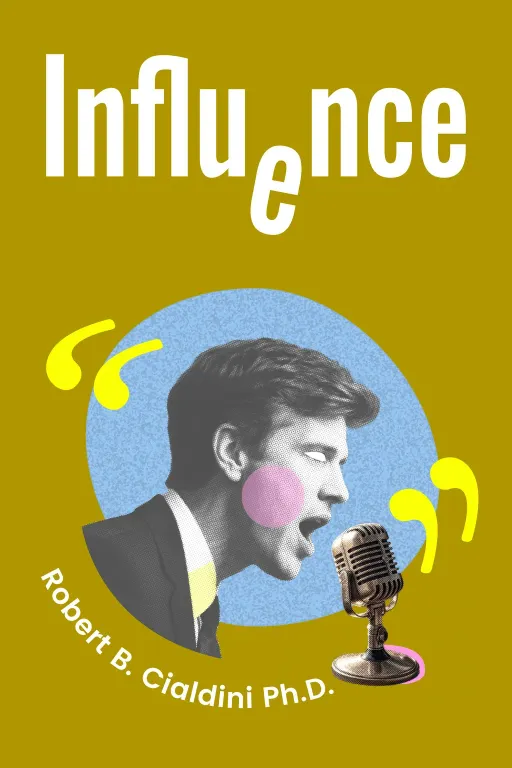
Nova: Absolutely. And to help us navigate that canyon, we're drawing insights from two seminal works today: Robert Cialdini's classic, "Influence: The Psychology of Persuasion," and then Chip and Dan Heath's brilliant "Made to Stick: Why Some Ideas Survive and Others Die."
Atlas: Cialdini, he’s the one who basically went undercover, right? Like a corporate spy, but for psychology?
Nova: Precisely! What’s fascinating about Cialdini is he didn’t just theorize from an ivory tower. He spent years infiltrating various influence professions—car sales, fundraising, marketing—not as a researcher, but as a practitioner. He put himself in the trenches to observe persuasion in its natural habitat, giving his work unparalleled real-world credibility.
Atlas: That’s amazing. It’s like he reverse-engineered human nature from the inside out. For someone building robust systems, understanding those foundational human levers is gold.
Nova: And then the Heath brothers, with "Made to Stick," they came along trying to solve a different but related problem: why do some ideas, even trivial ones, spread like wildfire, while profound, impactful ideas often die on the vine? They sought to reverse-engineer why some ideas 'stick' and others don't.
Atlas: That makes me wonder, how do these two books, one about influence and the other about stickiness, actually connect for someone trying to cultivate a lasting vision? Because you can influence someone in the moment, but if the idea doesn't stick, what's the point?
The Foundational Principles of Ethical Influence
SECTION
Nova: Exactly. That’s the perfect bridge. Cialdini gives us the underlying psychological triggers that get people to say 'yes' in the first place, or at least open their minds. The Heath brothers then show us how to package our ideas so that 'yes' isn't just a fleeting agreement, but a lasting conviction. Let’s start with Cialdini, because before an idea can stick, it first needs to be heard and accepted. He broke down persuasion into six universal principles.
Atlas: Six universal principles? That sounds like a cheat code for understanding human behavior. But for our listeners who are trying to build trust and sustainable growth, how do you use these without feeling manipulative? It feels like a fine line.
Nova: That’s a crucial distinction, Atlas. Cialdini himself emphasizes that these principles are not about manipulation, but about understanding and decisions. When used transparently and for mutual benefit, they build stronger connections. Let’s look at Reciprocity first. It's simple: we feel obliged to return favors.
Atlas: Oh, I know that feeling. Someone helps you out, and you almost immediately start thinking about how you can repay them.
Nova: Right? Think about the classic restaurant mint experiment. Researchers found that if a server gives customers a single mint with their bill, tips go up by around 3%. Give two mints, and tips jump to about 14%. But here’s the kicker: if the server gives one mint, pauses, makes eye contact, and then offers a second mint as if it’s a personal, spontaneous gesture, tips can soar to 23%.
Atlas: Wow. So it’s not just the gift, it’s the it’s given? The unexpected, personalized touch. That’s incredible.
Nova: Exactly. It creates a subtle, unconscious obligation. For an architect building a community, it means thinking about genuine value you can offer upfront, without expectation, but in a way that feels personal. It builds goodwill, which is a powerful foundation.
Atlas: I see. So it’s not about tricking someone into taking a mint, it’s about genuinely offering value and understanding that act creates a connection. How about another principle?
Nova: Let's consider Social Proof. We tend to do what we see other people doing, especially when we're uncertain. It’s why you see a long queue outside a new restaurant and think, "That must be good!"
Atlas: Yes, or why online reviews are so powerful. If a product has thousands of five-star ratings, you're much more likely to trust it, even if you don't know any of the reviewers personally.
Nova: Precisely. Or think about those old TV sitcoms with laugh tracks. The laughter wasn’t there because the jokes were always hilarious; it was social proof, telling you, “This is funny; you should be laughing too.”
Atlas: Oh man, that’s so true! So for someone trying to cultivate a new initiative or build a community, it’s about showcasing existing engagement, even if it’s small at first? Like, highlighting early adopters or testimonials?
Nova: Exactly. It's about demonstrating that others are already on board, that there's a movement happening. It reduces perceived risk and signals validity. It creates a sense of belonging for those who are looking for it.
Atlas: That makes sense for foundational work. You’re not just saying, "Trust me," you're showing, "Look, others already trust this, and it’s working." That feels more authentic than just a hard sell.
Crafting Messages That Endure and Inspire Action
SECTION
Nova: And that naturally leads us to the second key idea we need to talk about: once you've ethically engaged someone's attention using Cialdini's principles, how do you make sure your idea doesn't just evaporate into the ether? This is where the Heath brothers' work in "Made to Stick" comes in. They identified six key traits that make ideas "sticky."
Atlas: Okay, so Cialdini gets them to listen, and the Heath brothers make sure they and. What are these traits?
Nova: They use the acronym SUCCESs: Simple, Unexpected, Concrete, Credible, Emotional, and Story. And the beauty is, you don't need all six, but the more you have, the stickier your idea. Let's look at Simple and Unexpected first.
Atlas: For someone trying to cultivate a complex long-term vision, how do you make that 'simple' or 'concrete' without oversimplifying it to the point of losing its depth? That’s a common challenge for architects building robust systems.
Nova: That’s a brilliant question, and it’s exactly what the Heath brothers address. "Simple" isn't about dumbing down; it's about finding the core message, the single most important thing. Think about the concept of "Commander's Intent" in the military. In chaotic situations, a detailed plan falls apart, but a clear, simple intent—like "seize the high ground"—allows forces to adapt while still achieving the main goal.
Atlas: I see. So it's not a step-by-step manual, it's the North Star. The guiding principle that allows for flexibility but maintains direction.
Nova: Precisely. And then you pair that with "Unexpected." You break a pattern, generate curiosity. For example, instead of saying, "Our new software increases efficiency," you might say, "Our new software is so fast, it gives you back an hour of your day, every day." It's the same message, but one is a dry statement, the other creates a surprising image.
Atlas: That’s a great way to put it. It’s like, you expect the efficiency claim, but you don't expect the personal time back. It makes you lean in. What about Concrete and Story? Those sound like they go hand in hand.
Nova: They absolutely do. "Concrete" means explaining things in terms of sensory information, things people can visualize and touch. And "Story" is perhaps the most powerful tool because stories are naturally concrete, unexpected, credible, emotional, and simple all at once.
Atlas: Can you give an example? For someone trying to inspire human connection and build a vibrant community, stories are essential, but making them impactful is the trick.
Nova: Think about the legendary Nordstrom customer service story. A customer wanted to return a set of tires to a Nordstrom store. The problem? Nordstrom doesn't sell tires. But the employee, without hesitation, gave the customer a full refund anyway.
Atlas: Wait, they don’t sell tires, but they gave a refund? That’s… unexpected! And very concrete.
Nova: Exactly! It's concrete because you can picture it. It's unexpected because it defies normal retail logic. It's credible because it's a specific anecdote. It's emotional because it speaks to extraordinary customer care. And it's a story that instantly communicates the core value of Nordstrom's service better than any mission statement ever could. It became a legendary internal and external story, shaping their culture and reputation.
Atlas: Wow. That’s a perfect example of how a simple, concrete story can encapsulate an entire philosophy. For an architect building something for lasting value, that’s how you embed culture, isn't it? Not with rules, but with narratives that people can grasp and share.
Synthesis & Takeaways
SECTION
Nova: Absolutely. What we’re really seeing here is that true persuasion, the kind that builds robust systems and vibrant communities, isn't about manipulation, but about alignment and shared purpose. It’s about taking your foundational idea—your vision for sustainable growth or human connection—and first, ethically presenting it in a way that resonates with fundamental human psychology, and then, packaging that message so it's not just understood, but truly unforgettable.
Atlas: That’s powerful. It’s like you’re not just pitching an idea, you’re inviting people into a shared narrative, giving them the tools to not only understand it but to carry it forward themselves. It’s about building trust and lasting value through clarity and genuine connection.
Nova: Precisely. It’s about ensuring your foundational ideas are not just heard, but deeply understood and acted upon, creating that lasting impact you're striving for.
Atlas: So, for our listeners, what’s one thing they can do this week to apply these insights? How can they start building that resonance?
Nova: I'd say, choose one key idea you want to communicate this week. Then, ask yourself: How can I make this message more 'concrete' using a vivid example or a story? And how can I ethically tap into 'social proof' or 'reciprocity' to open the door for that message to be truly heard? Think about the small, thoughtful actions that create genuine connection.
Atlas: That’s a great challenge. Because whether you're architecting a new system or cultivating a community, making your message resonate and stick isn't just a skill—it's the bedrock of lasting impact.
Nova: Indeed. It's about building bridges, one thoughtful message at a time.
Atlas: Thanks, Nova. This was incredibly insightful.
Nova: My pleasure, Atlas.
Atlas: This is Aibrary. Congratulations on your growth!