

The Subtle Art of Influence: Mastering Persuasion in a Complex World
Golden Hook & Introduction
SECTION
Nova: You think you make your own decisions? Think again. What if I told you that most of your choices, from what you buy to who you trust, are actually being made for you, by invisible forces you don't even know exist?
Atlas: Whoa. Invisible forces? That sounds a bit out there, but also, disturbingly plausible. So you're saying I’m not as much in control as I think I am?
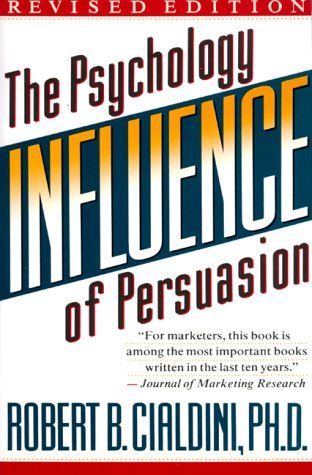
Nova: In many crucial ways, perhaps not as much as your conscious mind believes. Today, we're diving into this fascinating and sometimes unsettling truth, drawing insights from the profound ideas presented in "The Subtle Art of Influence: Mastering Persuasion in a Complex World." It's a journey informed by foundational works like Robert Cialdini's "Influence" and Daniel Kahneman's "Thinking, Fast and Slow."
Atlas: I’ve heard those names. Cialdini the persuasion guru, and Kahneman, the Nobel laureate. That’s some serious intellectual firepower.
Nova: Absolutely. Cialdini, a social psychologist, famously went undercover, immersing himself in sales and marketing roles to understand influence tactics from the inside out. His firsthand observations gave his work an incredible, street-level authenticity. Kahneman, on the other hand, is a Nobel laureate in Economic Sciences, whose groundbreaking research fundamentally reshaped our understanding of human rationality, proving that even the most brilliant minds are susceptible to cognitive biases. Their combined insights offer both the practical 'how' and the scientific 'why.'
Atlas: That’s a powerful combination! It makes me wonder, if these forces are so invisible, how do we even begin to spot them?
Nova: That’s exactly where we begin. We’re going to unmask what we call "The Hidden Architects of Our Choices: Unmasking the Blind Spot."
The Hidden Architects of Our Choices: Unmasking the Blind Spot
SECTION
Nova: Our core contention is that we often assume our decisions are purely rational, logical computations. But human behavior, and thus human decision-making, is actually deeply rooted in unconscious biases and psychological triggers. This is our blind spot. We're often on autopilot, and that autopilot has a powerful, hidden influence.
Atlas: Okay, but it feels like thinking is just… thinking. How do these 'unconscious biases' actually work? Can you give us an example that really hits home for our listeners who are navigating complex decisions daily?
Nova: Think about Daniel Kahneman's groundbreaking work on System 1 and System 2 thinking. System 1 is our fast, intuitive, emotional, almost automatic way of thinking. It's what allows you to instantly recognize a friend's face or quickly solve 2+2. It’s efficient, but it’s also prone to biases and shortcuts.
Atlas: Oh, I like that. So, System 1 is my gut reaction, my instinct.
Nova: Exactly. Now, System 2 is your slower, more deliberate, logical, and effortful thinking. That's when you're calculating a complex math problem, trying to plan a complicated trip, or consciously weighing the pros and cons of a major life decision. It requires mental energy. The blind spot comes in because our System 1 is running almost constantly, making snap judgments, and often, we don't engage our System 2 enough to check those judgments.
Atlas: So, our gut reactions are often System 1. But it feels like that's just… how we think. How does this 'blind spot' actually lead us astray, especially for someone trying to learn new things or make important choices?
Nova: Let’s consider a classic case: first impressions. When you meet someone new, your System 1 quickly assesses their appearance, demeanor, and a few initial words. It immediately constructs a narrative about them – are they trustworthy? Competent? Friendly? This happens in milliseconds, often before your System 2 has even had a chance to logically process their actual qualifications or character.
Atlas: That happens to me all the time! I’ll meet someone, and within seconds, I just 'know' if I like them or not.
Nova: And that 'knowing' is System 1 at work. It's efficient, saving cognitive energy. But it can also lead to biases like the halo effect, where if you like one aspect of a person, you unconsciously attribute other positive qualities to them, even without evidence. Your System 1 is creating a consistent, easy-to-process story, and your System 2 rarely steps in to challenge it unless prompted. That’s the blind spot in action – assuming our initial, rapid judgment is accurate, when it's just System 1 being efficient.
Atlas: That’s wild! So, we're essentially on autopilot a lot of the time, and that autopilot has its own agenda, often based on these quick, sometimes flawed, assessments.
The Six Levers of Persuasion & The Two Systems of Thought: How Influence Really Works
SECTION
Nova: Precisely. And once you understand that autopilot, you start to see how others subtly engage with it. Which brings us to Robert Cialdini's six universal principles of persuasion. Think of them as the operating manual for influencing that very System 1 we just discussed.
Atlas: The operating manual? Lay it on me. For our curious listeners, what are these levers that people are pulling, often without us even knowing?
Nova: Cialdini identified six powerful principles: reciprocity, commitment and consistency, social proof, authority, liking, and scarcity. Each one taps into a fundamental human tendency, often bypassing our logical System 2 and going straight for System 1's shortcuts.
Atlas: Give me an example. How does reciprocity, for instance, play out in the wild?
Nova: Reciprocity is simple: we feel obliged to return favors, gifts, or acts of kindness. Think of those free samples at the grocery store. You try a piece of cheese, and suddenly, you feel a subtle urge to buy the whole block, even if you weren't planning to. Your System 1 registers a gift, and the social norm of returning a favor kicks in, often before your System 2 can logically question if you actually need that cheese.
Atlas: Oh, I’ve definitely fallen for the free sample trap! So, it’s like a subconscious debt. What about social proof? That one sounds like peer pressure.
Nova: It is, in a way, but far more pervasive. Social proof is our tendency to look to others to determine correct behavior, especially when we're uncertain. That "best-seller" sticker on a book? It's not just an award; it's social proof. Our System 1 thinks, "If everyone else is buying it, it must be good," saving us the effort of a deep dive into reviews or content. Or a long queue outside a restaurant – we assume it must be amazing, even if we know nothing about the food.
Atlas: Wow, it's like these are hardwired into us. So, how do these connect back to Kahneman's System 1 and System 2? Is it mostly System 1 that these principles are targeting?
Nova: Absolutely. Cialdini's principles are so powerful precisely because they often bypass System 2's critical analysis and directly activate System 1's shortcuts and emotional responses. Take scarcity, for example: "Limited time offer!" or "Only 3 left in stock!" This triggers an immediate, emotional 'fear of missing out' – a System 1 reaction – rather than a logical evaluation of the item's true worth or your actual need for it. Your brain goes into 'act now or lose out' mode, overriding a more deliberate System 2 assessment.
Atlas: So, if we're not careful, we're just reacting to these triggers, letting our System 1 make decisions that our System 2 might regret. It's like our brains are running on default settings designed for efficiency, not always for optimal outcomes. That's a bit unsettling.
Synthesis & Takeaways
SECTION
Nova: Precisely. The profound insight here isn't just that influence exists, but that it's deeply woven into our cognitive architecture. Recognizing these underlying psychological mechanisms, both the blind spots of System 1 and the levers of persuasion, isn't about learning to manipulate others. It's fundamentally about empowering ourselves to be more conscious, intentional decision-makers.
Atlas: Empowering ourselves... I like that. For our listeners who are passionate about learning and deep thinking, this isn't just academic. It's about taking back control of our own decision-making and understanding the world around us with greater clarity. It's about recognizing the subtle nudges we encounter daily.
Nova: Absolutely. Nova's Take was that recognizing these mechanisms empowers you to communicate more effectively and build stronger, more authentic connections. It's about engaging your System 2 more often, pausing before reacting, and asking: "Why am I feeling this urge? Is this a rational choice or a triggered response?" It's about developing a kind of meta-awareness about your own thinking.
Atlas: That's a fantastic call to action for anyone who wants to be a more conscious learner and decision-maker. It’s about becoming a more discerning individual in a world full of attempts at influence.
Nova: Indeed. So, we leave you with this deep question: where in your daily interactions do you see these subtle principles of influence at play, and how might you use them more consciously, both to protect your own choices and to communicate more ethically?
Atlas: A truly powerful thought to end on, encouraging us all to look closer at the unseen forces around us.
Nova: This is Aibrary. Congratulations on your growth!