

The Invisible Threads: Mastering Influence Without Manipulation.
Golden Hook & Introduction
SECTION
Nova: Atlas, I've got a challenge for you. We're talking today about "influence without manipulation." Give me your five-word review of that concept. Go.
Atlas: Oh, five words? Hmm. "Sounds impossible, tell me more."
Nova: Exactly! That's the perfect skeptical but curious entry point. Because for so long, influence has been synonymous with, well, manipulation. But today, we're diving into two brilliant minds who cracked the code on true, ethical influence.
Atlas: And these aren't just boardroom theories, are they?
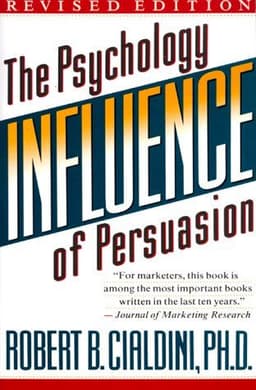
Nova: Far from it! We're talking about Robert Cialdini, author of "Influence," who, get this, spent years infiltrating sales organizations, advertising firms, and fundraisers as an undercover researcher. He wasn't just observing from an ivory tower; he was on the ground, witnessing persuasion tactics firsthand.
Atlas: Wow. So he was like the James Bond of social psychology?
Nova: Precisely! And then we have Chris Voss, author of "Never Split the Difference," who literally was the lead international hostage negotiator for the FBI. Imagine the stakes there! His insights come from life-or-death situations. This isn't about selling a used car; it's about saving lives.
Atlas: That's incredible. So one's a deep academic dive with real-world undercover work, and the other is high-stakes, real-time application. That's a powerful combination.
Nova: Absolutely. And the core of our podcast today is really an exploration of how true influence is not about wielding power, but about deeply understanding human nature to build trust and achieve alignment. Today we'll dive deep into this from two perspectives. First, we'll explore the foundational psychological principles that drive ethical influence, then we'll discuss how empathy and active listening can transform even the most challenging negotiations into opportunities for connection.
The Six Pillars of Ethical Influence
SECTION
Atlas: That makes me wonder, how do Cialdini's academic insights, even from his undercover days, actually apply to someone in a leadership role today, someone trying to build a culture or inspire a team? Are these principles still relevant?
Nova: They are more relevant than ever, Atlas, because they tap into universal human psychology. Cialdini distilled six principles, but let's zero in on two that are particularly potent for building trust: Reciprocity and Social Proof.
Atlas: Okay, Reciprocity. That sounds straightforward: you do something for me, I do something for you. But how does that play out in a subtle, non-manipulative way?
Nova: Imagine the Hare Krishna groups back in the day. They would approach people in airports, hand them a 'free' flower, and then ask for a donation. Now, many people didn't want the flower, but once they had it, they felt an almost irresistible urge to give something back. That's reciprocity at play. The initial unsolicited gift creates a subtle but powerful feeling of obligation.
Atlas: Oh, I see. It's not about a direct exchange, but that feeling of indebtedness, even for something you didn't ask for. For a leader, then, it's about genuinely giving value first, without immediate expectation.
Nova: Exactly. It could be offering mentorship without being asked, sharing valuable insights, or even just genuinely listening to a concern before you ever ask for a commitment. You're building a bank of goodwill. It's about being the first to give, and giving genuinely.
Atlas: I can definitely relate to that. It's like when a colleague goes out of their way to help you with a project, you naturally feel more inclined to assist them later, even if it's outside your immediate scope. What about Social Proof?
Nova: Social Proof is fascinating because it leverages our innate tendency to look to others for cues on how to think, feel, and act, especially when we're uncertain. Think about a nightclub. If there's a long queue outside, even if the club inside isn't full, people perceive it as desirable and want to get in. The queue itself creates the demand.
Atlas: That's so true. Or even online reviews. We trust what other people say, sometimes more than the company itself.
Nova: Absolutely. For a talent whisperer or an architect of culture, this means highlighting the positive actions and successes of others. It's not just saying "our company is great"; it's showcasing team members who embody the values, sharing success stories, or celebrating milestones publicly. When people see others they respect doing something, they are far more likely to follow suit.
Atlas: So it's about making the desired behavior visible and celebrated. But what's the line between showing what others are doing and making people feel pressured or like they're just conforming?
Nova: That's where the "ethical" part comes in. You're not fabricating success or coercing participation. You're simply shining a light on genuine, positive examples. The intention is to inspire, not to manipulate. You're providing a model, not a command. It's about genuine understanding of what motivates people, not tricking them. This helps build resilient, high-performing structures where people to contribute.
Empathy-Based Negotiation: Beyond the Battlefield
SECTION
Nova: And that naturally leads us to the second key idea we need to talk about, which often acts as a powerful, practical application of understanding human nature in the most intense scenarios: Chris Voss's empathy-based negotiation.
Atlas: High-stakes negotiation. That sounds like something out of a movie. I imagine a lot of our listeners, especially those building cultures or managing complex teams, think of negotiation as a confrontational battle. How does 'empathy' fit into that?
Nova: Well, Voss completely reframes it. He argues that the goal isn't to win by force, but to win by understanding. His core philosophy, born from his FBI hostage negotiation days, is about tactical empathy. It's not about agreeing with someone, but about understanding their perspective, their emotions, and their underlying drivers so deeply that they feel heard.
Atlas: Okay, but how does that play out in a real-life, high-pressure situation? Like, a bank robber with a gun, how do you empathize with that?
Nova: Voss recounted a situation where he was negotiating with a bank robber who had hostages. The robber was agitated, making demands. Instead of arguing or commanding, Voss used what he calls "mirroring"—simply repeating the last few words the robber said—and "labeling" his emotions. He'd say things like, "It sounds like you're feeling frustrated," or "It seems like you're worried about X."
Atlas: And that actually worked? My intuition tells me that would just make them angrier.
Nova: Interestingly, it often has the opposite effect. When the robber heard his own emotions and words reflected back to him, without judgment, he started to elaborate. He felt. That feeling of being heard, even by an adversary, is incredibly powerful. It de-escalates tension and opens up channels for communication that were previously shut down by defensiveness. It creates a space where a solution can emerge.
Atlas: That gives me chills. So it's not about being soft or capitulating; it's a strategic tool to gain information and build rapport, even in extreme cases. For someone in organizational design, trying to build resilient structures, or a talent whisperer having a tough conversation with a high-potential employee, how do you apply this?
Nova: It’s absolutely critical. When you're dealing with a difficult stakeholder or a team member who's resistant to change, your first instinct might be to present data or logic. Voss would say, pause. Instead, listen actively. Ask open-ended questions like, "What about this situation is important to you?" or "It sounds like you're concerned about X." Then, mirror their words, label their emotions.
Atlas: So, if someone says, "This new process is a waste of time," instead of arguing, you might say, "A waste of time. It sounds like you're worried about efficiency?"
Nova: Precisely! And then you let them talk. They might reveal that their concern isn't about efficiency at all, but about job security, or a past negative experience. That's the gold. Once you understand the underlying concern, you can address it, and suddenly, you're not battling; you're problem-solving together. It builds trust and connection, which is essential for sustainable growth and a healthy culture.
Synthesis & Takeaways
SECTION
Nova: So, whether we're looking at Cialdini's academic insights into the foundational triggers of persuasion or Voss's street-smart, high-stakes negotiation tactics, the common thread is clear: true influence is deeply rooted in understanding human psychology.
Atlas: It's not about forcing people to do what you want, but about creating an environment where they to align with your vision because they feel seen, heard, and valued. It's about building trust, not just making demands.
Nova: Exactly. As an architect of cultures or a talent whisperer, your power doesn't come from your position, but from your ability to genuinely connect. It's about making your vision resonate so deeply that others to follow, not because they have to, but because they understand and believe in it. It’s the difference between temporary compliance and lasting commitment.
Atlas: That’s actually really inspiring. It transforms influence from something transactional into something relational and profoundly human.
Nova: It truly does. So, for our listeners today, here’s a tiny step you can take: In your next significant conversation, consciously apply just one of these principles. Maybe it's Cialdini's reciprocity – genuinely offer value first. Or perhaps it's Voss's tactical empathy – actively listen, mirror, and label the other person’s emotions to truly understand their perspective.
Atlas: And do it not just to 'win' the conversation, but to genuinely understand, connect, and build that deeper trust. That's how you build resilient, high-performing teams and cultures.
Nova: Absolutely. Understanding is the ultimate leverage.
Atlas: This is Aibrary. Congratulations on your growth!