

The Invisible Threads: Mastering Influence Without Manipulation.
Golden Hook & Introduction
SECTION
Nova: Atlas, what is the very first thing that pops into your mind when I say the word "influence"?
Atlas: Oh, man. Immediately, I think of that slightly greasy car salesman, or maybe a politician with a perfectly curated smile. Not exactly warm and fuzzy. It often feels a bit… manipulative, doesn't it?
Nova: Absolutely! That's the common perception, isn't it? We associate influence with coercion, with people trying to get us to do something we don't want to do. But what if I told you that true influence is actually the opposite? That it's about deeply understanding human nature, building trust, and creating such genuine connection that people to follow your vision?
Atlas: Now that's a different tune! So you're saying we can become these masterful persuaders without feeling like we're wearing a disguise or, you know, selling snake oil?
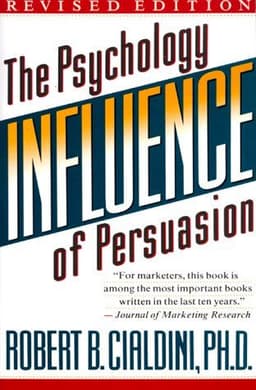
Nova: Precisely! And we’re diving into that fascinating duality today, drawing insights from two titans in the field: Robert Cialdini's groundbreaking work, "Influence," and the tactical genius of Chris Voss in "Never Split the Difference." It's a powerful combination.
Atlas: Cialdini, the academic who went undercover, right?
Nova: That’s him! Robert Cialdini, a social psychologist, literally spent years embedding himself in various "compliance professions"—from door-to-door sales to fundraising organizations. He wanted to understand, from the inside out, people say yes. It’s an incredible testament to his dedication to real-world observation. And then you have Chris Voss, a former FBI hostage negotiator, who brings this intense, high-stakes, life-or-death experience to the art of communication.
Atlas: Wow. So one's observing human behavior in the wild, and the other is actively shaping it in the most extreme scenarios. That’s a powerful pairing.
Nova: Exactly! The core of our podcast today is really an exploration of how to master influence not through coercion, but through a profound understanding of human nature and genuine connection. Today we'll dive deep into this from two perspectives. First, we'll explore the underlying psychological principles that shape human decisions, then we'll discuss the art of empathy-based negotiation to transform conflict into collaboration.
The Six Principles of Influence: Ethical Persuasion through Psychology
SECTION
Nova: So, let's start with Cialdini and his six universal principles of persuasion. These aren't tricks; they're deeply embedded psychological shortcuts we all use to navigate a complex world. Understanding them is like having a map to human decision-making.
Atlas: Okay, but how are these not "mind games"? When I hear "principles of persuasion," my inner skeptic immediately flags it as something that can be easily abused. I imagine a lot of our listeners, especially those who prioritize building trust in their organizations, might feel the same way.
Nova: That’s a fantastic point, and it’s the crucial distinction. The principles themselves are neutral; their ethical application depends entirely on intent. Let’s take reciprocity as an example. It's the impulse to return a favor or a gift. Cialdini recounts this fascinating case study of the Hare Krishna movement.
Atlas: Oh, the airport flower thing!
Nova: Exactly! In the 70s, they had this strategy where members would approach travelers in airports, give them a flower, and then ask for a donation. Most people, even if they didn't want the flower, felt an immediate, often uncomfortable, obligation to give something in return.
Atlas: So, they were leveraging that ingrained human need to pay back. That's actually really clever, but it still feels a bit… forced.
Nova: Right, because the flower was unsolicited. But imagine this in an ethical context: a leader who genuinely invests in their team's development, offering mentorship, resources, and support without an immediate expectation of return. When that leader later asks for extra effort on a critical project, the team's willingness to reciprocate comes from a place of genuine goodwill, not manipulation. It’s about building a bank of trust.
Atlas: I see. So it’s not about giving a flower to get a donation, it’s about genuinely investing in relationships, which then naturally fosters a desire to give back. That resonates with anyone trying to build a strong, cohesive team culture, where trust is paramount.
Nova: Absolutely. Another powerful one is social proof. We tend to look to others to determine appropriate behavior, especially when we're uncertain. Think about those hotel signs that say, "75% of guests reuse their towels."
Atlas: Oh, I've seen those! And I always think, "Well, if everyone else is doing it…"
Nova: Exactly! It’s far more effective than just saying "Please reuse your towels for the environment." The social proof taps into our fundamental need to belong and to make socially acceptable decisions. In a leadership context, if you want a new initiative to gain traction, highlighting how other successful teams or individuals are already embracing it can be incredibly powerful. It normalizes the behavior.
Atlas: So, for leaders trying to introduce a new process or technology, it’s not just about explaining its benefits, but showing how others are already successfully using it. That makes sense. It builds confidence. But what about authority? That one feels inherently prone to misuse.
Nova: It can be, but again, intent is key. We're wired to defer to credible authorities. Cialdini points to studies where people would follow a doctor's incorrect instructions, even when they knew it was wrong, simply because of the white coat and perceived expertise. The ethical application is about and your expertise and credibility transparently.
Atlas: So, it’s not about pulling rank, but about demonstrating genuine knowledge and experience, allowing people to trust your judgment. For someone in a strategic role, that's incredibly important – people need to trust your vision, not just follow orders. It’s about being a talent whisperer, not a dictator.
Nova: Exactly. These aren't about tricking people; they're about understanding the underlying psychological currents that guide human behavior. When used ethically, they move beyond simple persuasion to building genuine alignment and connection.
Empathy-Based Negotiation: Building Rapport for Win-Win Outcomes
SECTION
Atlas: So, if Cialdini gives us the map of how people make decisions, how do we then navigate those conversations, especially when stakes are high or opinions diverge? Because understanding someone might say yes is one thing, but getting them to truly and collaborate, especially when there's conflict, feels like another challenge entirely.
Nova: That’s where Chris Voss and his concept of "tactical empathy" come into play. Voss, from his FBI hostage negotiation days, realized that the traditional, adversarial approach to negotiation often fails. His breakthrough insight was that the most powerful tool isn't logical argument, but deep, active listening and understanding the other party's perspective.
Atlas: Tactical empathy. That sounds like a fancy way of saying "be nice." But when you're in a high-pressure situation, like negotiating a critical partnership or mediating a team conflict, "being nice" might feel a bit naive. What does it actually like?
Nova: It’s far from naive; it’s incredibly strategic. Voss teaches that you don't have to with someone's perspective to understand it. Tactical empathy is about verbally demonstrating that you comprehend their feelings and their worldview. He uses techniques like "mirroring," simply repeating the last few words someone said, and "labeling," which is articulating the other person's emotions.
Atlas: Wait, so just repeating their words? Like, if someone says, "I'm really frustrated with this project timeline," I just say, "Project timeline"?
Nova: Precisely! It sounds almost too simple, doesn't it? But it's profoundly effective. When you mirror, it encourages them to elaborate, to feel heard, and to self-correct if they miscommunicated. And labeling their emotions—"It sounds like you're frustrated," or "It seems like you're feeling undervalued"—does something even more powerful. It disarms them. It tells them, "I see you, I hear you."
Atlas: That’s actually really insightful. I imagine a lot of our listeners, those building cultures and leading teams, often face situations where people feel unheard. This isn't about agreeing, it's about validating their experience. It builds rapport, which is essential for sustainable growth and trust.
Nova: Exactly. Voss emphasizes that people don't want to be as much as they want to be. When you label their emotions, even if you’re wrong, they’ll correct you, and in doing so, they provide more information. It's a goldmine for understanding their true motivations and fears. He gives this powerful example of negotiating with a bank robber. The robber is demanding money, but by labeling their fear of going back to prison, Voss can shift the conversation from the demand to the underlying fear, opening up new solutions.
Atlas: So, instead of just arguing against the demand, you're addressing the deeper human need. That's a huge shift from traditional negotiation, which often feels like a battle of wills. It’s about building a bridge, not a wall.
Nova: It is. And it directly addresses the user profile's desire for human connection and building trust. Voss's methods turn confrontation into collaboration because you're working their perspective, not against it. You're not manipulating them; you're helping them articulate their needs so you can find a solution that works for everyone.
Atlas: That gives me chills, honestly. It takes the perceived "dark art" of negotiation and transforms it into a profound act of human connection. It's about seeing the person, not just the position.
Synthesis & Takeaways
SECTION
Nova: So, bringing Cialdini and Voss together, we see that true influence is this beautiful dance between understanding the psychological undercurrents that move people and then actively engaging with them through deep empathy and communication.
Atlas: It's like Cialdini gives us the blueprint of human behavior, showing us the levers, and Voss hands us the tools to engage those levers with genuine care and understanding. It transforms influence from a transactional act into a relationship-building one.
Nova: Absolutely. It’s about moving beyond the idea of "winning" an argument or "getting your way" to creating mutual understanding and alignment. The goal isn't to force someone into your vision, but to help them see how their own needs and values can be met within that vision. This profound insight is critical for anyone who strives to build resilient, high-performing structures and scale with intention.
Atlas: That’s a powerful reframing. For our listeners who are architects of cultures and talent whisperers, the tiny step here is so clear: in your next significant conversation, consciously apply just one of these principles. Maybe it’s mirroring, or perhaps it’s actively looking for social proof or genuine reciprocity.
Nova: Precisely. Focus on genuine understanding rather than just presenting your argument. You'll not only achieve better outcomes, but you'll also deepen trust and connection, which is the bedrock of any truly impactful leadership.
Atlas: That's a challenge I think we can all take on. It’s about moving from a mindset of persuasion as a battle to one of influence as a collaborative journey.
Nova: Indeed. What a journey it is.
Atlas: It really is.
Nova: This is Aibrary. Congratulations on your growth!