

The Invisible Threads: Mastering Influence Without Manipulation.
Golden Hook & Introduction
SECTION
Nova: Atlas, what do you know about true influence? Like, really, truly influencing people?
Atlas: Oh, I thought that was just about having the loudest voice in the room, or maybe the most aggressive LinkedIn profile. Am I wrong? Because if so, a lot of my strategy is about to fall apart.
Nova: You are wonderfully, hilariously wrong, my friend. And that's exactly why we're diving into a topic today that's foundational for anyone who wants to build, lead, and connect: "The Invisible Threads: Mastering Influence Without Manipulation."
Atlas: Invisible threads? That sounds like something out of a spy novel. I'm intrigued.
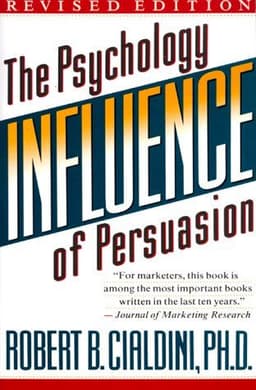
Nova: It's more profound than that. We're talking about the deep psychological currents that run through every human interaction. And our insights today come from two absolute giants in the field. First up, we have Robert Cialdini, author of "Influence." He's a social psychologist whose work isn't just theory; he spent years going undercover in sales organizations to see how persuasion actually works in the real world.
Atlas: Undercover? That's commitment. So, he's basically the James Bond of persuasion?
Nova: In a tweed jacket, perhaps. And then, we'll pivot to Chris Voss, whose book "Never Split the Difference" changed the game for negotiation. Voss wasn't just a theorist; he was the lead international hostage negotiator for the FBI, where miscommunication literally had life-or-death consequences. These aren't just academic concepts; they're battle-tested strategies.
Atlas: Wow. So we're talking about psychological blueprints and actual high-stakes, real-world application. This isn't about convincing someone to buy a pen, is it?
Nova: Far from it. This is about building trust, fostering connection, and making your vision resonate so deeply that others to follow. It's about how to lead without coercion, how to guide without micromanaging. And Cialdini gives us the foundational knowledge, the psychological architecture, if you will, of how influence truly operates.
The Six Principles of Ethical Influence (Cialdini)
SECTION
Nova: Cialdini breaks down influence into six universal principles. And the first one is Reciprocity. This is a deep-seated human instinct. If I give you something, you feel a strong, often unconscious, urge to give something back.
Atlas: Okay, but how does that manifest beyond, you know, returning a favor? Like, if I send someone a Christmas card, do they suddenly want to invest in my startup?
Nova: Not quite so directly, Atlas, though that's a fun image! Cialdini actually did a fantastic study where he sent Christmas cards to a random group of strangers. To his surprise, a significant number of people sent cards back. They had no idea who he was, but the principle of reciprocity was so strong, they felt compelled to reciprocate the gesture. It's not about a direct transaction; it’s a subtle, almost automatic human response.
Atlas: That's incredible. So it's not even about consciously thinking, "Oh, I owe them." It's just... a feeling?
Nova: Exactly. It's about genuine giving value first. In a professional context, it’s about being truly helpful, sharing your expertise, offering support without expecting an immediate return. Think about a leader who consistently champions their team members, provides mentorship, or goes above and beyond to remove obstacles. That leader builds immense loyalty because their team feels a reciprocal desire to support them. It's building trust through consistent, authentic generosity.
Atlas: I guess that makes sense. For anyone trying to build a strong culture, it's not about demanding loyalty, it's about earning it through consistent, genuine investment in your people.
Nova: Precisely. And that leads us to the principle of Liking. It's simple, but profoundly powerful: we are far more likely to be influenced by people we like.
Atlas: But how do you genuinely cultivate "liking" without it feeling superficial or like you're just trying to be everyone's best friend? Especially for someone who's strategic, focused on impact and building resilient structures, not just popularity.
Nova: That's a great question because it’s not about being fake. Cialdini identifies three key factors: similarity, compliments, and cooperation. We like people who are similar to us, who pay us genuine compliments, and who cooperate with us towards a common goal. Think about a leader who genuinely seeks common ground, who acknowledges successes sincerely, and who fosters a sense of shared mission. That builds genuine liking, which then opens the door for influence.
Atlas: So, it's not about forced smiles, but finding common ground, acknowledging contributions, and truly working together. That resonates with someone who values human connection and building trust.
Nova: Absolutely. And a quick one is Social Proof. We tend to follow the lead of others, especially when we're uncertain. If everyone else is doing it, it must be right, right?
Atlas: But wait, looking at this from a strategic perspective, isn't that risky? Blindly following social proof can lead to groupthink or missing innovative opportunities. What about when the crowd is wrong?
Nova: That's the critical nuance! Social proof is powerful, but it's a heuristic, a mental shortcut. It's why product reviews matter, why testimonials are effective. But as you rightly point out, true leaders, true architects of culture, understand to leverage social proof and to challenge it. It's about discerning when the collective wisdom is genuine and when it's just herd mentality. It adds a layer of critical thinking to the process.
Empathy-Based Negotiation and Active Listening (Voss)
SECTION
Nova: So, while Cialdini gives us these incredible psychological blueprints for understanding how influence works, sometimes you're not just trying to build consensus, you're in a situation where the stakes are high, emotions are running hot, and you need to de-escalate, to truly connect. That's where Chris Voss steps in with his revolutionary approach to negotiation.
Atlas: And this is the former FBI hostage negotiator, right? I can't imagine a higher-stakes environment than that.
Nova: Exactly. Voss’s core philosophy is what he calls "tactical empathy." It’s not about agreeing with the other side; it's about understanding their perspective so deeply that they understood. This isn't about being nice; it's about gaining information and influencing outcomes by disarming the other party.
Atlas: Tactical empathy. That sounds like a contradiction in terms. How can empathy be a tactic? I always thought empathy was just… feeling what someone else feels.
Nova: That’s the brilliance of it. It’s not about their pain; it’s about that you understand their pain, their fears, their desires. One of his simplest yet most powerful techniques is "mirroring." It’s incredibly simple: you just repeat the last one to three words someone said.
Atlas: Wait, so you're saying just repeating what someone says back to them can actually disarm them? That sounds a bit out there. Wouldn't they just think I'm mocking them, or that I wasn't listening?
Nova: It’s counterintuitive, but it works precisely because it forces the other person to elaborate without feeling interrogated. Imagine a tense negotiation: someone says, "We just can't afford that proposal." You respond, "Can't afford that proposal?" They almost automatically feel compelled to explain they can't, giving you invaluable information you wouldn't have gotten otherwise. It makes them feel heard, which is a fundamental human need. It builds rapport by giving them space to talk, not by you talking more.
Atlas: Huh. So it’s less about asserting your position and more about actively creating an environment where the other person feels safe enough to reveal theirs. That makes me wonder, how does this apply to building trust and connection within a team, especially for a leader who values human connection and is building cultures?
Nova: It's incredibly powerful there. Another Voss technique is "labeling" – articulating what you perceive the other person is feeling. "It seems like you're frustrated with this deadline," or "It sounds like you're concerned about the resources." When you label an emotion, you bring it into the light, and often, that alone defuses its power. It creates a space for them to confirm or correct you, deepening understanding. For a talent whisperer, this is gold. It’s how you get to the root of team conflicts or individual performance issues. Instead of assuming, you're inviting them to share their truth.
Atlas: That's actually really inspiring. It transforms what could be a confrontational moment into an opportunity for genuine connection and problem-solving. It's about building bridges, not just winning arguments.
Synthesis & Takeaways
SECTION
Nova: Exactly. When you look at Cialdini and Voss together, you see this incredible synergy. Cialdini gives us the underlying psychological triggers that move people, the invisible threads that are always there. Voss gives us the practical, real-time communication tools to navigate those threads, especially in complex, high-stakes conversations. Both fundamentally underscore that true influence isn't about manipulation or force, but about understanding human psychology, building genuine connection, and making your vision resonate so deeply that others to be part of it.
Atlas: It’s about building cultures, not just products. It’s about sustainable growth that comes from genuine alignment, not just compliance. This is about being a true architect of connection.
Nova: Precisely. And for anyone listening today who's thinking, "Okay, this sounds great, but where do I start?" here's a tiny step. In your very next significant conversation – whether it's with a team member, a client, or even a family member – consciously apply just one of these principles. Maybe you try mirroring, repeating the last few words to encourage elaboration. Or perhaps you focus on genuine reciprocity, offering value without immediate expectation.
Atlas: Or even just actively listening, truly hearing what your team or market is saying, as we often recommend. Trust your intuition, but combine it with these proven, data-driven psychological insights.
Nova: Absolutely. It transforms every interaction from a potential transaction into a genuine partnership. When you master these invisible threads, you're not just persuading; you're connecting, you're inspiring, and you're building something truly lasting.
Atlas: That's a powerful thought to end on. It shows that the deepest impact comes from the deepest understanding.
Nova: This is Aibrary. Congratulations on your growth!