

The Invisible Hand of Influence: Mastering Social Dynamics for Leadership
Golden Hook & Introduction
SECTION
Nova: Atlas, I was today years old when I realized that the reason some brilliant strategies fail isn't because they're bad plans, but because the people executing them aren't truly invested. It's like having a Formula 1 car but no one in the pit crew believes in the driver.
Atlas: Oh, I love that analogy, Nova! That hits home for anyone who's ever seen a perfectly logical plan crumble because of human resistance. It's infuriating, right?
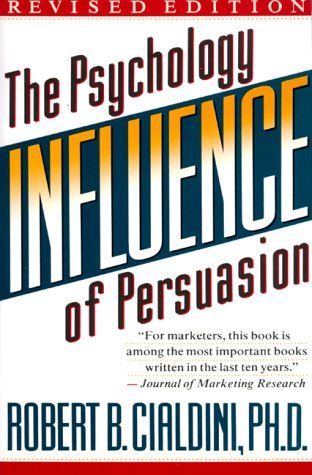
Nova: Absolutely. And that's exactly what we're tackling today. We're diving into 'The Invisible Hand of Influence: Mastering Social Dynamics for Leadership.' Today, we're unlocking that secret formula by dissecting two titans of influence: Robert Cialdini's 'Influence: The Psychology of Persuasion' and Simon Sinek's 'Start with Why.' Cialdini, a renowned social psychologist, didn't just theorize about persuasion; he spent years undercover, immersing himself in sales organizations and fundraising groups to observe influence in action, giving his work an unparalleled real-world grounding. It's not just theory; it's observed reality.
Atlas: Wow, that’s impressive dedication. So he was basically a spy for science, figuring out what makes people tick. And Sinek, of course, is a household name for anyone looking to inspire.
Nova: Precisely. And this leads us straight into our first core idea: the critical 'blind spot' in leadership.
Unmasking the Blind Spot: The Hidden Psychological Forces in Leadership
SECTION
Nova: Many brilliant leaders, the ones who ace strategy and analytics, often completely miss the subtle psychological forces at play within their teams. They focus on the 'what' and 'how,' but not the 'who' and 'why' people behave the way they do.
Atlas: That makes me wonder, isn't that just 'soft skills'? Something often dismissed in fast-paced, results-driven environments?
Nova: It's often mislabeled, Atlas. It's not 'soft'; it's fundamental. Think of it this way: a leader might roll out a new initiative, let's say, a mandatory new software system. Logically, it’s superior, more efficient. But the team drags its feet, resistance builds, and eventually, the project founders.
Atlas: Oh, I've been there. The 'why' behind the resistance often feels like a mystery. You've given them all the facts!
Nova: Exactly! The leader's blind spot is failing to recognize the deeper psychological currents. For instance, the team might perceive the new software as a threat to their job security, or a critique of their current methods, even if that's not the intention. Or perhaps they weren't consulted, leading to a feeling of disrespect and lack of ownership.
Atlas: So, it's not the software itself, but the human reaction to change, and specifically, the way that change was introduced.
Nova: Precisely. Cialdini's principle of 'Liking' comes into play here. If the team doesn't 'like' or trust the person introducing the change, or feels alienated from the process, their resistance will be higher, regardless of the logical merits. A leader who overlooks this is essentially trying to steer a ship by only looking at the sails, ignoring the currents beneath.
Atlas: That's a great analogy. So, the blind spot is thinking logic alone will win the day, when in reality, it's the underlying human psychology that dictates the true outcome. It’s like, you can have the best plan for a building, but if you don't understand the soil it sits on, it's all going to collapse.
The Architects of Influence: Principles for Inspiring Buy-in
SECTION
Nova: Beautifully put, Atlas. And that understanding of the 'soil' leads us directly to our second core idea: the architects of influence. How do we move beyond just avoiding the blind spots and actively build inspiration?
Atlas: Okay, so we've identified the problem. Now, what are the tools for the solution? How do we become those architects?
Nova: This is where Cialdini's six universal principles of persuasion become incredibly powerful, especially when combined with Sinek's 'Start with Why.' Let's take 'Social Proof' for instance. If everyone else is doing it, we're more likely to follow. A leader can leverage this ethically by showcasing early adopters and positive outcomes from within the team, instead of just mandating change from the top.
Atlas: So, instead of saying, 'You must use this new system,' it's more like, 'Look at how Sarah's team saw a 15% efficiency boost using this new system.'
Nova: Exactly! And 'Commitment and Consistency' is another gem. People prefer to be consistent with what they've already said or done. If you can get small, voluntary public commitments from your team members, they're far more likely to follow through on larger related actions.
Atlas: That makes sense. It's like if you get someone to agree to a small favor, they're more likely to agree to a bigger one later. You're building momentum.
Nova: And then there's Sinek's 'Start with Why.' This isn't about manipulation; it's about inspiration. Leaders who communicate their purpose first—the 'why' behind what they do—tap into deeper motivations. Think of Apple. They didn't sell computers; they sold challenging the status quo, thinking differently. People bought into the 'why,' not just the 'what.'
Atlas: So, instead of just rolling out the new software system, you'd explain why this system matters. What's the bigger purpose it serves for the team, for the company, for the customer? It's about connecting to something bigger than the task itself.
Nova: Precisely. You shift from a directive 'do this' to an inspiring 'join us because this is what we believe, and this is how we'll achieve it together.' When you combine Cialdini's principles, which give you the 'how' of influence, with Sinek's 'why,' you're not just moving people; you're moving them towards a shared vision they genuinely believe in.
Atlas: That’s actually really inspiring. It’s about building a movement, not just managing a project. It means leaders need to be deeply self-aware about their own 'why' first, before they can even hope to inspire others.
Synthesis & Takeaways
SECTION
Nova: Absolutely, Atlas. The profound insight here is that leadership isn't about barking orders or even just having the smartest strategy. It's about becoming a master of social dynamics, understanding the invisible currents of human psychology. When you ignore these forces, you're constantly fighting an uphill battle against unseen resistance.
Atlas: So, the real power isn't in forcing compliance, but in cultivating genuine buy-in. It's about moving from a leader who directs to a leader who deeply inspires. It's a fundamental shift in mindset.
Nova: Exactly. And the beauty is, these aren't esoteric concepts. They are practical tools. So, for our listeners, here's a challenge: take one of Cialdini's principles—maybe reciprocity, commitment, or social proof—and consciously look for an opportunity to apply it ethically this week.
Atlas: That’s a great, tangible action. Whether it's better inspiring your team or influencing a key stakeholder, just pick one principle and observe the difference it makes. It’s about making the invisible visible.
Nova: And that's how you transform your leadership, one conscious act of influence at a time.
Atlas: Such an insightful discussion, Nova. This is Aibrary. Congratulations on your growth!