

The Invisible Hand of Communication: Decoding Team Dynamics.
Golden Hook & Introduction
SECTION
Nova: Most of us like to believe our team decisions are these perfectly rational, data-driven affairs, right? We gather the facts, we weigh the options, we make the smart choice.
Atlas: Oh, absolutely. That’s the dream, anyway. The whiteboard is full, the coffee is brewing, and logic is our guiding star. But I imagine you’re about to tell me that’s a beautiful fiction.
Nova: It is, Atlas. It's a beautiful, often dangerous fiction. Because beneath that veneer of logic, there's an entire invisible architecture of psychological forces, biases, and subtle influences pulling the strings. We react to what we see, but we entirely miss the deeper, often irrational currents at play.
Atlas: That sounds like a blind spot big enough to derail an entire project. For leaders deeply committed to building strong, connected teams, understanding these hidden mechanisms feels absolutely crucial.
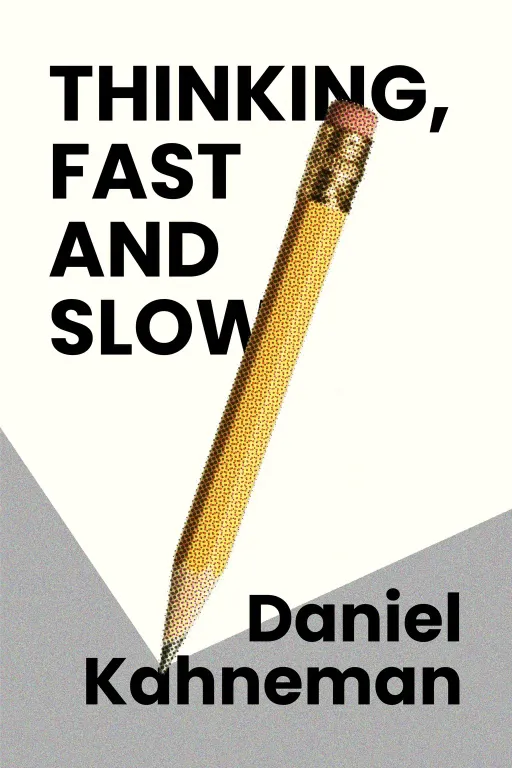
Nova: It is. And that's exactly what we're decoding today. We're pulling back the curtain on how teams truly operate, drawing profound insights from two giants who cracked the code on human decision-making and persuasion. We're talking about Daniel Kahneman's groundbreaking work in "Thinking, Fast and Slow," and Robert Cialdini's seminal "Influence."
Atlas: Oh, I love that pairing. Kahneman, the Nobel laureate who essentially brought psychology into economics, revealing the two systems that drive our minds. And Cialdini, who famously went undercover to study the art of persuasion in the wild. You can't get much more foundational than that for understanding human behavior.
Nova: Exactly. Their work provides the ultimate toolkit for anyone who wants to move beyond surface-level communication and truly understand the unseen cognitive currents influencing how every message is received and every decision is made in a team.
The Invisible Architect: How System 1 Thinking Shapes Team Decisions
SECTION
Nova: So let's start with Kahneman. He gave us this incredibly powerful framework: System 1 and System 2. System 2 is our slow, deliberate, logical, analytical thinking. It's the one we is running the show in our team meetings.
Atlas: Right, the system that crunches numbers, debates pros and cons, and writes comprehensive reports. The one our project plans are theoretically built on.
Nova: Precisely. But System 1? That's our fast, intuitive, emotional, often unconscious thinking. It's the one that jumps to conclusions, makes snap judgments, and operates on gut feelings. And here's the crucial part: System 1 is often the silent architect of our team decisions, even when System 2 it’s in charge.
Atlas: Whoa. So you’re saying that even when we’re sitting around a table, meticulously analyzing a new strategy for, say, a product launch, there’s this hidden, impulsive part of our brain that’s already made up its mind, influencing the 'logical' discussion? That sounds a bit out there. How does that actually play out in a real team meeting?
Nova: Imagine this scenario: a team is tasked with choosing between two potential software vendors for a critical company-wide rollout. Vendor A has a slightly higher price but a flashy, modern interface, and their sales rep was incredibly charismatic. Vendor B is more cost-effective, with robust features, but their demo was a bit clunky, and the rep was dry.
Atlas: Okay, I’ve been in that meeting. Everyone's got their spreadsheets open, talking about ROI and scalability.
Nova: Exactly. But System 1 is already at work. The charisma of Vendor A's rep, the sleekness of their demo – these create an immediate, positive emotional response. It feels 'right.' System 1 loves a good story, a clear, confident presentation. It’s quick to form coherent narratives, even with incomplete information. So, when the team starts discussing, the conversation subtly shifts. People start finding reasons to justify Vendor A, even if the data for Vendor B is objectively stronger. They'll focus on "user experience" over "long-term maintenance costs," not because UX isn't important, but because System 1 has already established a preference.
Atlas: So basically you’re saying the team’s collective System 1 falls in love with the shiny object, and then System 2 spends its time rationalizing that initial gut feeling? That’s kind of heartbreaking, especially for leaders who are trying to foster objective decision-making and avoid costly mistakes. How do you even begin to spot that?
Nova: It’s incredibly subtle. The cause is often an immediate emotional appeal or a compelling, but possibly incomplete, narrative. The process involves System 1 generating a quick, intuitive judgment, and then System 2 being recruited to find logical justifications for that judgment. The outcome? A decision that rational but is built on a foundation of unconscious bias, potentially costing the company more in the long run or leading to a less optimal solution.
Atlas: But hold on. For innovators, sometimes that gut feeling, that intuition, is exactly what sparks creativity. Are we saying all fast thinking is bad?
Nova: Not at all! System 1 is powerful and efficient, essential for quick reactions. The key is awareness. It’s about knowing System 1 is likely to lead us astray, particularly in complex team decisions where the stakes are high. It's about recognizing that initial emotional pull and consciously engaging System 2 to challenge it, rather than just letting it run the show.
The Subtle Strings: Unmasking Persuasion in Team Influence
SECTION
Nova: And this brings us beautifully to our second point, because System 1 isn't just about our biases; it's also highly susceptible to external influences. This is where Robert Cialdini's work on persuasion comes in. He outlined six universal principles that subtly guide how we respond to ideas and requests, often unconsciously.
Atlas: I’m curious, what's a common 'persuasion trick' I might see playing out in my team without realizing it? Because if we’re talking about building truly connected teams, understanding how we influence each other, for better or worse, is essential.
Nova: Let's take 'social proof.' Cialdini found that we're much more likely to agree with an idea or follow a course of action if we see others doing it, especially if those others are similar to us or are in a position of respect.
Atlas: Right, like when everyone in the meeting nods along, even if they have reservations. It's that moment where you think, "Well, if everyone else agrees, it must be right."
Nova: Exactly. Imagine a project team brainstorming solutions for a tricky client problem. One team member, perhaps a respected senior developer, floats an idea. Immediately, a few others chime in with agreement, praising the idea. Suddenly, the initial skepticism from other team members starts to dissipate. They might have had a better, more innovative solution, but the 'social proof' of the early adopters, especially the senior one, creates an almost irresistible gravitational pull.
Atlas: Wow, that’s kind of heartbreaking. So the idea isn't necessarily evaluated on its merits, but on who said it and who agreed first? That sounds like a fast track to groupthink, and it directly undermines the 'resilient innovator' in us who wants to challenge the status quo. If you're trying to introduce a genuinely innovative idea, but the team is stuck in that social proof loop, how do you break that cycle?
Nova: That's the million-dollar question. The cause here is the inherent human desire to belong and to trust the collective. The process is a subtle, often non-verbal, cascade of agreement. And the outcome can be a suboptimal decision, not because of malicious intent, but because these subtle forces of persuasion override individual critical thinking. To break it, a leader needs to actively create psychological safety. Ask for dissenting opinions. Explicitly task someone to play devil's advocate. Or even gather initial ideas anonymously before public discussion.
Atlas: That’s a great way to put it. It's about creating a space where System 2 can truly operate, rather than being hijacked by System 1’s quick judgments and Cialdini’s subtle strings. It emphasizes the need for embracing the discomfort of difficult conversations, which you mentioned is a pathway to deeper trust.
Synthesis & Takeaways
SECTION
Nova: Absolutely. What Kahneman and Cialdini collectively show us is that good communication and effective team dynamics aren't just about what you say or even how clearly you say it. It's about understanding the unseen cognitive currents, the invisible hand of communication, influencing how it's received. System 1 makes us vulnerable to Cialdini's principles, creating this powerful, often unconscious, dynamic in our teams.
Atlas: So for our listeners, thinking about a recent team decision where there was disagreement or a consensus that felt a little off, how might these System 1 biases or Cialdini's principles have played a role? I imagine a lot of our listeners are now replaying past meetings in their heads.
Nova: I hope so! The first step is awareness. The actionable takeaway for anyone leading or participating in a team is to practice active listening. But it’s not just listening for the words; it’s listening for the underlying emotional currents, the unspoken influences, the subtle nods of agreement, or the quick dismissals. Ask yourself: Is this decision being driven by true logic and data, or by a charismatic presentation, a sense of urgency, or the fact that "everyone else seems to agree"?
Atlas: That’s a profound shift in how to approach team interactions. It’s about seeking to understand, first, what’s going on beneath the surface. It’s a powerful tool for building those strong, connected teams and fostering genuine human connection.
Nova: Exactly. By understanding these invisible forces, we can move from reacting to visible actions to proactively shaping a more conscious, effective, and truly collaborative team environment.