

The 'Influence Illusion': Why Logic Alone Fails to Persuade
Golden Hook & Introduction
SECTION
Atlas: Oh man, I've always been told that to win an argument, to truly persuade someone, you need the facts, the data, the irrefutable logic. You just lay it all out there, right?
Nova: Right? That's the conventional wisdom, Atlas. But what if that very approach, that unwavering belief in pure logic, is exactly why so many of us struggle to truly influence? What if it's the 'influence illusion' we've all bought into?
Atlas: Whoa, that sounds a bit out there. Are you saying logic is... bad? Because I've definitely tried to logically explain my way into things, and sometimes it feels like I'm talking to a brick wall.
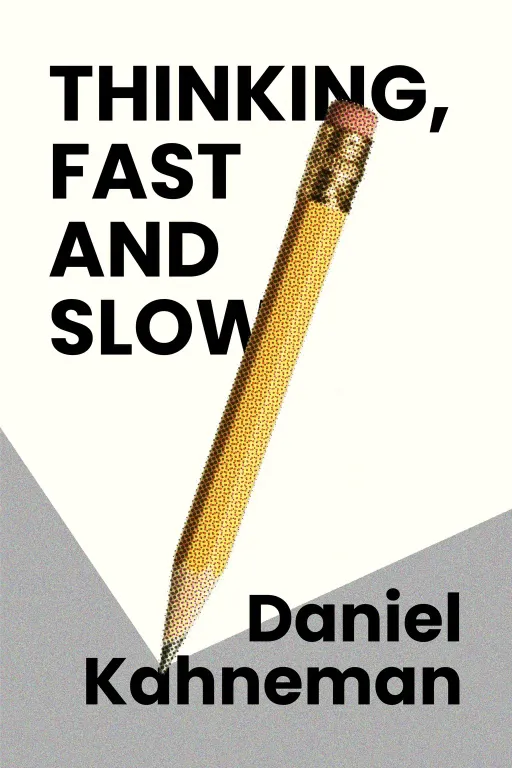
Nova: Not bad at all, just incomplete. And that brick wall feeling? It's a universal experience. Today, we're diving into two foundational works that completely flipped our understanding of persuasion: Daniel Kahneman's groundbreaking book, "Thinking, Fast and Slow," and Robert Cialdini's perennial classic, "Influence."
Atlas: I’m curious, what's the backstory on Kahneman? He's often mentioned in these conversations.
Nova: What's fascinating about Kahneman is he's a Nobel laureate in Economics, but he's a psychologist by training. That blend gave him this incredible lens to look at human decision-making, showing that our economic models often assume a rationality that simply doesn't exist in the wild. And Cialdini's book? It's often called the "bible of persuasion" because he literally went undercover, immersing himself in sales organizations and marketing firms, to see these principles in action. Talk about boots-on-the-ground research!
Atlas: That makes me wonder how many times I've been "influenced" without even realizing it. So, what's the big secret they uncovered?
Nova: Well, it starts with understanding how our brains actually work, which Kahneman so brilliantly laid out. He reveals we've got two very different systems for thinking, and only one of them deals with pure logic.
The Two Systems of Thought: Beyond Pure Logic
SECTION
Nova: Imagine driving your car. When you're on your usual commute, you're not consciously thinking about every turn, every gear shift, every pedal push. You're just… driving. That's what Kahneman calls System 1. It's fast, intuitive, automatic, and often emotional.
Atlas: So you’re saying it's like our autopilot mode?
Nova: Exactly! It's incredible efficient for routine tasks, for recognizing faces, for instantly understanding a simple sentence. But then there's System 2. This is your deliberate, effortful, logical thinking. It kicks in when you're solving a complex math problem, trying to parallel park in a tight spot, or consciously analyzing a difficult situation.
Atlas: Okay, so System 1 is the quick, gut-feeling part, and System 2 is the deep-thinking, analytical part. But wait, if we have System 2, why wouldn't we just use that for important decisions? I imagine a lot of our listeners, the aspiring leaders out there, are taught to be logical, to analyze everything.
Nova: And that's the rub! System 2 is powerful, but it's also incredibly lazy. It consumes a lot of mental energy. Our brains are designed for efficiency, so System 1 often tries to handle everything first. And if it can’t find an easy answer, or if it's emotionally invested, it can bypass System 2 entirely or feed it a pre-packaged conclusion.
Atlas: So, are you saying our brains are actively trying to avoid thinking deeply? That we prefer the easy way out?
Nova: In many cases, yes. Think about a classic example: I ask you, "A bat and a ball cost $1.10 in total. The bat costs $1.00 more than the ball. How much does the ball cost?"
Atlas: Oh, I like that. My System 1 is immediately screaming "10 cents!"
Nova: And that's the intuitive, fast answer. Most people jump to that. But if you engage System 2, you'd quickly realize that if the ball was 10 cents, the bat would be $1.10, making the total $1.20. The correct answer? The ball costs 5 cents.
Atlas: Wow, that's actually really unsettling. It makes me wonder how many decisions I think are logical are actually just my gut feeling on autopilot. This is a profound insight.
Nova: Precisely. And this 'blind spot' is crucial for influence. If you're only presenting facts and figures to someone's System 2, you're often missing the real decision-maker, which is System 1, already swayed by emotions, biases, or shortcuts. It's why even the most brilliant strategies can fall flat if they don't account for these hidden forces.
The Six Pillars of Influence: Tapping into Subconscious Biases
SECTION
Nova: This leads us perfectly to Cialdini's work, which essentially gives us the playbook for navigating System 1. He identifies six universal principles of persuasion that tap directly into these automatic, often subconscious, responses.
Atlas: Okay, so how does an aspiring leader use these 'cheat codes' for human behavior without just being manipulative? I imagine a lot of our listeners want to influence positively, build strong relationships, not just trick people into doing things.
Nova: That's a critical distinction, Atlas, and Cialdini himself emphasizes the ethical application. Let's look at a couple of these principles. First,. It's the deep-seated human need to return a favor. If someone does something for us, we feel obliged to do something for them in return.
Atlas: Ah, like when a waiter gives you a small mint with the check, and you're more likely to leave a bigger tip.
Nova: Exactly! It's not about the logical value of the mint; it's about the feeling of receiving a gift, which triggers an automatic desire to reciprocate. For an empathetic influencer, this means genuinely giving first, providing value without immediate expectation. A leader who consistently supports their team, offers help, or shares credit first, builds a reservoir of goodwill that naturally leads to reciprocation when they need support.
Atlas: That makes sense. It’s about building trust through generosity, not just cold transactions. What's another powerful one?
Nova: Another huge one is. This is our tendency to look to others to determine what is correct behavior, especially when we're uncertain. Think about a crowded restaurant. We often assume the one with the longest line has the best food, even if we've never eaten there before.
Atlas: Right, like those laugh tracks on TV shows. We hear other people laughing, and suddenly, the joke feels funnier.
Nova: You got it. It's System 1 taking a shortcut: "If everyone else is doing it, it must be right." For a leader, this isn't about fabricating popularity. It's about authentically showcasing positive examples. Highlighting team members who are excelling, sharing success stories, or getting testimonials from satisfied clients. It subtly signals, "This path is validated, others are thriving here."
Atlas: It’s kind of like discovering the blueprint for human connection. It’s not about manipulating; it's about understanding the existing pathways. That’s actually really inspiring. This makes influence feel less like a dark art and more like a human science.
Synthesis & Takeaways
SECTION
Nova: Absolutely. What Kahneman teaches us is the 'why' – why logic alone fails, why our brains are wired the way they are. And Cialdini gives us the 'how' – how to effectively communicate and lead by understanding these inherent human tendencies. The synthesis? True influence isn't about overpowering someone with facts; it's about connecting with their human experience, their emotions, and their subconscious biases in an ethical, impactful way.
Atlas: So, for our listeners, the aspiring leaders and empathetic influencers out there, what's the one thing they should take away from this? How can they start applying this tomorrow to boost their confidence and make a difference?
Nova: Start by observing your own decisions. When you make a choice, big or small, pause and ask yourself: was that pure, deliberate logic, or did something else subtly sway me? An emotion, a past experience, what someone else said? And then, when you're trying to persuade, think about which 'system' you're speaking to. Are you trying to convince a spreadsheet, or are you trying to move a human being?
Atlas: That's a great way to put it. It shifts the focus from just delivering information to truly understanding who you're talking to. And that, ultimately, is how you build stronger relationships and make a genuine impact.
Nova: Indeed. Remember, the goal isn't to trick people, but to communicate in a way that resonates with how their brains are actually wired, leading to more effective and, ultimately, more empathetic influence.
Atlas: So, the next time you're trying to persuade someone, think beyond the bullet points. What non-logical factors might truly be at play?
Nova: This is Aibrary. Congratulations on your growth!