

The Art of Persuasion: Influencing with Integrity
Golden Hook & Introduction
SECTION
Nova: Okay, Atlas, quick game. I’ll give you a scenario, you tell me the first thing that comes to mind. Ready?
Atlas: Oh, I like this! Hit me. My brain's primed for anything you throw at it.
Nova: You're at a networking event, and someone you just met offers you a small, unexpected gift – maybe a really nice pen or a limited-edition business card holder. Then, they ask for a favor. What's your immediate, gut reaction?
Atlas: Oh man, that's a classic. My gut reaction is... a mild sense of obligation. Like, 'Well, they just gave me this cool thing, I should probably at least helping them.' It's not a strong pull, but it's definitely there. This isn't about the pen, is it?
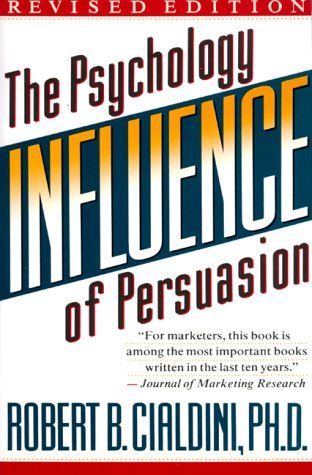
Nova: Absolutely not about the pen! That subtle feeling you described, that's exactly what we're dissecting today. We’re diving into the brilliant mind of Robert Cialdini, specifically his foundational work, "Influence: Science and Practice," and its powerful follow-up, "Pre-Suasion."
Atlas: Ah, Cialdini! I’ve heard his name whispered in the halls of marketing and sales, almost with a reverent, slightly mischievous tone. He's one of those rare academics who really bridges the gap between deep psychological research and practical, real-world application.
Nova: Exactly. Cialdini is a social psychologist who spent decades embedded in various industries – from sales organizations to fundraising groups – to understand the real-world dynamics of persuasion. He literally went undercover to observe how people were influenced. It's that blend of rigorous academic study and hands-on observation that makes his work so powerful and, honestly, so ethical when applied correctly. He’s not about manipulation; he’s about understanding human behavior.
Atlas: That’s a crucial distinction. It’s not about tricking people, it’s about understanding the mechanisms of human decision-making. For our listeners who are constantly trying to communicate their ideas, whether it's in a pitch, a team meeting, or even a casual conversation, this is gold. So, where do we start with Cialdini's insights?
The Six Principles of Ethical Persuasion
SECTION
Nova: We start with the bedrock: his six universal principles of persuasion. These are the psychological triggers that, when understood, allow you to ethically guide decisions. Think of them as the psychological landscape you mentioned earlier. If you ignore it, your message might just get lost.
Atlas: Okay, six principles. That sounds like a lot to unpack, but I’m ready. What's the first one, the one that makes me feel obligated by a fancy pen?
Nova: That, my friend, is. It’s the deeply ingrained human tendency to repay in kind what another person has provided us. It’s why that unexpected gift creates a subtle pressure to reciprocate. It's a fundamental social rule – we feel compelled to give back when we've received.
Atlas: I know that feeling! It’s like when a colleague helps you out with a tight deadline, you automatically start looking for ways to return the favor. It’s almost unconscious. But how does that play out in a business context beyond giving out pens?
Nova: Think about offering genuine value upfront. Providing free, useful content, giving a small, unsolicited piece of advice, or even just offering a genuine compliment. It primes the other person to be more receptive and willing to engage. It's not about keeping score, it's about initiating a positive exchange.
Atlas: That makes sense. It builds goodwill. What’s next?
Nova: The second is. Once we make a choice or take a stand, we feel a strong pressure to behave consistently with that commitment. It’s about aligning our future actions with our past declarations.
Atlas: So, if I publicly state that I'm going to start running every morning, I'm more likely to actually do it? Even if I dread it?
Nova: Precisely! The more public, active, and voluntary the commitment, the stronger the pull towards consistency. In a professional setting, this could be getting a small, initial ‘yes’ on a minor point before asking for a bigger commitment. Or having someone write down their agreement to a plan, rather than just verbally agreeing. It locks in that internal drive for consistency.
Atlas: That's a powerful one, especially for someone trying to get buy-in on a new project. You start small, build that initial agreement, and then expand. What's the third principle?
Nova: That would be. We determine what is correct by finding out what other people think is correct. When we're uncertain, we look to others for cues on how to behave.
Atlas: Oh, like when you’re choosing a restaurant in an unfamiliar city, and one place is packed while the one next door is empty? You instinctively gravitate towards the busy one.
Nova: Exactly! Or, in a more formal context, testimonials, case studies, showing how many people have already adopted a solution, or even just mentioning that "many of our clients in similar situations have found success with this approach." It’s incredibly persuasive because it leverages our innate desire to fit in and trust the collective wisdom.
Atlas: I can see how that would be critical for anyone trying to introduce a new idea or product. You're not just selling the idea, you're showing that it's already validated by others. What's the fourth?
Nova: . We are more likely to be persuaded by people we like. This might seem obvious, but ‘liking’ isn't just about friendship. It's about similarity, compliments, cooperation, and familiarity.
Atlas: So, if I find common ground with someone during a meeting, or if they genuinely compliment my work, I'm more inclined to listen to their proposal?
Nova: Absolutely. It’s why building rapport, finding common interests, and even mirroring body language can be so effective. It creates a sense of connection and trust, making the other person more open to your influence. It’s not about being fake; it’s about genuinely seeking connection.
Atlas: That resonates deeply with the idea of being driven by connection, as many of our listeners are. It shows that genuine human interaction isn't just a soft skill, it's a strategic one. What about the fifth?
Nova: The fifth is. We are more likely to comply with requests from perceived authority figures. This isn't just about titles, but also about expertise, experience, and even symbols of authority like uniforms or credentials.
Atlas: So, if a doctor tells me to take a certain medication, I’m far more likely to do it than if a random stranger on the street gives me the same advice. It’s about credibility.
Nova: Exactly. In communication, it means establishing your expertise or the expertise of your sources. Citing research, sharing relevant experience, or even just presenting yourself in a credible, knowledgeable way. It lends weight to your words.
Atlas: That's important for anyone trying to establish themselves as a leader or an expert in their field. It’s not just about having the knowledge, but also about how you convey that authority. And finally, the sixth principle?
Nova: The last, but certainly not least, is. Opportunities seem more valuable to us when their availability is limited. We want what we perceive we can't have, or what is in limited supply.
Atlas: Oh, like "limited time offer" or "only three left in stock." That's a classic sales tactic, but it's rooted in something deeper, isn't it?
Nova: It taps into our fear of loss. The idea that something might be gone forever makes us value it more. In communication, it can be about highlighting unique opportunities, limited windows for action, or exclusive access to information. It’s about creating a sense of urgency without being manipulative.
Atlas: So, in summary, we've got Reciprocity, Commitment and Consistency, Social Proof, Liking, Authority, and Scarcity. Understanding these isn't about being sneaky, it's about being effective and ethical. It’s about using these natural human tendencies to build consensus and drive meaningful action.
Pre-Suasion: Preparing the Mind for Influence
SECTION
Nova: Now, Atlas, what if I told you there's a way to significantly increase the power of those six principles, even before you utter a single word of your main message?
Atlas: Whoa. That sounds almost like mind-reading, or some kind of Jedi trick. I mean, we've just talked about how crucial the message itself is, and the subtle cues within the interaction. Are you saying there's a whole other layer that?
Nova: That's exactly what Cialdini explores in his follow-up book, "Pre-Suasion." It’s about the critical importance of what you do you deliver your message to prepare your audience to be receptive to your ideas. It's about strategically shifting their attention and mindset to a favorable state at the precise moment before they encounter your message.
Atlas: Okay, so it’s not just about you say, or even you say it, but and you set the stage for it. I imagine a lot of our listeners, especially those who are constantly trying to get their innovative ideas heard in a competitive environment, might feel like their valuable insights are just being overlooked. This sounds like a way to cut through that noise.
Nova: It absolutely is. Cialdini calls it "the privileged moment." It's the moment just before a message is delivered when a person is most receptive to it. The key is to direct their attention to a concept that is favorable to your message.
Atlas: Can you give me an example? Because it sounds a bit abstract. How do you 'direct attention' subtly before the conversation even begins?
Nova: Imagine a furniture store. One store trains its sales staff to ask customers, "Are you looking for something comfortable?" before showing them sofas. Another store trains its staff to ask, "Are you looking for something high-quality?" before showing the same sofas. Which store do you think sells more expensive, high-quality sofas?
Atlas: Oh, I see where this is going! The second store. By asking about "high-quality" first, they prime the customer's mind to prioritize quality and associate it with the furniture they're about to see, making them more receptive to a higher price point. It’s not about manipulating them into buying something they don't want, but about aligning their current focus with the strengths of the product.
Nova: Exactly! That’s pre-suasion in action. You're not changing the product or the main sales pitch. You're changing the through which the customer views the product, they even see it. Another example: a website selling expensive software might subtly display images of luxurious items – like a yacht or a fancy car – in the background before presenting their pricing.
Atlas: So, the visitor isn't even consciously aware of the yacht, but their mind is being subtly primed with the concept of 'high value' or 'affluence,' making them more comfortable with a higher price tag for the software? That’s wild. It’s almost invisible influence.
Nova: It's all about associative connections. Our brains are constantly making links. If you can subtly bring a concept to the forefront of someone's mind – like "quality," "comfort," "value," or "security" – just before they encounter your message, they're predisposed to interpret your message through that lens.
Atlas: That’s a huge shift in thinking for anyone who just focuses on the message itself. It’s saying that the context and the mental state of the audience are just as important, if not more important, than the content itself. For our listeners who are builders and explorers, always looking for opportunities, this is about building the right mental framework for those opportunities to be seen.
Nova: It truly is. Think about it in a negotiation. Before you present your terms, you might spend a few minutes talking about shared goals, or the long-term benefits of collaboration, or even just building rapport. You're not directly talking about the deal yet, but you're pre-suading them towards a cooperative, long-term mindset.
Atlas: So, it's not just about what you say, but setting the emotional and cognitive stage. Because if someone is already thinking about 'risk' or 'cost' before you even start, it's an uphill battle. But if they're thinking 'opportunity' or 'partnership,' your message lands differently.
Nova: Precisely. It makes your communication far more effective because you've already made the ground fertile for your seeds of ideas to grow. It empowers you to build consensus and drive meaningful action, not by force, but by preparation. It’s about being thoughtful about the entire communication process, not just the delivery.
Synthesis & Takeaways
SECTION
Nova: So, Atlas, when we look at Cialdini's work – the six principles and then the groundbreaking idea of pre-suasion – what's the biggest takeaway for you, especially thinking about our ambitious, growth-oriented listeners?
Atlas: My biggest takeaway is that effective communication, true influence, isn't just about having strong arguments or a powerful message. It's about understanding the human mind, and specifically, understanding the psychological landscape of your audience. It's about knowing and to present your message so it actually lands. It’s a shift from just talking people to truly connecting them.
Nova: That's beautifully put. It’s moving beyond simply presenting information to strategically preparing minds. It means that before your next important conversation, whether it's a pitch, a difficult discussion, or inspiring your team, you should consider: How can you subtly prepare the other person to be more receptive to your message? What mental frame can you activate that aligns with what you're about to say?
Atlas: And it’s not about manipulation. It’s about integrity. It’s about using these insights to foster genuine understanding, build trust, and create win-win situations. It's about being a more effective communicator, which ultimately leads to stronger connections and greater impact. It's about trusting your voice, but also knowing how to make sure that voice is heard.
Nova: Exactly. It’s a profound thought that the most powerful influence often happens in the moments the main event. It's the silent setup that makes all the difference. As Cialdini himself has shown, these subtle shifts can have truly outsized impacts.
Atlas: It gives me a lot to think about, not just in my professional life, but in my personal interactions too. It’s about being more intentional, more empathetic, and ultimately, more effective in every conversation.
Nova: This is Aibrary. Congratulations on your growth!