

The Architecture of Persuasion
Golden Hook & Introduction
SECTION
Nova: Atlas, five words to describe the art of persuasion. Go.
Atlas: Invisible, powerful, subtle, human,.
Nova: Ooh, I love 'everywhere.' Mine would be: Connection, setup, influence, mind-shift, mastery.
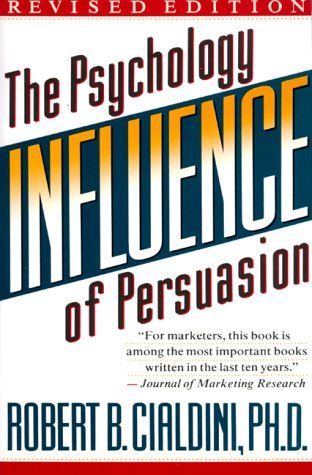
Atlas: That's a strong five. And that mastery is exactly what we're dissecting today, through the lens of Robert Cialdini's seminal works, "Influence" and "Pre-Suasion."
Nova: The guy who literally went undercover in sales organizations and marketing firms to learn how people get us to say 'yes'? His approach wasn't just theory, it was embedded observation, a deep dive into the real-world mechanics of influence.
Atlas: That's why his work resonates so much with strategists and communicators. It's not just academic; it’s practical. It's about understanding the deep currents of human behavior.
Nova: Absolutely. And when you think about amplifying your impact, as many of our listeners are striving to do, Cialdini gives us two incredibly potent tools. The first is something fundamental, almost primal, to human connection.
The Power of Liking: Building Connection for Persuasion
SECTION
Atlas: Are you talking about the 'Liking' principle? Because honestly, that one almost seems too simple at first glance. Like, just be nice to people, and they'll do what you want?
Nova: It's deceptively simple, but incredibly powerful. Cialdini shows that we are far more likely to be persuaded by people we know and like. But it’s not just about being "nice." It’s about established connections, shared values, even physical attractiveness, or simple familiarity.
Atlas: So it's not just about a friendly smile. It runs deeper. For someone trying to build a new venture or communicate a complex strategy, how does that translate beyond just 'networking'?
Nova: Think about the classic Tupperware party example. It wasn't just about selling plastic containers. It was a social gathering, hosted by a friend, for friends. The hostess would often give small gifts or serve refreshments, subtly triggering the principle of reciprocity.
Atlas: Oh, I know that feeling. You go to a friend’s house, they’ve gone to all this effort, and suddenly you feel a social obligation to buy something, even if you don't really need it.
Nova: Exactly! The primary driver wasn't necessarily the product's features; it was the existing social bond and the desire not to disappoint a friend. People were persuaded not by the salesperson—who was often absent—but by the, their friend, who also benefited from their purchases. The social proof of seeing your friends also buying, the consistency of showing up and participating, it all stacks up.
Atlas: That makes me wonder, though. For our listeners who are driven by progress and mastering their craft, isn't there a risk of this feeling manipulative? Like you're just trying to engineer friendships for gain?
Nova: That's a crucial distinction. Cialdini himself emphasizes that these principles are ethical tools, not weapons. Genuine connection, shared values, authentic compliments—these build real rapport. Manipulation is when you exploit these principles deceptively. The goal isn't to trick people, but to facilitate a message landing with an audience that. It's about authentic influence.
Atlas: So, for a communicator looking to amplify their impact, it's not about faking it, but about genuinely investing in relationships, finding common ground, and then leveraging that authentic connection to deliver their value proposition.
Nova: Precisely. You build the bridge of connection first. But once that bridge is built, how do you ensure your message crosses it smoothly and lands exactly where you want it to? That brings us to Cialdini's insights in "Pre-Suasion."
Pre-Suasion and Anchoring: Setting the Stage for Influence
SECTION
Atlas: Okay, 'Pre-Suasion.' That sounds like something out of a spy novel. You're talking about shifting someone's focus you even present them with a choice.
Nova: That's the core idea! In "Pre-Suasion," Cialdini argues that the moment you deliver your message is the most crucial for persuasion. It's about creating a state of mind, a focus, that makes your audience receptive to your specific message. One powerful technique for this is 'anchoring.'
Atlas: Wait, so it's not even about the product or the idea yet? You're literally changing my mental furniture before I even see the room?
Nova: In a way, yes. Imagine a furniture store. If a salesperson first asks you, "Is comfort important to you in a sofa?" they are priming your mind to value comfort. Then, when they show you a very comfortable, but perhaps expensive, sofa, you're already anchored to prioritize comfort, making the price less of an obstacle.
Atlas: That's wild. It's not just asking about preferences; it’s a preference by directing attention. So, how is this different from just... good marketing? What's the 'pre' part doing?
Nova: The 'pre' is all about timing and subtlety. Good marketing often highlights benefits. Pre-suasion goes a step further by to a specific concept or idea the message that concept supports is delivered. It makes the audience's mind fertile ground for that particular seed.
Atlas: So, for our listeners who are building something new, or trying to secure buy-in for a big vision, how do they 'anchor' their audience without them even realizing it?
Nova: It could be as simple as the language you use in an introductory email before a meeting. If you want people to focus on innovation, your pre-meeting communication might subtly use words like "future," "breakthrough," "opportunity." If you want them to focus on security, you might use "stability," "foundation," "risk mitigation." You’re gently steering their mental spotlight.
Atlas: It's like setting the mood, but for specific ideas. You’re not explicitly telling them what to think, but you're guiding they think about what's coming next. It's about strategic preparation of the mind.
Nova: Exactly. It's the architecture of the conversation itself, building the structure before the content.
Synthesis & Takeaways
SECTION
Atlas: This really reframes how I think about communication. It's not just about having a great message; it's about the entire ecosystem around that message.
Nova: The real architecture here is about respecting the human mind's journey. You build connection through liking, creating a receptive audience. Then, you prepare their mindset through pre-suasion and anchoring, ensuring they're focused on the right elements when your message arrives.
Atlas: It’s about building a better, clearer path for your message, rather than just trying to shout louder or make your message more complex. It's about influence through thoughtful design.
Nova: Absolutely. When done ethically, it's not about manipulation, but about facilitating understanding, connection, and ultimately, impact. It's about being more intentional with every step of your communication, from the relationships you build to the mental stage you set.
Atlas: That’s a powerful insight for anyone looking to truly amplify their impact and master their craft. It makes me wonder, how do prepare the ground for your most important messages?
Nova: A powerful question indeed.
Atlas: This is Aibrary. Congratulations on your growth!