

Stop Guessing, Start Influencing: The Neuroscience of Communication.
Golden Hook & Introduction
SECTION
Nova: You think you're rational? You think people make decisions based on logic and clear facts? Think again. What if I told you the very fabric of human choice is woven with predictable irrationality and subtle, almost invisible, triggers?
Atlas: Huh. That's a bold claim, Nova. Most of us pride ourselves on our logical minds, especially when it comes to important decisions or professional interactions.
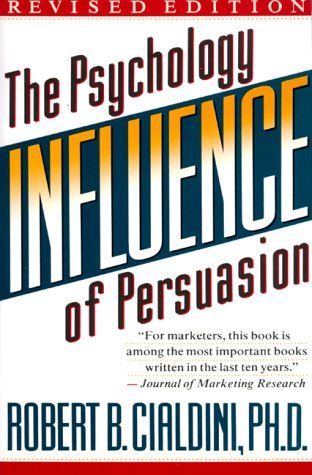
Nova: Exactly! And that's precisely what we're dissecting today. We're pulling back the curtain on those triggers, diving into two groundbreaking books: Robert Cialdini's seminal work, "Influence: The Psychology of Persuasion," and Dan Ariely's fascinating exposé, "Predictably Irrational."
Atlas: Cialdini, now that's a name that resonates in the world of persuasion. As I recall, he’s a social psychologist who took a rather unconventional approach, literally embedding himself in various industries to understand persuasion from the inside out.
Nova: He did. He spent years undercover, working as a car salesman, a fundraiser, a telemarketer, to experience these tactics firsthand. His insights aren't just theoretical; they're forged in the real-world crucible of influence. It gave him a uniquely empirical foundation for his six principles, which have become industry standards.
Atlas: So, not just armchair philosophy, then? He really got into the trenches to see how people say "yes." That’s a level of rigor our listeners, who value advanced clinical reasoning, can definitely appreciate.
Nova: Absolutely. And Ariely, on the other hand, a behavioral economist, came at it from a different angle, using ingenious experiments to show how our decisions are often systematically irrational, yet predictable. Together, these two offer a powerful lens to move beyond guesswork in communication and truly understand how to connect and influence.
The Six Pillars of Persuasion: Cialdini's Influence Principles
SECTION
Nova: Alright, let's start with Cialdini's foundational six principles. They're like the fundamental laws of social physics. The first one, and perhaps one of the most powerful, is Reciprocity.
Atlas: Reciprocity. The idea of "you scratch my back, I'll scratch yours." Sounds straightforward enough.
Nova: It is, but its power is often underestimated. Cialdini observed a classic example with the Hare Krishnas. They would approach people in airports, often giving them a flower, unasked. Then, and only then, would they ask for a donation.
Atlas: Oh, I've encountered that! You feel this immediate, subtle pressure, don't you?
Nova: Precisely! That flower, even unwanted, triggers a deep-seated human need to repay. You feel an internal psychological pressure, a social obligation, to give something back. It's incredibly effective because it taps into our innate programming for social exchange.
Atlas: Wait, so giving something creates an obligation? Even if I didn't ask for it? That sounds almost manipulative, especially for someone trying to build trust in a professional relationship, say, with a patient who's already feeling vulnerable.
Nova: That’s an excellent point, Atlas, and it highlights the ethical tightrope. The principles themselves are neutral; their application determines their ethicality. In a professional context, reciprocity isn't about a trick. It's about genuinely providing value first. Giving a patient extra time, offering clear, understandable information without being asked, or providing unexpected support. That builds genuine rapport and trust, making them more receptive to your guidance.
Atlas: I see what you mean. It’s about understanding the wiring, not exploiting it. It’s about building a foundation of goodwill. So, if I consistently offer genuine, valuable insights or support, a patient is more likely to reciprocate by adhering to treatment plans or engaging more openly.
Nova: Exactly. Let's look at another one: Social Proof. This is where we look to others for cues on how to think, feel, and act. Think about a restaurant with a long line outside; suddenly, it seems more appealing, doesn't it?
Atlas: Oh, absolutely. Or reviews online. If everyone else is raving about something, it’s hard not to be influenced.
Nova: Right. It’s the "everyone else is doing it" phenomenon. In a professional setting, this can be incredibly powerful. If you can show that many others in a similar situation have successfully adopted a particular approach or treatment, it reduces perceived risk and increases acceptance.
Atlas: Okay, so it's not about being sneaky, but understanding the wiring. But how does 'everyone else is doing it' translate when you're trying to convey a complex treatment plan where individual needs are paramount? It can’t just be a blanket statement.
Nova: That’s where the nuance comes in. It's not about saying "everyone." It's about showing "people like you." Testimonials from similar patients who have achieved positive outcomes, or statistics on success rates within a specific demographic. It makes the social proof relevant and relatable. It’s about leveraging credible evidence.
Atlas: That makes sense. It’s about finding the social proof. And I imagine Authority plays into this too, given the analytical, evidence-driven mindset of our listeners.
Nova: Absolutely. Authority, the principle that we tend to obey credible experts. This isn't just about titles; it's about demonstrated knowledge, experience, and integrity. And then there's Liking – we're more easily persuaded by people we like. Rapport, shared interests, compliments – they all build that bridge.
Unmasking Irrationality: Ariely's Predictable Human Behaviors
SECTION
Nova: And while Cialdini gives us the roadmap for conscious influence, Dan Ariely shows us the hidden currents beneath the surface, the 'predictably irrational' ways our brains work. He fundamentally challenged the idea that humans always act as rational agents.
Atlas: Predictably irrational. That's a fascinating paradox. We like to think we're making logical choices, especially when it comes to important matters. But Ariely’s work suggests otherwise, right?
Nova: He demonstrates it with compelling experiments. One of my favorites is the "Decoy Effect," also known as Asymmetric Dominance. He illustrated this with a subscription offer from The Economist.
Atlas: The Economist? What could be irrational about choosing a magazine subscription?
Nova: Well, here were the options:
Atlas: Hold on. The print-only and the web-and-print bundle cost the same? That print-only option seems… useless. Who would choose that?
Nova: Exactly! Ariely found that nobody chose the print-only option. But when it was present, a significant majority chose the web and print bundle. When he removed that seemingly useless print-only option, most people chose the cheaper web-only subscription.
Atlas: That's incredible! So, just by introducing an option nobody would choose, you can steer people towards a more expensive one? How is that even possible? It feels like our brains are hardwired for these kinds of traps.
Nova: It is! Our brains often struggle with absolute value, especially when comparing complex items. Instead, we rely on relative comparisons. The print-only option, the "decoy," makes the web and print bundle look like an amazing deal by comparison. It makes the bundle seem disproportionately superior to the web-only option, simply because there's a clearly inferior, yet similarly priced, alternative.
Atlas: So, for an analytical mind, it's about framing. We think we're weighing objective facts, but our brains are actually taking shortcuts, comparing things to what's immediately available. That's profound for patient decision-making, where compliance and choosing the right path are so critical. It’s not just about presenting the facts, but how you present them.
Nova: Precisely. Understanding these cognitive biases allows us to frame choices in a way that guides individuals towards optimal decisions, whether it's a treatment plan or a new protocol. It’s about designing the choice architecture. We also see this with 'loss aversion' – the pain of losing something is psychologically twice as powerful as the pleasure of gaining an equivalent item. That means framing messages around preventing loss can be far more motivating than framing them around potential gains.
Synthesis & Takeaways
SECTION
Nova: So, what Cialdini and Ariely really show us is that communication isn't just about the words we choose, but understanding the deep operating system of the human mind. It's about the psychological triggers, the predictable irrationalities, and the neural pathways.
Atlas: Right. It's about moving beyond simply presenting information, and instead, designing our communication to align with how brains process information and make decisions. It's an upgrade from guesswork to precision, isn't it? It grounds innovative techniques in brain science.
Nova: Absolutely. It's about ethical influence, about understanding these predictable patterns so we can craft messages that truly resonate, leading to better outcomes and deeper connections. It’s about profound communication enhancement.
Atlas: For anyone looking to elevate their practice and really innovate in communication, the tiny step here is to observe. Pick one Cialdini principle, or look for a predictable irrationality in your next interaction. Just notice it. That awareness is the first step to influence.
Nova: And then, take that next step. Listen to that 10-minute briefing on "Influence" and "Predictably Irrational" we’ve linked in the show notes. Master these techniques. This is Aibrary. Congratulations on your growth!