

Mastering the Art of Persuasion: Influencing Decisions with Integrity
Golden Hook & Introduction
SECTION
Nova: Atlas, I'm going to give you a scenario. You're at a friend's house, and they offer you a slice of their homemade, award-winning apple pie. You politely decline, you're full. Then, they say, "Oh, but I made it just for you, and I used that special heirloom apple from your grandmother's farm." What do you do?
Atlas: Oh man, Nova, that's a classic trap! My stomach might be full, but my conscience just got a swift kick. I'd probably end up eating the pie, and then some. Why do you do this to me?
Nova: Because, my friend, that's the unseen force of persuasion at play, specifically the principle of reciprocity. And it's exactly what we're dissecting today, diving deep into the mind-bending work of Robert Cialdini.
Atlas: Cialdini! The OG of influence. I've always been fascinated by his work. He’s like the psychological detective who pulls back the curtain on why we say 'yes.'
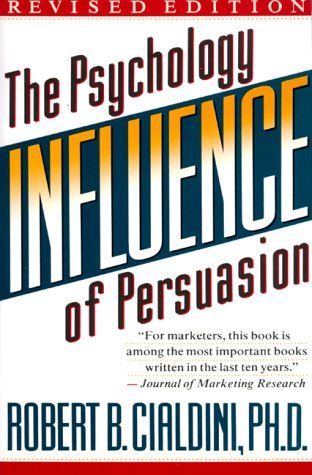
Nova: Absolutely. Today, we're exploring his two seminal books: and. Cialdini isn't just an academic; he actually went undercover, working in sales, fundraising, and advertising to see these principles in action. That hands-on approach, that deep dive into the real world, is what makes his insights so incredibly potent and relatable. He's not just theorizing; he's reporting from the trenches of human decision-making.
Atlas: That's fascinating. It’s not just theory from an ivory tower, then. He's truly walked the talk, which probably lends so much weight to his observations. So, for those unfamiliar, is the foundational text, right? The one that laid out the six core principles?
Nova: Exactly. Think of as the foundational toolkit – the six universal psychological triggers he identified: reciprocity, commitment and consistency, social proof, authority, liking, and scarcity. These are the fundamental levers that operate in nearly every human interaction, whether we're aware of them or not.
Cialdini's Six Principles of Persuasion
SECTION
Atlas: Okay, so six principles. Can we just quickly unpack them? Because I imagine a lot of our listeners have encountered these, even if they don't know the names. What's the most common one people might see in their day-to-day?
Nova: I’d say reciprocity is one of the most pervasive. It's the deep-seated human tendency to feel obligated to return a favor. Like your pie scenario. Someone gives you something, even unsolicited, and you feel compelled to give back.
Atlas: Oh, I see. So when that charity organization sends me free address labels, even though I didn't ask for them, they're banking on me feeling like I owe them a donation?
Nova: Precisely. Or when a salesperson offers you a free sample. It's not just about trying the product; it's about triggering that sense of obligation. Cialdini's research shows this is a powerful, almost primal, human instinct.
Atlas: That’s insidious, but brilliant. What about commitment and consistency? That sounds like something we all try to embody, but how does it become a persuasion principle?
Nova: Ah, commitment and consistency. This principle states that once we make a commitment, especially publicly, we feel a strong pressure to behave consistently with that commitment. It’s about aligning our actions with our words. A classic example Cialdini points out is a study where beachgoers were asked to watch a stranger's radio for a moment. When asked, only 20% intervened if a 'thief' tried to steal it. But if they first to watch the radio, making a small commitment, 95% intervened.
Atlas: Wow, so just that small verbal agreement made them feel personally responsible. That’s powerful. It’s like if I tell everyone I’m going to run a marathon, I’m way more likely to actually train for it.
Nova: Exactly! It’s the drive to appear, and to be, consistent. Then there’s social proof, which we see everywhere online today.
Atlas: You mean like when I pick a restaurant because it has a thousand five-star reviews, even if I don't know any of the reviewers?
Nova: You got it. We look to others to determine appropriate behavior. If everyone else is doing it, it must be the right thing to do. Cialdini cites experiments where people are more likely to look up at a building if others are already doing so. In a crowded, uncertain world, social proof is our mental shortcut.
Atlas: That makes sense. It’s like a built-in herd mentality. What about authority? That one seems pretty straightforward.
Nova: It is, but its power is often underestimated. We're conditioned from childhood to obey authority figures. Cialdini highlights the famous Milgram experiments, where ordinary people were willing to administer what they believed were painful, even lethal, electric shocks to others simply because an authority figure in a lab coat told them to.
Atlas: Oh, I've heard of those. They’re terrifying. It shows how deeply ingrained that response is. So, if a doctor recommends something, I’m much more likely to follow it than if my neighbor does.
Nova: Precisely. Uniforms, titles, even expensive cars or watches can trigger this deference. Then we have liking. This one's simple: we're more likely to be persuaded by people we like.
Atlas: That’s actually really inspiring. So, if I want to influence people, I should just try to be a genuinely good person?
Nova: Well, yes, but Cialdini shows it's also about factors like physical attractiveness, similarity, compliments, and cooperation. Salespeople are often trained to find common ground with you, to give you compliments, to make you them, because that significantly increases their persuasive power.
Atlas: So the friendly car salesman who asks about my kids and compliments my taste in music isn't just being nice, he's building rapport. I knew it! What’s the last one? Scarcity?
Nova: Scarcity. This is the principle that things are more attractive when their availability is limited, or when we stand to lose the opportunity to acquire them. Think 'limited edition,' 'flash sale,' 'only three left in stock!'
Atlas: Oh, I've been there. That frantic feeling of "I have to get it now or I'll miss out!" My wife and I almost bought a couch once just because the salesperson said it was the last one in that fabric.
Nova: It's a powerful motivator because the idea of loss looms larger in our minds than the idea of gain. Cialdini explains how this triggers a psychological reactance – we want what we can't have, or what might be taken away. These six principles, working in concert, are the backbone of effective persuasion.
The Power of Pre-Suasion: Priming the Mind
SECTION
Atlas: That’s a brilliant breakdown, Nova. It really makes you see how these forces are constantly at play. But I’m curious, builds on this, right? It sounds like it’s about setting the stage before you even get to these principles. What exactly is 'pre-suasion'?
Nova: That's a fantastic segue, Atlas, because is Cialdini’s deeper dive into the the message. It's the art of arranging for recipients to be receptive to a message before they encounter it. It’s not about you say, but you say it, to direct attention and prime mindsets.
Atlas: So, it's not changing the content of the message, but changing the around it? Like, making sure the audience is already nodding yes before you even ask the question?
Nova: Exactly! Cialdini argues that the "privileged moment" for persuasion isn't when you deliver your message, but the instant it, when you can subtly shift someone's focus and mindset. He gives a great example: a furniture store website had two versions. One with fluffy clouds in the background, another with pennies. Visitors to the cloud site were more likely to focus on comfort and buy softer, more expensive sofas. Visitors to the penny site focused on economy and bought cheaper items. The background image, a 'pre-suasive' element, subtly primed their purchasing criteria.
Atlas: Whoa. So, just seeing clouds made people think about comfort? That's almost subliminal. It sounds like it's about directing attention to a specific idea or value before the actual pitch.
Nova: Precisely. Cialdini emphasizes that "where attention goes, causality flows." If you can direct someone's attention to a particular concept or value right before your message, they'll be more receptive to a message aligned with that concept. For instance, if you want someone to be helpful, you might start by asking them if they consider themselves a helpful person. By getting them to affirm that identity, you prime them for a request for help.
Atlas: That’s a bit mind-bending. It’s like setting up the dominoes just right so they all fall in the direction you want. So, how does this apply to something like, say, a product launch, which many of our listeners might be involved in?
Nova: That's a perfect question, and it's something Cialdini explores in depth. Let's take that product launch scenario. Imagine you're launching a new, incredibly innovative software. Instead of immediately listing its features, a pre-suasive approach might involve first asking your audience a question like, "How important is innovation to you when choosing new tools?" or "Do you find yourself constantly looking for cutting-edge solutions?"
Atlas: I see. By asking that, you're not just getting information; you're making them about innovation, getting them to mentally affirm its importance. So when you present your 'innovative' product, they're already primed to value that quality.
Nova: Exactly. Or, if your product is about security, you might start by presenting a statistic about data breaches or a story about a recent cyberattack. You’re not selling yet; you're simply making security top-of-mind and creating a felt need you introduce your solution. Cialdini found that even showing an image of a runner before asking for donations for a children's charity increased contributions, because it subtly primed the idea of physical exertion and effort, making people more receptive to the idea of effort in donating.
Atlas: That’s wild. So, the environment, the preceding questions, even unrelated visual cues can set the stage for how we interpret information. It’s almost like a mental warm-up act.
Nova: A mental warm-up act, a framing device, a subtle redirection of focus. Cialdini's work in is a profound reminder that our rationality is often guided by what's salient in our minds at any given moment. Influencers and marketers, whether they realize it or not, are constantly playing with these pre-suasive elements.
Atlas: So, if I understand correctly, gives us the "what" – the six principles of human behavior that drive persuasion. And gives us the "when" and "how" to make those principles even more effective by setting the mental stage.
Nova: That’s a brilliant summary, Atlas. defines the tools, and teaches you how to sharpen them and deploy them at the optimal moment. Together, they offer a powerful toolkit for ethical influence.
Synthesis & Takeaways
SECTION
Atlas: This has been incredibly insightful, Nova. It really makes you think about not just how you deliver a message, but everything that comes before it. It's a bit like a chess game, where the opening moves dictate the entire match.
Nova: Precisely. Cialdini’s genius is in showing us that influence isn't some dark art; it's a science built on predictable psychological triggers. And understanding these principles, particularly how pre-suasive elements direct our attention, empowers us. It makes us not only more effective in our own communications and decisions, but also more resistant to unwanted influence.
Atlas: So it’s not just about influencing others, but about protecting ourselves from being unduly influenced. That's a huge takeaway. It's about conscious awareness in a world full of unconscious triggers.
Nova: Exactly. It's about recognizing when someone is trying to leverage scarcity, or social proof, or even a pre-suasive setup, and then making a truly informed, independent decision. It's about moving from being a passive recipient to an active, critical thinker in the face of persuasive attempts. It’s a profound shift from merely reacting to consciously choosing.
Atlas: That’s actually really inspiring. It gives you a sense of agency. For anyone listening, I think the biggest takeaway here is to pay attention to the small details, the subtle cues, the context that's being created the main event. Because that's where the real magic, or the real manipulation, often happens.
Nova: Absolutely. And that curiosity, that deep dive into the 'why' behind human behavior, that's what makes Cialdini's work so enduring and so vital in our complex world.
Atlas: Well, Nova, this has been a truly illuminating discussion. I feel like I've just been handed a secret decoder ring for human interaction.
Nova: And that, Atlas, is the power of understanding the unseen forces of persuasion.
Atlas: Thanks for breaking it all down.
Nova: My pleasure.
Atlas: This is Aibrary. Congratulations on your growth!