

High-Net-Worth Acquisition: Beyond Sales, Towards Deep Influence.
Golden Hook & Introduction
SECTION
Nova: What if I told you that everything you've been taught about 'closing the deal' is actually sabotaging your biggest opportunities with your most valuable clients?
Atlas: Whoa, come on, Nova. That's a bold claim. For anyone navigating complex financial landscapes, 'closing the deal' is practically enshrined. Are you saying we've been doing it wrong all along?
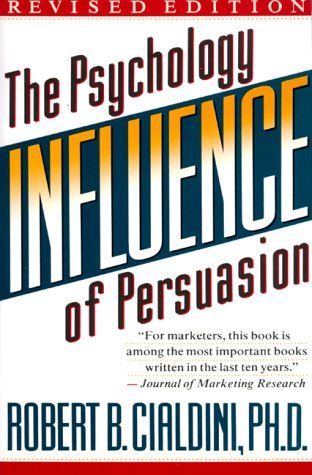
Nova: Absolutely, Atlas. Especially when we're talking about high-net-worth acquisition. It's not about the aggressive pitch or the hard sell. It’s about something far more subtle, far more powerful: deep influence. And today, we're diving into the brilliant minds who cracked the code on this. We're talking about Robert Cialdini's foundational work in "Influence: The Psychology of Persuasion" and Chris Voss's game-changing insights in "Never Split the Difference."
Atlas: Ah, Cialdini – the academic who went undercover, if I recall, to study persuasion in the wild, immersing himself in sales training programs and cults. And Voss, the former FBI hostage negotiator. That's quite the dynamic duo. You've got a psychologist studying how we're subtly swayed and an ex-fed teaching us how to talk down a kidnapper.
Nova: Exactly! Their backgrounds alone tell you this isn't your typical sales training. Cialdini's work is a masterclass in understanding the six universal principles that ethically guide human behavior, and Voss takes that understanding into the highest-stakes negotiations imaginable. Together, they provide an unparalleled toolkit for building genuine connection and achieving mutually beneficial outcomes.
Atlas: Okay, so we're moving beyond the transactional handshake to something more profound. I'm listening. How do these principles fundamentally shift our approach, especially when dealing with highly discerning individuals?
The Psychology of Influence: Beyond the Transaction
SECTION
Nova: Well, let's start with Cialdini. He identified six universal principles, but for high-net-worth acquisition, two immediately jump out: Reciprocity and Liking. Think about Reciprocity. It's the deep-seated human need to return a favor. Nova's Take on this is that it's not about grand gestures or quid pro quo; it's about unexpected, genuinely helpful acts that aren't tied to an immediate ask.
Atlas: So you're saying, for someone trying to capture new high-net-worth markets, it's not about sending a fancy gift basket before a meeting? That feels a bit… transactional.
Nova: Precisely. That’s the trap. Imagine a global architect, let's call her Sarah, trying to get a major, multi-million dollar project with a notoriously private and demanding family office. Her competitors are all sending lavish proposals and trying to force meetings. Sarah, instead, notices a niche publication wrote a surprisingly insightful piece on sustainable urban development, a topic she knows this family office cares deeply about, even though it's not directly related to her current proposal. She sends it to them with a brief, handwritten note: "Thought you might find this interesting, knowing your commitment to sustainable innovation." No ask, no follow-up. Just pure value.
Atlas: Huh. That's actually really inspiring. So the family office might not even respond, but the seed is planted.
Nova: Fast forward a few weeks. Sarah's firm is invited to bid. During the initial conversation, the managing partner mentions that article, saying, "That piece you sent, Sarah, was incredibly timely. It sparked a fascinating internal discussion." What happened? Sarah didn't ask for anything. She simply provided unexpected, relevant value. When the time came, the family office felt a subtle, almost unconscious pull to reciprocate that genuine thoughtfulness. It built a foundation of trust and 'liking' before any formal proposal was even discussed.
Atlas: I totally know that feeling. It's like when someone remembers a tiny detail about you, and it just… shifts your perception of them. It makes them feel human, not just another vendor. But what about 'liking'? Is that just about being charming? Because for a lot of our listeners, who are results-driven, charming might feel secondary to competence.
Nova: That's a great way to put it, and it's a common misconception. Liking isn't about being a comedian. Cialdini shows us that we're more likely to be influenced by people we like, and 'liking' stems from several factors: similarity, compliments, and cooperation. For our strategic innovators, it's about finding genuine common ground – shared values, similar challenges, even a mutual interest outside of work.
Atlas: So basically you're saying, for someone aiming for operational streamlining or innovative marketing, it’s about identifying those authentic points of connection, rather than just delivering a polished presentation?
Nova: Exactly. Imagine a resilient builder, John, trying to secure funding for an ambitious, sustainable infrastructure project. The investment firm is known for its tough negotiators. John does his research and discovers the lead partner, beyond her formidable financial acumen, is also deeply committed to regenerative agriculture, a passion John quietly shares. During their initial, formal meeting, John subtly weaves in a brief, genuine observation about a particular challenge in regenerative agriculture he recently encountered, connecting it to the long-term thinking required for sustainable infrastructure.
Atlas: So he's not faking it, he's finding an shared value.
Nova: Precisely. The partner's demeanor visibly shifts. They spend five minutes discussing it, finding common ground. It's not about the project at that moment, but about forging a human bond. When the conversation returns to the project, the dynamic has changed. There’s a foundation of 'liking' based on shared values, which makes the subsequent, complex financial discussions far more productive. It’s not about being 'friends'; it's about reducing friction and building rapport through genuine connection.
Empathy as Your Ultimate Negotiation Tool
SECTION
Atlas: That makes sense. Once you understand those psychological levers, like reciprocity and liking, how do you actually use them when the stakes are highest, when there's genuine conflict or resistance? Because even with rapport, dealing with complex financial landscapes often means tough negotiations.
Nova: That naturally leads us to Chris Voss and "Never Split the Difference." Voss, with his background in high-stakes hostage negotiation, boils it down to one core principle: tactical empathy. This isn't about agreeing with someone's position; it's about understanding their perspective so deeply that you can articulate it better than they can. It's about listening to understand, not to respond.
Atlas: Wait, so you're saying I should be able to summarize a high-net-worth client's objection better than they can? That sounds a bit out there, especially when they're probably already very articulate.
Nova: It's powerful. Voss teaches techniques like 'mirroring' and 'labeling.' Mirroring is simply repeating the last few words a person said. It creates a subtle echo, encouraging them to elaborate. Labeling is acknowledging their emotions – "It sounds like you're concerned about risk," or "It feels like this timeline is unrealistic for you." It diffuses tension and shows you're truly hearing them.
Atlas: Oh, I like that. So for a strategic innovator trying to scale their ventures efficiently, if a potential partner expresses skepticism about the speed of implementation, instead of immediately defending the timeline, you might say, "The speed of implementation?" or "It sounds like you're worried about the execution timeline."
Nova: Exactly. Let's take that scenario. Your partner, a seasoned investor, says, "I'm not sure we can pull off this aggressive timeline without significant operational disruption." Most people would jump in to defend the timeline or offer solutions. Voss would say, mirror: "Significant operational disruption?" The investor pauses, then elaborates, "Yes, we've seen rapid scaling efforts fail because the internal systems weren't ready, and that created more problems than it solved."
Atlas: What's even more interesting is that it forces them to clarify their own thoughts, too.
Nova: Exactly! You've just gained invaluable insight. Now you can label: "It sounds like you're concerned about past experiences with systemic unpreparedness during rapid growth." By doing this, you're not agreeing with their doubt, but you're validating their feeling and showing you understand the, not just the surface objection. This builds immense trust and opens the door for a real conversation about how your plan specifically mitigates risks, rather than just defending a timeline.
Atlas: That’s actually really inspiring. For someone who thrives on mastery and influence, this isn't about being 'nice'; it's about being strategically empathetic to gain a deeper, more actionable understanding of the other person's position. It’s about getting to the true 'why' behind their 'what'.
Nova: And that's Nova's Take right there: mastering these principles empowers you to ethically guide high-net-worth clients towards mutually beneficial decisions. It's not about manipulating them into a deal; it's about understanding their motivations, their fears, their aspirations, and then showing them how your solution genuinely aligns with their best interests. Voss's methods are about finding the 'Black Swan' – the unstated, often emotional, need that, once addressed, can completely change the dynamic.
Synthesis & Takeaways
SECTION
Atlas: So, we've gone from Cialdini's foundational psychological triggers that build rapport and liking, to Voss's tactical empathy that helps us navigate complex objections and uncover hidden needs. It seems like the core insight here is that true influence isn't about pushing your agenda; it's about profoundly understanding and serving the other person's.
Nova: Absolutely. For our listeners, the global architects and strategic innovators, the takeaway is clear: your acute strategic mind and results-driven approach are powerful, but they become exponentially more effective when paired with a deep understanding of human psychology. It’s how you move beyond just closing a deal to building relationships that generate lasting impact and loyalty. The real currency in high-net-worth acquisition isn't just capital; it's trust and genuine connection.
Atlas: That gives me chills. It’s about leveraging psychology to create win-win scenarios, essentially. So, for our listeners, what's a tiny step they can take this week to start applying these powerful ideas?
Nova: Identify one high-value client interaction this week. Instead of going in with your usual script, consciously apply either Cialdini's principle of 'liking' – find a genuine point of shared interest or value – or Voss's 'mirroring' technique. Just listen, echo their last few words, and watch how the conversation deepens. It's a small shift with massive potential.
Atlas: I can see how that would be incredibly impactful. It's not about changing who you are, but refining how you engage.
Nova: Exactly. It's about being more human, more strategic, and ultimately, more influential.
Atlas: This is Aibrary. Congratulations on your growth!