

Beyond the Algorithm: Understanding Human Behavior for True Connection.
Golden Hook & Introduction
SECTION
Nova: Most of us walk around convinced we're making perfectly logical decisions, right? Every choice, every thought, a crystal-clear path to reason.
Atlas: Oh, absolutely. I map out my entire week, every task, every potential obstacle. Pure logic.
Nova: What if I told you that's the biggest illusion of all? That your brain is actively tricking you, constantly, and you're oblivious to most of it?
Atlas: Huh. That's a bold claim, Nova. I'm already questioning my morning coffee choice.
Nova: Exactly! And that's why today, we're diving into the minds of two titans who cracked open that illusion and showed us the inner workings of human behavior. We're talking about Daniel Kahneman, a psychologist who won a Nobel Prize in Economics for showing us just how irrational we often are, and Robert Cialdini, who literally went undercover in sales, marketing, and fundraising organizations to understand the mechanics of persuasion in the real world.
Atlas: Wow, a psychologist winning an economics Nobel? That already tells you how profoundly he shifted our understanding of decision-making. And Cialdini going undercover, that's dedication to understanding human nature.
Nova: Absolutely. Their work reveals that human behavior isn't a simple calculation; it's a complex dance of deep psychological biases and universal principles. Understanding these isn't just academic; it's the ultimate cheat code for true connection and impactful results, especially for anyone who values autonomy and tangible outcomes.
Atlas: I can see that. For our listeners who are self-starters, always looking for effective ways to apply knowledge, this sounds like foundational stuff. So, where do we start unraveling this intricate human operating system?
The Unseen Drivers: Unpacking Cognitive Biases
SECTION
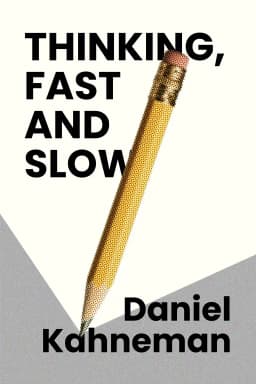
Nova: We start with Kahneman and his groundbreaking work in "Thinking, Fast and Slow." He introduced us to two distinct modes of thought: System 1 and System 2. Think of System 1 as your intuition, your gut reactions, the automatic pilot that handles most of your day-to-day decisions without you even realizing it.
Atlas: So it's the part of my brain that knows to hit the brakes without me consciously processing 'red light, car in front, danger'?
Nova: Precisely. It's fast, effortless, and often emotional. System 2, on the other hand, is your slow, deliberate, analytical self. It's what you engage when you're solving a complex math problem, trying to understand a nuanced argument, or carefully weighing pros and cons.
Atlas: That makes sense. I imagine a lot of our listeners, especially those who pride themselves on being pragmatic and building foundational knowledge, probably think they're operating in System 2 most of the time when it really matters.
Nova: That's the blind spot! Kahneman shows us that while System 2 likes to think it's in charge, System 1 is constantly feeding it information, often biased information, and making snap judgments. These mental shortcuts, or cognitive biases, are incredibly efficient, but they often lead us to irrational choices without us ever realizing it.
Atlas: So you're saying our "gut instincts," which we often trust implicitly, are actually just mental shortcuts that can lead us astray? Can you give an example of how this plays out in the real world?
Nova: Of course. Consider the "Anchoring Effect." It's a classic. Imagine you're negotiating a price for a new project. If the other person throws out a high number first, even if it's completely unreasonable, it 'anchors' your perception. Your subsequent offers, even if lower, will still be influenced by that initial, high anchor.
Atlas: Wait, so just hearing a big number, even if I know it's inflated, somehow skews my own rational assessment? That sounds a bit out there. My brain knows better than that.
Nova: Your System 2 might it knows better, but your System 1 has already done the heavy lifting, creating that anchor. Another one is the "Availability Heuristic." If you hear about a plane crash on the news, you might suddenly overestimate the risk of flying, even though statistically, it's incredibly safe. The vivid, easily recalled image influences your perception of likelihood.
Atlas: That's wild! I imagine a lot of our listeners, especially those building their own ventures, rely heavily on their intuition and quick assessments. How does knowing this help someone who values autonomy and quick decision-making, rather than just making them second-guess everything?
Nova: It's not about second-guessing everything; it's about informed decision-making. Recognizing System 1's power means you can deliberately engage System 2 for critical decisions. If you're making a big investment or a crucial hiring choice, you know to pause, gather more data, and consciously challenge your initial gut feeling. It helps you protect your self-reliance by understanding your own internal vulnerabilities, rather than being unknowingly led by them.
Mastering Influence: Leveraging Behavioral Principles
SECTION
Nova: Now, once we understand our own internal operating system, we can start to see how others' work, and crucially, how we can effectively communicate with them to build better connections and introduce our work. This is where Robert Cialdini's "Influence" becomes incredibly powerful.
Atlas: Okay, so we're moving from understanding biases to understanding triggers. What's one of these "universal principles" that really makes a difference when you're trying to connect or introduce your work, especially for someone who needs to be effective?
Nova: There are six, but let's talk about "Reciprocity." It's a deeply ingrained human tendency to feel obligated to repay favors or gifts. If someone gives you something, you automatically feel a pull to give something back.
Atlas: That makes sense. It's like when someone holds a door for you, you feel compelled to say thank you, or even hold the next door for them.
Nova: Exactly, but it goes deeper. Cialdini recounts a fascinating study where waiters left a small piece of chocolate or a mint with the bill. This tiny, unexpected gesture often resulted in a significant increase in tips. The gift, no matter how small, triggered the principle of reciprocity.
Atlas: That's a great example. So, for our listeners, it's like if I offer a valuable insight or a genuine connection to someone in my network without immediately asking for anything in return, they're more likely to be open to my ideas or help me later on. But wait, couldn't this be seen as manipulative? For someone who values authentic connections, this sounds a bit like playing mind games.
Nova: That's an important distinction, Atlas. These principles are natural human responses. Understanding them isn't about manipulation; it's about ethical, effective communication. If you genuinely want to build trust and connection, you can use reciprocity by offering genuine value first. It's about being generous, sharing knowledge, or offering help without expectation, knowing that it naturally fosters goodwill and a desire to reciprocate. It ensures your valuable ideas aren't dismissed because you haven't first established that human connection through a genuine offering.
Atlas: I can see how that shifts it. It's about being strategically generous, not just hoping people will see the value of your work. It's about understanding the human element that makes people receptive.
Synthesis & Takeaways
SECTION
Nova: Ultimately, both Kahneman and Cialdini show us that human behavior isn't a black box. It's a complex, predictable system driven by these underlying psychological mechanisms.
Atlas: So, for our listeners who are out there building, creating, and connecting, it sounds like the real power comes from recognizing these deep patterns, both within themselves and in others, to move beyond just hoping for rational outcomes or purely logical pitches.
Nova: Absolutely. This understanding empowers individuals to communicate more effectively, build stronger networks, and introduce their work in a way that truly resonates, rather than just relying on the perceived merit of their ideas. It's about being effective because you understand the human element, not despite it. It shifts your approach from "what should I say?" to "how will this be heard, given how our brains are wired?"
Atlas: That's a profound reframe. It brings it back to that deep question: how does acknowledging inherent human biases change your approach? It sounds like it cultivates resilience and effectiveness through a much deeper understanding of ourselves and others. What's one small, pragmatic thing our listeners can do this week to start applying this, to really lean into their self-reliance with this new insight?
Nova: I'd say this week, actively try to identify one System 1 bias in your own decision-making. Maybe it's confirmation bias, where you only seek out information that confirms what you already believe. Or, consciously use reciprocity in a positive interaction: offer a genuine compliment or a helpful piece of information to someone in your network without any immediate agenda. Just observe the ripple effect.
Atlas: I love that. It's about putting these big ideas into tangible action.
Nova: Exactly. It’s about being smarter about being human.
Atlas: This is Aibrary. Congratulations on your growth!