

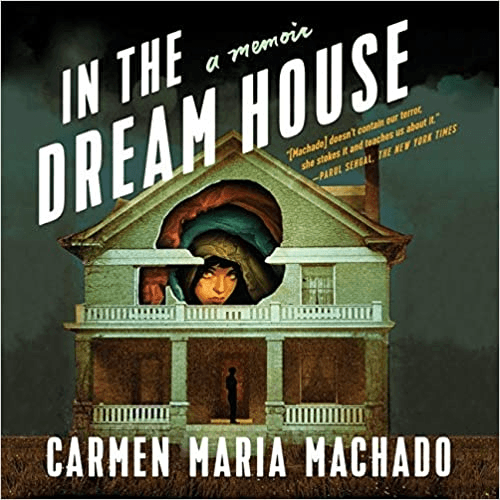
In the Dream House
Introduction: A Memoir Built in Fragments
Introduction: A Memoir Built in Fragments
Nova: Welcome back to the show. Today, we are stepping inside a structure unlike any other in contemporary literature: Carmen Maria Machado’s memoir, In the Dream House. Forget the traditional, linear narrative; this book is built from 146 distinct pieces, some just eight words long, others sprawling explorations.
Nova: : Eight words? That sounds less like a memoir and more like a series of very intense, very short tweets. What is the central conceit that holds this fractured house together?
Nova: That’s the brilliance of it. The central conceit is the house itself—the Dream House—which serves as a metaphor for the entire, harrowing experience of an abusive queer relationship Machado endured. But the real hook is how she chooses to tell the story. She doesn't just tell it once; she tells it 146 different ways, through 146 different narrative lenses.
Nova: : So, it’s not just a book about abuse; it’s a book about the of abuse. Why would an author choose such a formally dazzling, almost dizzying structure for such a painful subject?
Nova: It speaks directly to the theme of dislocation that abuse causes. When you’re in that environment, reality itself feels fragmented. Machado said that abuse causes a kind of narrative collapse. By using genre tropes—a fairy tale, a horror movie, a Star Trek episode—she’s showing us how we try to make sense of the senseless, how we try to fit our trauma into existing cultural scripts.
Nova: : That’s fascinating. It suggests that the is as much the message as the content. It’s not just what happened, but how language and narrative fail, or succeed, in capturing it. I’m ready to tour this house, Nova. Where do we start looking at the blueprints?
Nova: We start with the foundation, the sheer architectural ambition of it all. Let’s talk about the structure itself and why fragmentation is the most honest way to build this memory.
Key Insight 1: Fragmentation as Truth
The Architecture of Trauma: 146 Vignettes
Nova: The book is famously structured with 146 chapters, and the variation in length is extreme. We have chapters that are just a sentence or two, and others that are more substantial scenes. This isn't just stylistic flair; it’s a deliberate choice to mirror the experience of trauma.
Nova: : I read that one chapter is only eight words long. That’s almost a poetic constraint. Does that brevity ever feel like it’s withholding information, or does it hit harder because it’s so distilled?
Nova: It hits harder, absolutely. Think of it like a sudden, sharp memory flash—a moment of pure, unadulterated feeling that doesn't need context. Machado is forcing us to sit with the raw impact. In a traditional memoir, you might spend pages building up to a moment of realization. Here, the realization the chapter. It’s immediate, like a punch to the gut.
Nova: : So, the reader is constantly being pulled out of a comfortable reading rhythm. You settle into a narrative voice, and then suddenly, bam, you’re in a completely different mode. It keeps you perpetually off-balance, which I imagine is exactly how Machado felt in the relationship.
Nova: Precisely. And this relates to what critics noted: the book is formally dazzling. It smashes our conventional notions of what a memoir should be. It’s not a straight line from A to B; it’s a constellation of moments, some bright, some dark, all orbiting the central event.
Nova: : I’m trying to picture the emotional toll of writing that. She’s revisiting this deeply personal, painful history, but instead of writing one long, agonizing narrative, she has to distill that agony into these perfect, tiny, genre-specific capsules. That requires incredible control.
Nova: It does. She spoke about how hard it was, saying it was really personal and weird to read out loud, especially in front of an audience. That vulnerability, that willingness to expose the pain in such a controlled, yet chaotic, structure, is what makes it so powerful. It’s an act of claiming and incantation, as one source put it, fighting the dislocation.
Nova: : And this structure also allows her to address the specific nature of queer abuse, which often lacks the cultural scripts we have for heterosexual domestic violence narratives. If there’s no established genre for your specific trauma, you have to invent one, right?
Nova: Exactly. And that brings us perfectly to our next point: inventing those genres. She doesn't just write about the house; she dresses the house up in costumes. Let’s talk about the genre-bending that makes this book a literary landmark.
Key Insight 2: Narrative Tropes as Coping Mechanisms
Genre as Armor: The Trope Toolbox
Nova: This is where the book truly leaps off the page. Machado takes the raw material of her trauma and filters it through every narrative trope imaginable. We get chapters framed as fairy tales, as horror movie sequences, as descriptions of physical structures, and even as pop singles.
Nova: : I remember reading about the Star Trek references! How does framing a moment of emotional manipulation as a scene from a sci-fi show help process the reality of the situation?
Nova: It creates distance, but a very specific kind of distance. When you label something, you gain a measure of control over it. If the abuse is happening in the genre of 'The Haunted House,' it’s easier to analyze the architecture of the trap than if it’s just happening to 'Carmen' in her living room. It allows her to step back and say, 'Look at this trope in action.'
Nova: : It’s like she’s using the collective imagination of culture—all the stories we’ve ever consumed—as a toolbox to dissect her own story. If the relationship felt like a Disney villain plot, she writes it as one. If it felt like a Gothic romance gone wrong, she uses that language.
Nova: And this is crucial for understanding the psychological aspect. Abuse often involves gaslighting, making the victim question their own reality. By consciously adopting these external, often fictional, frameworks, Machado is asserting her own authorship over the narrative, even when her reality felt authored by someone else.
Nova: : It’s a meta-commentary on storytelling itself. She’s showing us that we rely on stories to make sense of life, and when the life story is too dark, we borrow the structure of fiction to survive it.
Nova: Absolutely. And the critics loved this. They called it formally innovative, saying she seamlessly relocated her genre-bending mastery from her fiction work into nonfiction. It’s ambitious, and it works because the emotional core remains unflinching. The wit and playfulness she brings to these genre exercises leaven the darkness.
Nova: : So, the reader is constantly shifting gears. One moment you’re analyzing the structural integrity of a fictional house, the next you’re confronted with the raw shame of the real experience. It must be exhausting, but incredibly rewarding for the reader who sticks with it.
Nova: It is. It demands active participation. You can’t passively consume this book. You have to engage with the framework she provides. And speaking of the frameworks, let's zero in on the specific type of abuse she documents, because that visibility is a major political statement.
Key Insight 3: Documenting the Unseen
Visibility and Silence: Abuse in Queer Narratives
Nova: A significant aspect of In the Dream House is that it documents abuse within a same-sex relationship. This is a narrative that has historically been underrepresented, often erased, or simply not given the cultural vocabulary we might associate with heterosexual domestic violence.
Nova: : That’s a powerful point. When we think of domestic abuse narratives, the cultural shorthand often defaults to a very specific visual. Machado is deliberately challenging that limited scope.
Nova: She is shining a light on the complexities of queer abuse, which, as research confirms, is often primarily verbal and psychological rather than physical. The shame and worry she felt about telling people what was happening—that isolation is amplified when the community you belong to doesn't have a ready-made script for your pain.
Nova: : How does the memoir address the internal conflict? Because abuse thrives on making the victim feel like they are the anomaly, that their experience is unique and therefore not real or not worthy of help.
Nova: Machado masterfully captures that internal turmoil. She details the deep shame, the confusion over why this passionate relationship turned so volatile. The book becomes a testament to the fact that abuse is about power and control, regardless of the gender or orientation of the partners involved. It’s a universal mechanism wrapped in a specific, under-documented context.
Nova: : I wonder if the genre-bending helped here, too. If you can’t find a real-life story that matches yours, you have to build a fictional analogue to explain it to yourself and others. It’s a form of self-validation through narrative construction.
Nova: Absolutely. It’s about creating the language where none existed. By writing it down, by articulating the manipulation, the gaslighting, the emotional whiplash, she’s providing a roadmap for others who might be experiencing something similar but lack the words or the cultural permission to name it.
Nova: : It sounds like the book is both a personal exorcism and a vital piece of cultural documentation. It’s not just saying, 'This happened to me,' it’s saying, 'This happens, and here is the language we need to talk about it when it happens in our community.'
Nova: Precisely. It’s a necessary intervention. And this intervention is anchored by the physical space that contains it all: the Dream House itself. Let’s move from the narrative structure to the metaphorical space that defines the entire memoir.
Key Insight 4: The House as Metaphor
The Shifting Foundation: What is the Dream House?
Nova: The title, In the Dream House, immediately sets up an expectation of fantasy or aspiration, but Machado quickly subverts that. The house is never stable; it’s a void, a trap, and a constantly shifting set piece.
Nova: : I imagine the house starts out looking like a beautiful, aspirational space—the perfect queer domestic dream—before the rot sets in. Is that the trajectory?
Nova: That’s the initial promise. The house is where the relationship is supposed to flourish. But as the abuse escalates, the house becomes a physical manifestation of her psychological state. It’s described as a place of confinement, a structure that actively works against the inhabitant.
Nova: : It reminds me of Gothic literature, where the house itself is often a character, usually a malevolent one, trapping the heroine. Machado seems to be consciously invoking that trope, but updating it for a modern, queer context.
Nova: She is. She’s taking these established literary devices—the haunted house, the labyrinth—and applying them to the interior landscape of an abusive relationship. The house is the setting, but it’s also the abuser’s control made manifest in drywall and floorboards.
Nova: : And because she uses so many different genres, the house must change its appearance constantly, right? One chapter it’s a pristine, minimalist apartment, the next it’s a crumbling mansion full of secrets.
Nova: Exactly. It’s a chameleon structure. This fluidity is key because it mirrors the abuser’s own shifting tactics—the cycle of tension building, explosion, and then the false calm of the honeymoon phase. The house is never safe because its rules are never fixed.
Nova: : It’s a brilliant way to illustrate that the danger isn't just the partner, but the entire environment they create around you, an environment that feels both intensely intimate and utterly alienating.
Nova: And the final act of reclaiming the house, or perhaps abandoning it, is the final act of self-preservation. The memoir is about moving out, not just physically, but narratively. It’s about taking back the blueprints and deciding what the next structure will look like. It’s ambitious, politically charged, and deeply personal. We’ve covered the structure, the style, and the subject matter. It’s time to wrap up our tour of this unforgettable literary space.
Conclusion: Rebuilding the Narrative
Conclusion: Rebuilding the Narrative
Nova: We’ve spent our time today inside Carmen Maria Machado’s In the Dream House, a book that defies easy categorization. It’s a memoir, yes, but it’s also a formal experiment, a cultural critique, and a vital piece of queer testimony.
Nova: : What I’m taking away most strongly is the sheer audacity of the form. By using 146 different narrative lenses—from fairy tale to sci-fi—Machado didn't just tell us what happened; she showed us trauma fractures perception and how we use the stories we know to try and piece ourselves back together.
Nova: That’s the core takeaway. The book is a masterclass in showing, not just telling, the psychological toll of abuse. It demands that we look closely at the narratives we consume and the ones we are forced to live. It’s a powerful argument for the necessity of narrative control.
Nova: : And for listeners who might be struggling with their own fragmented experiences, the book offers a strange kind of hope—the hope that even the most painful, confusing reality can be captured, examined, and ultimately, owned by the survivor.
Nova: It’s a testament to the power of literature to create space where none existed before. It’s emotionally acute, formally innovative, and utterly essential reading. If you want to understand how memoir can be pushed to its absolute limits while retaining its deepest emotional truth, you need to visit the Dream House.
Nova: : A truly unforgettable structure. Thank you, Nova, for guiding us through this complex and brilliant work.
Nova: My pleasure. Remember, every story you consume, every structure you analyze, adds to your own narrative toolkit. This is Aibrary. Congratulations on your growth!