

The Unseen Threads: How Historical Narratives Shape Modern Identity
Golden Hook & Introduction
SECTION
Nova: Forget everything you thought you knew about history. It’s not just dates and names; it’s a carefully crafted story, and that story is actively shaping who you are, right now, whether you realize it or not.
Atlas: Whoa, that's a bold claim, Nova. "Carefully crafted"? So, history isn't just... what happened? It’s more like a choose-your-own-adventure book where someone else already picked the ending?
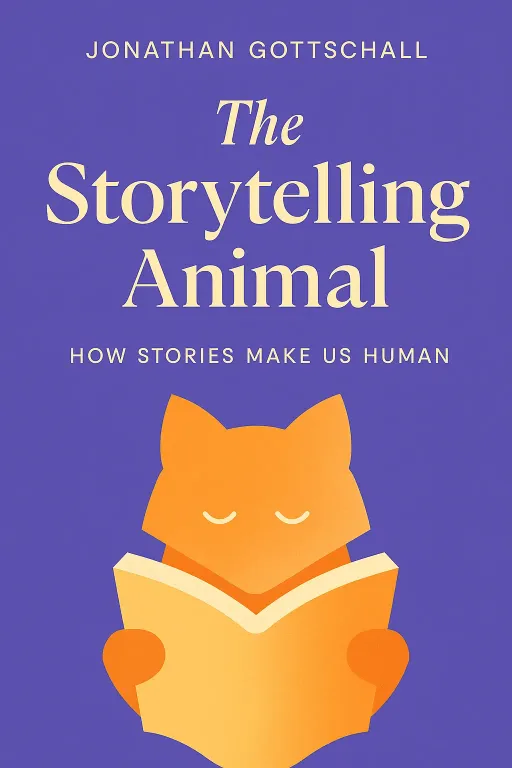
Nova: Exactly, Atlas! It's less like an objective record and more like a narrative we tell ourselves. This isn't a new idea, but it's one that completely reframes how we understand our world and ourselves. We're talking about the profound assertion that history is a narrative, often shaped by those in power, and it profoundly influences our collective identity and individual experiences. To dive into this, we're drawing insights from two brilliant thinkers: Jonathan Gottschall, with his book "The Storytelling Animal," and Benedict Anderson's groundbreaking work, "Imagined Communities."
Atlas: Gottschall, the literary scholar, and Anderson, the political scientist. That's an interesting pairing. What unique angles do they bring to this idea of history as a story?
Nova: It’s fascinating, right? Gottschall explores our innate human drive for narrative – why we’re hardwired for stories. He frames it almost biologically. Anderson then takes that fundamental human need and shows how it builds something as massive and abstract as a nation. He argues nations are fundamentally constructed through shared stories, often spread through media. It’s about the invisible threads that bind us, and how those threads are spun.
Atlas: So, one is about we tell stories, and the other is about those stories build societies. That makes a lot of sense.
History as Narrative Construction
SECTION
Nova: Precisely. And that leads us directly to our first core idea: history as narrative construction. The cold fact is, history is not just a collection of facts; it’s a narrative. And these narratives, often shaped by those in power, profoundly influence our collective identity and individual experiences.
Atlas: Okay, but isn't some history just... history? Like, the Battle of Hastings happened on a certain date. Is that also a 'narrative shaped by power'? What does 'shaped by power' actually mean for someone like our listeners, who are trying to understand the past accurately?
Nova: That's a great question, Atlas. The event itself happened, yes. But we remember it, the heroes and villains are, we draw from it, and – that's where the narrative construction comes in. Think about the founding myths of any nation. Take, for example, the American narrative of westward expansion.
Atlas: Manifest Destiny, the pioneers, settling uncharted territory.
Nova: Exactly. That narrative emphasizes bravery, resourcefulness, and the idea of bringing civilization to a wilderness. It's a powerful story that shapes American identity, implying a certain destiny and exceptionalism. But what does that narrative often downplay or ignore?
Atlas: The displacement, the violence, the broken treaties with Indigenous peoples. The environmental impact.
Nova: Exactly! The 'cold fact' of westward movement is undeniable. But the of 'Manifest Destiny' was a conscious construction by those in power to justify expansion, unify a diverse population, and instill a particular sense of national identity. It’s a story designed to make us feel a certain way about our origins. And because of this framing, generations grew up with a very specific, often incomplete, understanding of their own history. That influences everything from foreign policy to how we view land ownership today.
Atlas: Wow. So, it's not just about lying, it's about selective truth-telling and framing. And that framing directly impacts our individual sense of self if the collective narrative is so fluid. How does someone who seeks truth, like the analytical listeners we know, navigate such a landscape? If the history books are inherently biased, how do you find what Nova calls "true historical analysis"?
Nova: That's the million-dollar question, and it's why understanding this mechanism is so vital. It's about developing a critical lens. Instead of asking "What happened?", we need to start asking "Whose story is this? Who told it, and why?" Consider the narrative around the Vietnam War in America versus in Vietnam. Two vastly different stories, both rooted in facts, but framed to serve very different national identities and purposes. In one, it might be about containing communism; in the other, about national liberation. Both narratives, in their respective contexts, profoundly shape the collective identity and individual experiences of those populations.
Atlas: That's a powerful point. It's not about erasing the facts, but about recognizing the interpretive layer that's always present. It makes me think about how many of the "truths" I grew up with might have been more about shaping my identity than pure, unadulterated reality.
The Human Need for Storytelling & Imagined Communities
SECTION
Nova: Absolutely. And this idea of history as narrative really taps into something fundamental about us as humans, doesn't it? It's almost like we're built for stories. Which brings us to our second core topic: "The Storytelling Animal" and "Imagined Communities." Jonathan Gottschall argues that humans are hardwired for stories. It's not just a pastime; it's a fundamental operating system for our brains.
Atlas: Oh, I like that. "Hardwired for stories." So, it's deeper than just enjoying a good movie or book. It's a primal need?
Nova: Precisely. Gottschall suggests that stories are how we make sense of the world, how we practice for life's challenges, how we convey values, and how we bond. From cave paintings to TikTok, humans have always been immersed in narrative. This deep-seated need to tell and consume stories is then harnessed, often unconsciously, to create the very fabric of nations and shared identities. This is where Benedict Anderson's "Imagined Communities" becomes so illuminating.
Atlas: Imagined communities. That sounds a bit... ethereal. What does he mean by that, exactly?
Nova: Anderson's insight is brilliant. He says that a nation is an imagined community because its members will never know most of their fellow-members, meet them, or even hear of them, yet in the minds of each lives the image of their communion. Think about it: you feel a connection to millions of other people in your country you'll never meet. How does that happen?
Atlas: Through shared culture, I suppose. National holidays, symbols, a common language, maybe.
Nova: Exactly! And crucially, through shared narratives, often spread through media. Anderson focused heavily on newspapers in his time. Reading the same news, the same stories, the same advertisements, at roughly the same time, created a sense of parallel experience and collective identity. You felt connected to strangers because you were all consuming the same national story.
Atlas: So, if we're hardwired for stories, does that make us vulnerable to manipulation? And how does this 'imagined community' concept play out in our hyper-connected, yet often polarized, modern world? Is social media the new newspaper in this context?
Nova: That's a really critical question. Yes, our hardwiring for stories can make us vulnerable. Because stories simplify, they create heroes and villains, and they tap into our emotions. When those narratives are controlled or skewed, it can lead to dangerous forms of collective identity. And absolutely, social media is arguably the most powerful engine for imagined communities today. It can create incredibly strong bonds, but also deep divisions, depending on the narratives being amplified within those digital spaces. It's about how those events are framed and remembered, impacting our present.
Atlas: So, for an engaged citizen, someone who deeply cares about informed perspective and civic impact, how do you critically engage with these powerful narratives without becoming cynical? How do you maintain that drive for truth when you realize so much is constructed?
Nova: That’s the core challenge, and it’s why these insights are so crucial. It’s about being aware of the mechanisms. It’s about understanding that the stories we tell, and are told, are not neutral. They are tools. And once you understand that, you can start to question, to research alternative perspectives, to look for the voices that have been omitted. It's about moving beyond passive consumption to active, critical engagement with the narratives that shape our world.
Synthesis & Takeaways
SECTION
Nova: So, to bring it all together, what we've been exploring today is how history isn't just a record of the past, but a dynamic, constructed narrative. And this construction leverages our fundamental human need for storytelling to build the 'imagined communities' that define our collective and individual identities. Understanding these narratives are constructed is key to true historical analysis and informed citizenship.
Atlas: It really shifts your perspective, doesn't it? It makes you realize the power behind every headline, every historical account. So, for our listeners who are trying to make sense of the world, and who value truth, what's one 'tiny step' they can take this week to apply this insight?
Nova: This week, choose a historical event you've learned about. Then, research an alternative perspective or narrative surrounding it. It could be a different cultural interpretation, a marginalized voice, or simply a contrasting academic viewpoint. Just that small act of seeking out another story can profoundly change your understanding.
Atlas: That's a brilliant challenge for "The Historian, The Analyst, The Engaged Citizen." It's about actively seeking the unseen threads that weave our modern identity.
Nova: Exactly. Keep questioning, keep exploring. This is Aibrary. Congratulations on your growth!