

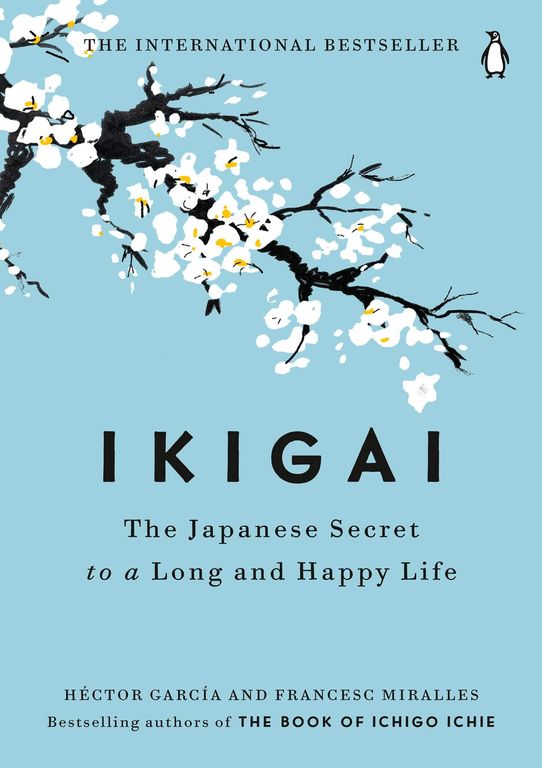
Ikigai
The Japanese Secret to a Long and Happy Life
Introduction
Nova: Imagine a place where people simply forget to die. I am not talking about a myth or a fantasy novel. I am talking about a real village in Japan called Ogimi, where the ratio of centenarians is among the highest in the entire world. What is their secret? Is it the water? The air? Or is it something much deeper that they carry inside them?
Nova: Exactly. It is a concept called Ikigai. It is the subject of the international bestseller by Hector Garcia and Francesc Miralles. The word roughly translates to your reason for being or the reason you get out of bed in the morning. In Okinawa, they do not even have a word for retirement. They just keep living their purpose until the very end.
Nova: That is what we are diving into today. We are going to break down the research Garcia and Miralles gathered from their time living in that village. We will look at the lifestyle, the mindset, and the surprising science behind why having a purpose might actually be the ultimate longevity hack. This is not just about living longer; it is about living better.
Key Insight 1
The Village of Longevity
Nova: To understand Ikigai, we have to go to the source. The authors, Hector Garcia and Francesc Miralles, actually traveled to Ogimi, a small village in the north of Okinawa. This place is nicknamed the Village of Longevity. They did not just look at data; they interviewed the residents, ate with them, and observed their daily rhythms.
Nova: The statistics are staggering. In Okinawa, there are about 24.55 people over the age of 100 for every 100,000 inhabitants. That is far higher than the global average. But it is not just the age; it is the health. These centenarians are active. They garden, they walk, they socialize. They do not spend their final decades in a hospital bed. They are out in the world.
Nova: Diet is a huge part of it, which we will get to, but the authors realized the real secret was the mindset. They noticed that everyone in the village had a specific task or a hobby that gave them a sense of responsibility. One woman might be the master of the local craft, while a man in his nineties is the primary gardener for his neighborhood. They call this their Ikigai.
Nova: Precisely. The authors explain that once you retire in the Western sense, you often lose your social connection and your sense of utility. In Ogimi, if you stop moving and stop contributing, you are essentially signaling to your body that your time is up. By staying busy with things they love, they keep their minds and bodies engaged.
Nova: That is the crucial distinction. Ikigai is not about being busy for the sake of being busy. It is about the quality of that activity. It is the happiness of always being busy with something that matters to you. It is the intersection of passion and presence.
Key Insight 2
The Truth About the Venn Diagram
Nova: Now, if you search for Ikigai online, you will almost certainly see a Venn diagram with four overlapping circles: what you love, what you are good at, what the world needs, and what you can be paid for. It is a very popular tool for career coaching.
Nova: Here is the surprising part: that Venn diagram is actually a Western invention. It was created by a British community builder named Andres Zuzunaga and later popularized by others who attached the word Ikigai to it. In the original Japanese context, Ikigai is often much simpler and less focused on money or career.
Nova: Not at all. In Japan, your Ikigai could be as simple as the smell of coffee in the morning, or the feeling of the sun on your skin, or taking care of your grandchildren. It is about finding meaning in the mundane. The authors emphasize that while the Western version is great for finding a career, the Japanese version is about finding a reason to live, which is much broader.
Nova: Exactly. The book quotes Ken Mogi, a Japanese neuroscientist, who says that the West seeks grand purpose, while Japan finds meaning in the small things. This is a core pillar of the book. It is about the art of living well in the present moment rather than chasing some far-off, monumental achievement.
Nova: Yes! If it brings you joy and keeps you engaged, it is your Ikigai. The authors argue that this low-stress, high-engagement approach is exactly what keeps the Okinawans so youthful. They are not stressed about their legacy; they are just enjoying their morning tea and their walk to the village center.
Key Insight 3
The Lifestyle of the Centenarians
Nova: Beyond the philosophy, the book gets very practical about the physical habits of these long-lived people. One of the most famous concepts they discuss is Hara Hachi Bu. Have you heard of it?
Nova: It is actually a rule for eating. It means eat until you are eighty percent full. The idea is that it takes about twenty minutes for the brain to realize the stomach is full. By stopping when you feel eighty percent satisfied, you avoid overtaxing your digestive system and prevent the cellular aging that comes with overeating.
Nova: It really does. The Okinawan diet is also very specific. They eat a huge variety of plants, often fifteen to twenty different types of vegetables a day. They are big on antioxidant-rich foods like green tea and Sanpin-cha, which is a jasmine blend. And they eat very little sugar or processed food.
Nova: Not in the way we think of it. You won't find many ninety-year-olds on a treadmill. Instead, they practice what the authors call natural movement. They walk everywhere, they garden, and they participate in something called Radio Taiso. It is a set of gentle calisthenics that has been broadcast on Japanese radio every morning since 1928.
Nova: It is! And it is not just about the movement; it is about the community. This brings us to another vital concept: the Moai. A Moai is an informal social group of people who support each other for life. In Ogimi, these groups often start in childhood and stay together for eighty or ninety years.
Nova: It is more than just a social club. Members of a Moai pay a monthly fee, and that money is used to fund social gatherings or to help a member if they fall on hard times. It provides a safety net that reduces stress. Knowing that you have a group of people who will always be there for you is a massive contributor to emotional health and longevity.
Key Insight 4
Flow and the Psychology of Purpose
Nova: One of the most fascinating chapters in the book connects Ikigai to modern psychology, specifically the concept of Flow. This was popularized by the psychologist Mihaly Csikszentmihalyi. Flow is that state where you are so involved in an activity that nothing else seems to matter.
Nova: Exactly. The authors argue that to find your Ikigai, you need to find activities that get you into a state of flow. When you are in flow, your ego disappears, and you are fully present. This state reduces cortisol and increases the production of feel-good chemicals like dopamine and endorphins.
Nova: The book suggests that the secret is in the challenge. If a task is too easy, you get bored. If it is too hard, you get anxious. Flow happens in that middle ground. The Okinawans find flow in simple things like sweeping a floor or preparing a meal by doing them with total concentration and a desire to do them well.
Nova: It is very similar. The authors also link this to Logotherapy, which was developed by Viktor Frankl, a psychiatrist and Holocaust survivor. Frankl noticed that the prisoners who were most likely to survive the camps were those who had a reason to live, a task waiting for them in the future. He believed that our primary drive as humans is not pleasure, but the discovery and pursuit of what we personally find meaningful.
Nova: Yes, Morita therapy is a Japanese approach that is quite different from Western therapy. Instead of trying to fix or change your feelings, Morita therapy teaches you to accept them. You acknowledge that you feel anxious or sad, but you focus on what you need to do anyway. You focus on your actions and your purpose, and eventually, the feelings follow the actions.
Conclusion
Nova: As we wrap up our journey through the world of Ikigai, the authors leave us with ten rules to live by. They are simple, but they are the distillation of everything they learned in Ogimi. First, stay active and do not retire. Second, take it slow. Being in a hurry is inversely proportional to quality of life.
Nova: Third, do not fill your stomach; remember the eighty percent rule. Fourth, surround yourself with good friends. Fifth, get in shape for your next birthday; gentle daily movement is key. Sixth, smile. A cheerful attitude is contagious and relaxing.
Nova: Seventh, reconnect with nature. Even if you live in a city, find a park or a plant. Eighth, give thanks to your ancestors, to nature, and to the people around you. Ninth, live in the moment. Stop regretting the past and fearing the future. And finally, number ten: follow your Ikigai. There is a passion inside you, a unique talent that gives meaning to your days.
Nova: That is the heart of the book. Ikigai is not a destination you reach; it is a way of traveling. It is about finding that small spark that makes you want to see what tomorrow brings. Whether it is gardening, writing, or just making the perfect cup of tea, your Ikigai is waiting for you to notice it.
Nova: That is a great start. Thank you for joining us on this exploration of the Japanese secret to a long and happy life. This is Aibrary. Congratulations on your growth!