Want to Get Rich? These Books Are the Blueprint
How to Get Rich (and Other Modern Fairy Tales)
SECTION
Michelle: You know what’s wild? Type “how to get rich” into YouTube—you’ll get, what, four million results? Mark: And three million are a guy in sunglasses, yelling from a rented Lamborghini about “escaping the matrix.” Michelle: With drone footage. Always drone footage. Mark: And the pitch is always identical: “Financial freedom! Just buy my course. Limited time offer. I’ll show you the secrets the elites don’t want you to know.” Michelle: I love that “freedom” always comes with a four-hundred–ninety–nine–dollar price tag. Mark: Yeah, if I buy your course, I’m not escaping anything—I’m joining your pyramid. Michelle: Here’s the real problem. Everyone wants to get rich, but almost nobody knows how. And the people shouting the loudest about money? Usually broke, bored, or both. Mark: So today we’re doing a full myth detox. We read five books that quietly dismantle the hustle gospel: A Random Walk Down Wall Street by Burton Malkiel, I Will Teach You to Be Rich by Ramit Sethi, Nudge by Richard Thaler and Cass Sunstein, The Next Millionaire Next Door by Thomas Stanley and Sarah Fallaw, and The Psychology of Money by Morgan Housel. Michelle: Five totally different lenses, but they converge on something shocking: wealth isn’t about risk, intelligence, or hustle—it’s about restraint. What you don’t buy, what you don’t chase, and how long you can stand being bored while your future compounds. Mark: So this is really a story about emotional control, not spreadsheets. Michelle: That's right. And emotional control doesn’t trend on TikTok.
The Cult of “Get Rich Quick” Meets the Math of Reality
SECTION
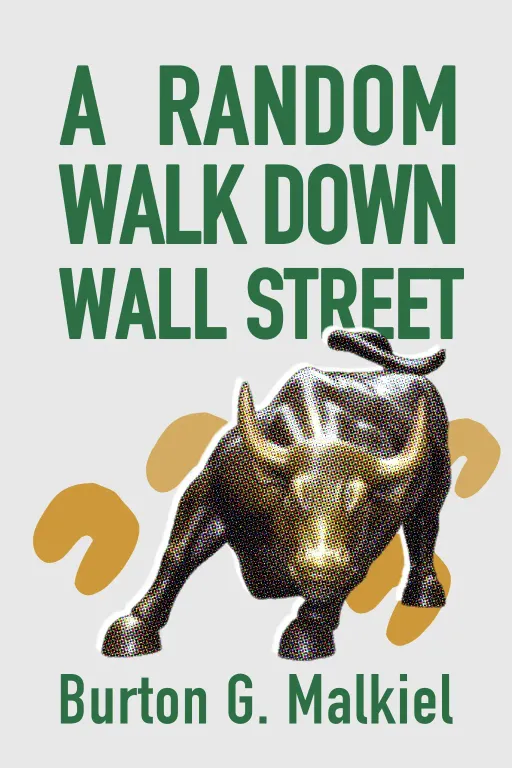
Michelle: Let’s start with Malkiel’s A Random Walk Down Wall Street. It should come with a trigger warning for day traders. Mark: Yeah—his message is brutal. “You’re not special. You can’t beat the market. Your trading strategy is astrology with spreadsheets.” Michelle: He proves that markets are mostly efficient. Every piece of information you think gives you an edge—someone else already traded on it. By the time you hit “buy,” the price has moved. Mark: Meaning your odds of outsmarting professional investors are basically the same as guessing coin flips—with fees. Michelle: Which is why his advice is radical in its simplicity: stop playing the game. Buy low-cost index funds, hold them forever, and go live your life. Mark: So instead of being clever, be consistent. The boring route that nobody on YouTube will ever film. Michelle: Exactly. But that’s the point. Getting rich slowly is the only method that always works—and it’s the one nobody wants to hear. Mark: Because “buy an index fund and wait thirty years” doesn’t get clicks. “Turn $100 into $10,000 in a weekend” does. Michelle: Right. But Malkiel’s math connects beautifully to Morgan Housel’s psychology. In The Psychology of Money, he tells the story of two men: Ronald Read, a janitor who quietly saved for decades and died with eight million dollars… Mark: …and Richard Fuscone, a Harvard-educated Merrill Lynch exec who declared bankruptcy after buying too many mansions and a yacht. Michelle: Same economy. Opposite outcomes. Housel’s message: money success isn’t IQ—it’s behavior. The janitor didn’t beat the market; he beat his impulses. Mark: He didn’t chase trends, he didn’t need to impress anyone, and—maybe the most underrated skill of all—he stayed patient. Michelle: Housel calls it “keeping the goalpost still.” Most people lose because they keep moving it. Enough is never enough. Mark: And that’s the business model of the hustle economy—convince you that “enough” doesn’t exist. Michelle: If you ever reached contentment, you’d stop buying “freedom courses.” Mark: So Malkiel gives us mathematical humility. Housel gives us emotional humility. Together, they’re saying: the market rewards endurance, not excitement. Michelle: You don’t win by being right—you win by staying in.
The Hidden Architecture of Smart Money Choices
SECTION
Mark: Okay, but even if you know all this, humans are terrible at following through. Michelle: That’s where Thaler and Sunstein come in with Nudge. They realized: people aren’t rational. So instead of shaming them, let’s redesign the environment so the easiest choice is the right one. Mark: Like auto-enrollment in retirement plans. Most companies used to ask employees to opt in. Nobody did. Flip the default to opt out, and suddenly savings rates skyrocket. Michelle: That’s called “choice architecture”—shaping the context, not the person. You make good behavior frictionless. Mark: It’s basically hiding the Doritos behind the kale, but for your bank account. Michelle: Perfect analogy. And Ramit Sethi takes that idea and makes it personal in I Will Teach You to Be Rich. He says, “If your willpower sucks, great—build a system that doesn’t depend on it.” Automate everything: bills, investments, savings. Mark: I love his mantra: “Spend extravagantly on the things you love, cut costs mercilessly on the things you don’t.” Michelle: It’s the rare self-help advice that actually works because it’s honest about human weakness. The goal isn’t monk-like restraint—it’s intelligent autopilot. Mark: So instead of budgeting through guilt, you budget through design. Michelle: Yep. Once you automate, you stop wasting mental energy on $5 questions. The boring stuff compounds quietly in the background. Mark: Which clears space for the real question: what’s your Rich Life? Michelle: For Sethi, that’s personal. For one person, it’s first-class travel. For another, it’s dinner with family every night. Money becomes a tool for agency, not performance. Mark: That’s such a big shift—from chasing status to curating experience. Michelle: Totally. And that’s the bridge to Stanley and Fallaw: the researchers who actually studied what rich people really do, instead of what Instagram pretends they do.
Real Millionaires Are Boring (and That’s the Point)
SECTION
Michelle: The Next Millionaire Next Door is the least flashy book about money ever written—and maybe the most important. Mark: Yeah, the data is hilarious. Most millionaires don’t wear Rolexes. They wear Casios. They drive Toyotas. They buy their clothes on sale. Michelle: They’re allergic to debt and obsessed with budgets. The ones pretending to be rich are usually “under-accumulators”—they look rich, but their net worth is smoke. Mark: So it’s not just that wealth hides—it actively avoids attention. Michelle: Stanley found that genuine wealth builders have one defining trait: they care more about freedom than flash. They don’t need to look successful every day, because they’re quietly building the kind of independence that actually lasts. Mark: That’s almost unfair. The people who are truly rich blend in, and the rest of us keep mistaking noise for success. Michelle: That’s the cultural irony of our time. We live in an era where success is performed. Housel calls this the “wealth illusion.” The car you don’t buy, the trip you don’t post—that’s the real compounding. Mark: So the new elite aren’t flaunting; they’re hiding. Michelle: Yep. And Stanley found something deeper: most millionaires measure success as control over time. The ability to say no—to meetings, to bosses, to nonsense. Mark: Which connects right back to Housel’s line: “The highest dividend money pays is control over your schedule.” Michelle: In the end, wealth isn’t about having more. It’s about having control. Mark: So the millionaires are really time billionaires in disguise. Michelle: The quiet kind. And that’s the point. Real wealth is invisible while it’s being built.
Five Books, One Truth—Wealth Is a Behavior, Not a Miracle
SECTION
Mark: So, if we put all five together, what’s the grand theory? Michelle: Here’s my take. Malkiel says: humility before the market. Housel says: humility before yourself. Thaler says: design your environment. Sethi says: automate your discipline. Stanley says: live like nobody’s watching. Mark: That’s like the Avengers of financial sanity. Michelle: The world sells you speed; these books sell you stillness. Getting rich isn’t mysterious—it’s monotonous. Mark: Which is why almost no one does it. We crave novelty more than stability. Michelle: Right. True wealth is like fitness: simple, unglamorous, and cumulative. You win by not quitting the boring stuff. Mark: So, the master skill isn’t making money—it’s not self-sabotaging for 30 years. Michelle: Bingo. If you can stay humble, patient, and slightly bored, compounding will handle the rest. Mark: That should be on the front of every brokerage app: “Warning: this may take decades.” Michelle: Or, “Results improve with extreme patience.” Mark: Which nobody clicks, but everyone needs. Michelle: Because the real secret of wealth is this paradox: the less you try to look rich, the more likely you are to become it.
The Calm After the Hustle
SECTION
Michelle: You know, after reading all these, I realized none of them are truly about money. Mark: No—they’re about behavior under pressure. About how to stay calm when everyone else is sprinting. Michelle: Emotional discipline disguised as finance. Think about it—Ramit Sethi isn’t selling budgets; he’s selling clarity. Thaler and Sunstein aren’t tweaking taxes; they’re teaching how to design a life that defaults to smart. Mark: Housel’s writing about humility as a financial operating system. Malkiel’s writing about surrendering control. Stanley’s writing about restraint as rebellion. Michelle: Together, they’re saying: getting rich is an inside job. The outer strategies are secondary. Mark: Which explains why almost nobody pulls it off. It’s not an information gap; it’s a temperament gap. Michelle: Yes. People don’t fail because they lack data; they fail because they lack patience. They don’t need better numbers—they need better nerves. Mark: That’s such a good line. “Better nerves.” It’s true. The market is basically a psychological stress test. Michelle: And the winners aren’t the smartest—they’re the ones who don’t flinch. Mark: So what’s the practical takeaway here? Michelle: Here’s our weekly challenge: do one financially boring thing. Automate a transfer. Increase your retirement contribution by one percent. Cancel something you forgot you were paying for. Mark: Or sit down and write your personal definition of “enough.” Not a number—a feeling. Michelle: Yes. Because once you name “enough,” you stop chasing ghosts. Mark: And once you stop chasing, you start compounding. Michelle: Exactly. Boring is the new luxury. Patience is the new flex. And humility—the kind that doesn’t need to perform—is the new wealth. Mark: So if you’re calm, consistent, and slightly bored, congratulations—you’re already ahead of most people yelling online about money. Michelle: That’s the quiet truth of wealth: it doesn’t shout. It stacks. Mark: This is Aibrary, signing off.