Foundations for Financial Freedom: Your Wealth Roadmap
Golden Hook & Introduction
SECTION
Nova: Working harder for your money is often the least effective way to actually get rich.
Atlas: Whoa, hold on a second, Nova. That's a pretty bold claim right out of the gate. Most of us are taught the exact opposite – hustle harder, put in more hours, grind until you achieve... whatever "rich" means. Are you saying we've been lied to?
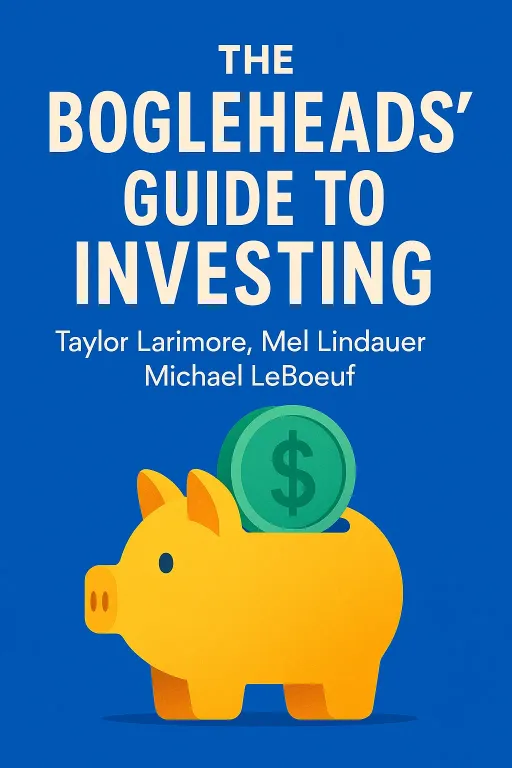
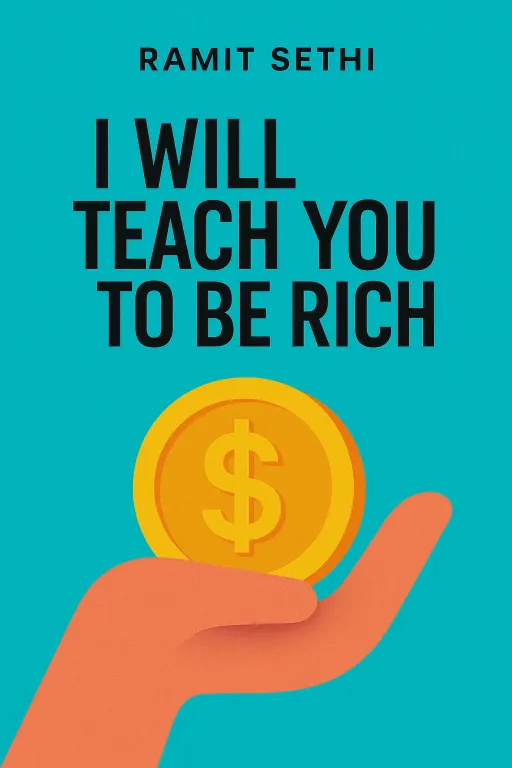
Nova: Not lied to, Atlas, but perhaps given an incomplete picture. Today, we're diving into two incredibly powerful yet surprisingly simple philosophies that challenge that very notion. We’re pulling insights from and the collective wisdom of
Atlas: Ah, Ramit Sethi. His name alone usually brings up images of direct, no-nonsense financial advice. And the Bogleheads, I know they're practically legendary in the world of passive investing. But how do these two, with their distinct approaches, connect to this idea of "working smarter, not harder" for wealth?
Nova: They’re two sides of the same coin, really. Ramit, known for his incredibly practical and often humorously blunt style, has built a reputation on showing people how to automate their finances to live a rich life. His book has received widespread acclaim for making complex financial concepts feel entirely achievable. And the Bogleheads, who are essentially the disciples of Vanguard founder John Bogle, champion a simple, evidence-based approach to investing that minimizes effort while maximizing long-term returns. Their guide is highly respected within the financial independence community precisely because it cuts through the noise.
Atlas: So, one is about setting up the money machine, and the other is about what kind of fuel to put into it? I’m curious how this plays out in real life, especially for someone seeking financial clarity amidst a busy schedule.
The "Set-It-and-Forget-It" Wealth Machine
SECTION
Nova: Precisely. Let's start with Ramit Sethi's framework, which is all about building what I call a "set-it-and-forget-it" wealth machine. His core philosophy is built on conscious spending, automating your finances, and optimizing those high-impact financial areas like banking, credit cards, and investments.
Atlas: Okay, but "conscious spending" can sound a lot like just another budget, which for many people, myself included, often feels restrictive and frankly, a bit soul-crushing. How is Ramit's approach different from just cutting out all the fun?
Nova: That's a brilliant question, and it's where Ramit completely flips the script. He argues that conscious spending isn't about cutting lattes if you love lattes. It's about identifying what you love, what truly brings you joy and value, and then spending lavishly on those things without guilt. Conversely, you ruthlessly cut back on everything you care about. For instance, he tells the story of a reader who loved going out to expensive dinners but hated paying for cable TV. Instead of cutting both, Ramit encouraged them to cancel cable, saving a significant amount, and then redirect that money to enjoy more of those dinners.
Atlas: Oh, I like that. It’s not about deprivation, it’s about intentionality. It shifts the focus from what you have to what you have more of, by making strategic choices. That's actually really inspiring for someone who wants to achieve more without feeling constrained.
Nova: Exactly. And once you've defined those conscious spending categories, the next critical step is automation. This is the "set-it-and-forget-it" part. He advocates for setting up your entire financial life to run on autopilot. Your paycheck comes in, and before you even see it, money is automatically routed to your investments, your savings goals, your bills, your conscious spending accounts.
Atlas: So how does that look in practice? Is it just setting up direct deposits, or is there more to it?
Nova: It’s a bit more comprehensive. Imagine your paycheck hits your checking account. Instantly, a percentage goes to your 401, another to your Roth IRA, then a fixed amount to your high-yield savings account for emergencies, and finally, your credit card bills are paid automatically. What's left is your conscious spending money. He shares a fantastic anecdote about a young professional who, feeling overwhelmed, set up an automatic transfer of just $50 from their checking to an investment account every payday. They literally forgot about it for years. When they finally checked, that small, consistent, effortless transfer had grown into a surprisingly substantial sum, completely transforming their financial outlook. It was a true "aha!" moment of passive wealth creation.
Atlas: Wow, that’s actually really inspiring. It’s like building a financial autopilot that just keeps working in the background, even when you're focused on your career or personal growth. But you mentioned optimizing "high-impact areas." What exactly are those, beyond just having a checking account?
Nova: Those are the areas where a small amount of effort upfront can yield massive returns over time. We're talking about banking – getting rid of fees and earning interest; credit cards – maximizing rewards without paying interest; and investments – ensuring your money is growing efficiently. Ramit emphasizes that these aren't about daily monitoring; they're about choosing the right tools and setting them up correctly once. He highlights how simply switching from a traditional bank with fees to a no-fee online bank can save hundreds over a year, money that can then be invested.
Atlas: So it's not about micro-managing every single dollar, but rather about strategically setting up the big systems correctly and then letting them run themselves? That sounds incredibly appealing for someone who values efficiency and doesn't want to get bogged down in minutiae.
The Power of Simplicity: Bogleheads' Path to Effortless Investing
SECTION
Nova: Exactly, Atlas. And that idea of 'setting up the big systems correctly once' leads us perfectly to the Bogleheads, who take that concept to its ultimate conclusion in the world of investing. Their philosophy, rooted in the teachings of John Bogle, is brilliantly simple: invest in low-cost, diversified index funds, be patient, and avoid trying to time the market.
Atlas: Okay, but "simple" and "investing" don't often go together. Most people, if they're thinking about building wealth, imagine they need a complex strategy, a financial advisor picking hot stocks, or some insider trading tip to get rich. Isn't that what the experts always seem to imply?
Nova: That's the conventional narrative, isn't it? The Bogleheads, however, present a mountain of evidence that shows the opposite. John Bogle's groundbreaking insight, which he championed through Vanguard, was that most actively managed funds—funds where a manager tries to pick winning stocks—actually underperform the overall market over the long term, especially once you factor in their higher fees.
Atlas: Really? So, all that effort and expense from these "expert" fund managers often results in money for the investor? That sounds almost counterintuitive for someone who's used to seeing effort directly correlate with results in their professional life.
Nova: It’s true. The Bogleheads' guide illustrates this with compelling examples. Imagine two investors: one puts their money into an actively managed fund with a 1% annual fee, and the other puts it into a low-cost index fund tracking the same market, with a 0.1% fee. Over 30 or 40 years, that seemingly small 0.9% difference in fees can literally eat away hundreds of thousands of dollars in returns. One of their classic comparisons shows how a hypothetical actively managed fund might grow to a substantial sum, but the low-cost index fund, by simply matching the market and minimizing fees, grows to a significantly larger amount due to the power of compounding. The fees become a silent, relentless drag on your wealth.
Atlas: So, the secret isn't picking winners, it's just owning a piece of everything and paying almost nothing for the privilege? That sounds almost too good to be true. It's like saying the best way to win the race is to just run steadily and not try to outsmart the track.
Nova: Precisely. Diversification means owning a little bit of every company in the market through an index fund, so you're not betting on a single horse; you're betting on the entire economy. And "low cost" means those tiny expense ratios that don't erode your returns. They also emphasize that market timing – trying to buy low and sell high – is a fool's errand. Even seasoned professionals rarely succeed consistently. The Bogleheads advocate for "time in the market," not "timing the market."
Atlas: For our listeners who are "Resilient Leaders," they're used to taking decisive action, making quick decisions, and seeing immediate results. The idea of "patience" and "minimal effort" might feel counterintuitive for achieving "superior returns." How do you reconcile that drive for action with this passive approach?
Nova: That's a critical point. The "effort" shifts. It's not about constant market watching or trying to predict the next big thing. The discipline comes in consistently saving, consistently investing, and then having the strategic inaction to tinker with it when the market gets volatile. It’s a different kind of leadership – leading yourself to trust the long-term growth of the global economy, rather than trying to micromanage unpredictable short-term fluctuations. It's about setting the right course and staying on it, which requires immense mental clarity and resilience in itself.
Synthesis & Takeaways
SECTION
Nova: So, when you bring these two powerful philosophies together, you see a complete roadmap for financial freedom. Ramit Sethi gives you the framework to automate your savings, to consciously decide where your money goes. And the Bogleheads give you the best, simplest, most efficient place to put those automated savings for long-term growth.
Atlas: It’s a powerful combination: conscious spending to fund the machine, automation to run it, and low-cost index funds to grow it without constant intervention. It really is about optimizing your financial systems for long-term growth and minimum effort, rather than getting bogged down in unnecessary complexities and fees that hinder your path to financial freedom. That deep question we started with, it feels answered.
Nova: Absolutely. And the "Tiny Step" takeaway from both is incredibly actionable. Automate a small, consistent transfer from your checking to an investment account each payday. Even if it's just $50. It’s about building that habit, establishing that "set it and forget it" wealth machine. That one small action, consistently applied, can be the most impactful thing you do for your financial future.
Atlas: That small initial step can feel like a huge mental hurdle, but the payoff of financial clarity, security, and options—that's the real goal for anyone seeking true financial freedom. It's about building a life where your money works for you, so you can focus on mastering your craft and leading your best life.
Nova: Exactly. We hope this conversation has sparked some reflection on your own financial systems. We’d love to hear your thoughts and experiences with automation or simple investing. Share your insights with the Aibrary community!
Atlas: This is Aibrary. Congratulations on your growth!