

The Science of Restoring Deep Focus in a Distracted World
Golden Hook & Introduction
SECTION
Nova: The average person switches tasks every three minutes. That is not a sign of productivity, and it is definitely not a sign of high performance. It is a sign that our attention has been effectively fragmented.
Atlas: That is a terrifying statistic. Every three minutes? I feel like I am doing well if I make it past three minutes without checking if I got an email, let alone finishing a project. It feels like the modern workplace is designed specifically to keep us from ever reaching a state of deep, meaningful work.
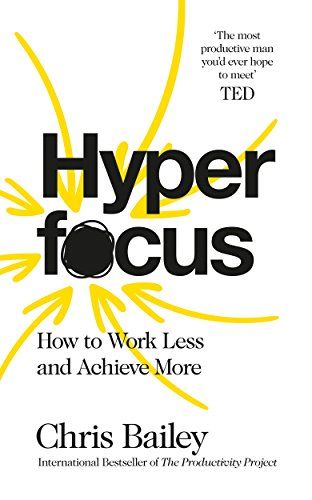
Nova: You are not wrong. And that is exactly why we are diving into this today. We are looking at two essential pillars of modern cognitive health. First, we have Hyperfocus by Chris Bailey, who is known for his, let us call it, extreme commitment to productivity—he actually spent a year living like a monk to test the limits of his own attention. And then we are looking at Stolen Focus by Johann Hari, a journalist who traveled the globe to figure out why the world feels like it is constantly screaming for our attention.
Atlas: I have heard of both. Bailey is the guy who treats his brain like a laboratory, right? And Hari is the one who argues that we are not just bad at focusing, but that there are systemic forces literally stealing our capacity to pay attention.
Nova: Exactly. Bailey gives us the internal framework, the "how-to" of managing our own brain, while Hari gives us the diagnostic, the "why" of the external environment. If you are a high-achiever, a strategist, someone who wants to reclaim their edge without burning out, these two combined are your blueprint.
Atlas: So, we are going to talk about how to protect our focus, why it feels so hard to do, and most importantly, how to actually build a system that works, instead of just trying to white-knuckle our way through the day.
Nova: Precisely. Let us start with the engine itself. Let us look at what happens inside your head when you actually try to focus.
The Internal Engine: Hyperfocus and Scatterfocus
SECTION
Atlas: Okay, let us start there. I think most people have a very binary view of focus. You are either working, or you are wasting time. You are either focused, or you are distracted. Is that the wrong way to look at it?
Nova: It is completely the wrong way. And that is the brilliance of Chris Bailey’s work. He argues that we have two primary modes of attention: Hyperfocus and Scatterfocus. And the mistake we make is thinking that we should be in Hyperfocus all the time.
Atlas: Wait, hold on. Hyperfocus sounds like the gold standard. Why wouldn't I want to be in Hyperfocus all day? If I am a strategist, I want to be locked in from nine to five.
Nova: Here is the reality. The brain is not a machine that can just run at peak capacity indefinitely. Think of Hyperfocus as your high-performance gear. It is where you do your deep, analytical, complex work. You are fully engaged, you are productive, and you are producing high-value output. But you cannot drive a car in fifth gear all the time. You will overheat the engine.
Atlas: That makes sense. I have definitely felt that "overheated" sensation by three o'clock in the afternoon. So, what is the other gear?
Nova: That is where Scatterfocus comes in. And this is the part people usually get wrong. They think Scatterfocus is just scrolling through social media or checking news headlines. But it is not. Scatterfocus is intentional daydreaming. It is when you let your mind wander, but you do it with purpose.
Atlas: Okay, I am intrigued. How do you "intentionally" daydream? That sounds like an oxymoron.
Nova: It is about giving your brain a different kind of task. When you are in Scatterfocus, you are not trying to solve a specific problem with intense logic. Instead, you are allowing your brain to connect distant dots. This is where creative breakthroughs happen. This is where you connect an idea you had last Tuesday with a project you are working on today. If you never engage in Scatterfocus, you are essentially starving your brain of the raw material it needs for Hyperfocus.
Atlas: That is a great analogy. It is like the difference between working the muscle and letting it recover. But let me play devil’s advocate for a second. If I tell my boss, or even if I tell myself, that I am taking thirty minutes to just "daydream" to boost my productivity, I feel like a slacker. There is a massive guilt factor there.
Nova: And that is the trap. The guilt is the biggest enemy of cognitive replenishment. You have to reframe that time. It is not "wasted time"; it is "cognitive maintenance." If you are a strategist, you need to treat your attention like a limited resource. You have a finite amount of "attentional space" every day. If you fill it all with low-value, reactive tasks, you have zero room left for the high-value, deep work.
Atlas: So, the goal is to balance these two. But how do you actually switch gears? It feels like the world is constantly pulling me out of Hyperfocus. My phone pings, a Slack notification pops up, a coworker swings by with a "quick question." It feels like I am being forced into a gear I do not want to be in.
Nova: And that is the perfect pivot to the second part of this puzzle. You are feeling the friction of the external world. You are trying to manage your internal engine, but the road is covered in potholes. And that is where Johann Hari’s work on Stolen Focus comes in.
The External Thief: Why Focus is Harder Than Ever
SECTION
Atlas: Right, because even if I am disciplined, even if I have my "Hyperfocus" blocks scheduled, the environment seems designed to break them. Is Hari saying this is all, like, a grand conspiracy?
Nova: Not a conspiracy, but a systemic reality. Hari’s argument is that we are living in an attention economy. The business model of the most powerful companies on earth is literally to steal your attention. Every time you get a notification, every time you feel that itch to check your feed, that is not a personal failure. That is a highly engineered response.
Atlas: I have always felt that. It is like trying to meditate in the middle of a carnival. It is not just that I am weak; it is that the carnival is really, really loud.
Nova: Exactly. Hari talks about the "Attention Economy," where the goal of these platforms is to keep you engaged for as long as possible. And the best way to keep you engaged is to keep you in a state of high arousal—usually through outrage, fear, or novelty. That constant state of arousal is the death of deep focus. It keeps your brain in a state of constant, low-level fight-or-flight.
Atlas: That explains the fatigue. It is not just that I worked hard; it is that I was being bombarded by information all day. It is like running a marathon while someone is throwing tennis balls at your head.
Nova: That is a vivid image, but it is accurate. And the tragedy is that we are losing our ability to read books, to have long conversations, to think deeply about complex problems. We are losing the capacity for what we might call "slow thought."
Atlas: So, if the system is designed to steal my focus, am I just doomed? Is the only solution to throw my phone in the ocean and move to a cabin in the woods?
Nova: That is the temptation. But that is not practical for the high-achieving strategist. You have to live in the world. The strategy here is not to retreat from the world, but to build a fortress around your attention.
The Strategist's Approach: Building Your Fortress
SECTION
Atlas: Okay, I like the idea of a fortress. So, how do we build it? If I am someone who has to be available, who has to be responsive, how do I actually implement this?
Nova: Start with the first twenty minutes of your day. This is a core recommendation for anyone trying to regain their edge. Do not check your email. Do not check your messages. Do not look at the news. Use that first, freshest block of time for your most important, high-cognitive-load task.
Atlas: But what if an emergency happens?
Nova: Here is the truth: ninety-nine percent of what we treat as an emergency is just noise. If it is a true emergency, someone will call you. If it is just a request for an update on a spreadsheet, that can wait twenty minutes. The cost of that "emergency" is the fragmentation of your best cognitive hours.
Atlas: I see what you are doing. You are prioritizing the internal engine—Hyperfocus—before the world gets a chance to hijack it.
Nova: Precisely. You are winning the first battle of the day. And then, you have to be intentional about your downtime. This goes back to Bailey’s Scatterfocus. When you take a break, do not just switch from your work screen to your phone screen. That is not rest. That is just shifting your distraction.
Atlas: Oh, that hits home. I definitely do that. I finish a task, and my immediate reflex is to check my phone. I am basically just switching from one set of stimuli to another.
Nova: And your brain never gets the chance to enter Scatterfocus. It never gets the chance to idle and reset. True rest, true Scatterfocus, is taking a walk without a podcast, or sitting with a cup of coffee without a screen, or just staring out the window. It feels boring at first. But that boredom is the precursor to creativity.
Atlas: It sounds like the "high-achieving" version of this is actually about being more intentional with the gaps in your day. It is not about working more hours; it is about protecting the quality of the hours you already have.
Nova: That is the entire point. You are a strategist. You manage your capital, your team, your resources. Why would you not manage your attention with the same level of rigor?
Synthesis & Takeaways
SECTION
Atlas: This has been eye-opening. I think the biggest takeaway for me is that I have been treating my attention like a renewable resource that I can just burn through, and then I am surprised when I feel burnt out. But it is actually a finite resource that needs to be managed and protected.
Nova: That is the perfect summary. It is not about having more willpower. It is about having a better system. You protect your Hyperfocus blocks with your life, and you treat your Scatterfocus time as an essential part of your work, not as a reward for finishing your work.
Atlas: And I love that distinction. It is not "I will take a break when I am done." It is "I am scheduling my recovery so I can continue to produce high-value work." It changes the whole mindset.
Nova: It shifts you from being a victim of your environment to being an architect of your own cognitive state. You are building the conditions for your own success.
Atlas: I feel like I have a much clearer roadmap now. Start the day with the twenty-minute deep work block, stop treating my breaks as a chance to doom-scroll, and start defending my focus as if it is the most valuable asset I own. Because, honestly, it kind of is.
Nova: It is the asset that matters in the knowledge economy. Everything else is a commodity. Your ability to focus is your competitive advantage.
Atlas: I am going to try that first twenty-minute rule tomorrow. No phone, no email, just the one big thing. I am curious to see how it changes my energy for the rest of the day.
Nova: You will be surprised. It changes the entire trajectory of your morning. And for everyone listening, remember: you do not have to be perfect. You just have to be intentional. Reclaim your focus, one block at a time.
Atlas: This has been a fantastic deep dive. I feel like I can finally stop fighting my own brain and start working with it.
Nova: That is the goal. Thank you for walking through this with me. This is Aibrary. Congratulations on your growth!