

The Global Tapestry: Laws, Societies, and Human Rights
Golden Hook & Introduction
SECTION
Nova: What if I told you that the invisible rules governing nations are more impactful on your daily life than most local laws? Think about it: the coffee you drink, the news you consume, even the air you breathe—all touched by a legal system few truly understand.
Atlas: Whoa, that's a bold claim, Nova. Most of us are probably thinking about our local traffic laws or tax codes, not some grand global legal system. Are you saying international law dictates my morning espresso?
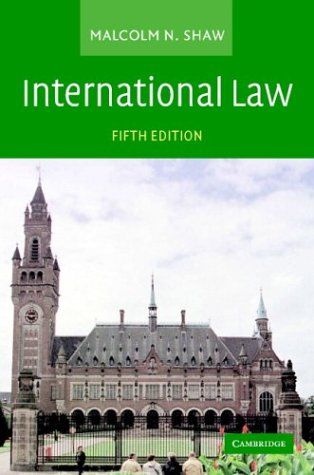
Nova: In a way, yes! It's the framework that allows global trade, establishes environmental standards, and even defines what constitutes acceptable state behavior. Today, we're dissecting two incredibly important texts that help us understand this: 'International Law' by Malcolm N. Shaw, a foundational text for anyone serious about the subject, and 'Human Rights Law and Practice' by Philip Alston and Ryan Goodman.
Atlas: Ah, Alston. I remember hearing his name in connection with the UN. Doesn't he have a really hands-on background?
Nova: Absolutely. Philip Alston, as a former UN Special Rapporteur on Extreme Poverty and Human Rights, brings a unique, on-the-ground perspective to the often-abstract world of human rights. He's not just a theorist; he's been in the trenches, witnessing the practical challenges firsthand. That experience grounds the entire discussion of human rights in reality, which is crucial when we're talking about something so fundamental.
Atlas: That makes a huge difference. It's one thing to talk about ideals, another to see how they play out in real life. So, for our listeners who are curious about how the world actually works beyond national borders, where do we even begin to unspool this global tapestry?
Nova: Well, to truly appreciate the threads, we have to start with the loom itself: the foundational architecture of international law. It’s what allows these global conversations, and indeed, global actions, to even take place.
The Global Legal Tapestry: Understanding International Law
SECTION
Nova: Many people hear "international law" and immediately think of a global police force or a world government, but it's far more nuanced. It’s a system primarily built on the consent of states, regulating their interactions. Its main sources are treaties, which are essentially contracts between nations, and customary international law, which arises from the consistent practice of states over time, accepted as law.
Atlas: Hold on, so it's not like a global parliament passing laws that everyone just has to follow? It's more like a handshake agreement, or a long-standing tradition that everyone just kind of respects?
Nova: Exactly! Think of the United Nations Charter, for instance. It was signed by 50 countries in 1945, a direct response to the devastation of World War II. Its core purpose was to prevent future global conflicts and promote cooperation. The process involved extensive negotiations, drafting, and ratification by sovereign states.
Atlas: That makes sense for something as monumental as preventing another world war. But how do you enforce a "handshake agreement" when powerful nations decide they don't want to play by the rules?
Nova: That’s the million-dollar question, isn't it? Unlike national law with its police and courts, international law lacks a centralized enforcement body. However, it’s far from toothless. Enforcement comes in various forms: the International Court of Justice can rule on disputes, though its jurisdiction often depends on state consent. Then there are economic sanctions, diplomatic pressure, and perhaps most powerfully, reputational costs. A nation that consistently flouts international law risks isolation and a loss of standing on the global stage.
Atlas: So, it's not about immediate arrest, but more about a slow, steady erosion of trust and influence. I can see how that would influence a nation's long-term strategic interests. But how does this abstract international system actually connect to national legal systems? Like, how does a treaty signed by a president in one country become something that affects a citizen in another?
Nova: That's where the integration happens. Many countries, like the UK, operate under a 'dualist' system, meaning international treaties don't automatically become national law. They require an act of Parliament to be incorporated. Others, like the United States, are 'monist' to varying degrees, where ratified treaties can directly become part of domestic law. This means that an international agreement on, say, environmental protection, might directly influence the regulations a local factory has to follow, or it might require a new national law to be passed first. It's a constant dance between global aspirations and national sovereignty.
Human Rights: Universal Ideals vs. Real-World Challenges
SECTION
Nova: And this dance becomes particularly intricate when we shift our focus from state-to-state conduct to the rights of individuals within those states: human rights. This is where the rubber meets the road between grand legal frameworks and the lived realities of billions.
Atlas: That’s a powerful transition. Because while we can talk about treaties and state conduct, human rights feel deeply personal. We're talking about basic dignities. But are they truly universal? I mean, different cultures have different values, right?
Nova: That's precisely the central tension Alston and Goodman explore. The Universal Declaration of Human Rights, adopted in 1948, is often considered the bedrock. It articulates fundamental rights like freedom from torture, freedom of expression, and the right to education. The idea was to create a common standard for all peoples and all nations. However, the implementation is where the complexities truly emerge.
Atlas: Can you give an example of that tension? Where a universal ideal clashes with a real-world cultural or political landscape?
Nova: Absolutely. Consider the right to freedom of expression, a cornerstone of many human rights conventions. In many Western democracies, this right is broadly protected, with limitations mainly around incitement to violence or defamation. However, in some authoritarian states, or even in societies with different cultural norms around public discourse, this right can be severely curtailed. For instance, a government might invoke national security or public order to silence dissent, leading to the arrest of journalists or activists.
Atlas: So, a journalist in one country speaking out against corruption might be celebrated, while in another, they could be imprisoned. It makes me wonder how effective these international laws truly are if they can be interpreted so differently, or simply ignored. Are they just aspirational documents?
Nova: They are aspirational, but they're also powerful tools. Take the case of the "comfort women" in the Philippines during World War II. Japan's actions, while not explicitly covered by human rights law at the time, later became a focal point for international human rights advocates. Decades later, survivors and their advocates, supported by international human rights principles and growing global awareness, continued to push for recognition and reparations. The process was long and arduous, involving international bodies, NGOs, and relentless activism. While full justice remains elusive for many, the sustained pressure, informed by human rights norms, significantly altered the global discourse on wartime sexual violence and led to some forms of acknowledgment and compensation. It's a testament to the long-term impact of these norms, even when direct legal enforcement is difficult.
Atlas: That's a powerful and heartbreaking example. It shows that even without a global police force, the moral weight and sustained advocacy, rooted in these principles, can eventually shift the needle. It's not a quick fix, but a slow, persistent push. That makes me think about the "Tiny Step" in our user's profile, to research a recent international human rights case. It's about seeing these principles in action.
Nova: Exactly. It's about understanding that human rights law isn't a static document; it's a living, breathing framework that is constantly being challenged, interpreted, and fought for. The influence of unique cultural and political landscapes isn't a reason to abandon universal rights, but rather a call to understand the nuances of their application and the persistent efforts required for their realization.
Synthesis & Takeaways
SECTION
Nova: So, what we've seen today is that international law provides the grand stage, the intricate architecture, upon which global interactions occur. And within that, human rights law is the crucial script, constantly being refined and debated, that guides how individuals are treated by their states and by each other.
Atlas: It’s a lot to take in. From treaties that regulate global trade to the incredibly personal fight for basic dignities, it all feels so interconnected. It’s not just for diplomats and lawyers; it truly shapes the world for everyone.
Nova: It absolutely does. Understanding this global legal tapestry is not just academic; it's essential for anyone seeking to navigate an increasingly interconnected world. It influences everything from business ethics and supply chains to environmental policy and global citizenship. The laws that bind nations, and the rights that protect individuals, are the invisible forces shaping our collective future.
Atlas: That’s a profound insight. It makes me realize that even if we don't work in international law, being aware of these frameworks is a critical part of being an informed global citizen. For our listeners, I’d encourage you to take that tiny step we mentioned: research a recent international human rights case that genuinely interests you. See how these principles are being argued, challenged, or upheld in the real world. It can be incredibly illuminating.
Nova: A fantastic call to action, Atlas. It's about moving from abstract concepts to tangible impact.
Atlas: Absolutely. This is Aibrary. Congratulations on your growth!