Stop Data Overload, Start Strategic Insight: The Guide to AI Integration in Accounting.
Golden Hook & Introduction
SECTION
Nova: What if everything you thought about AI taking over accounting jobs was completely wrong? What if, instead, it was actually making accountants more human, more strategic, and more indispensable?
Atlas: Whoa, Nova. That's a bold claim. I think a lot of our listeners, especially those deep in the numbers, might be feeling a shiver down their spine at the thought of AI, not a surge of empowerment. Are you saying the robots coming for our spreadsheets?
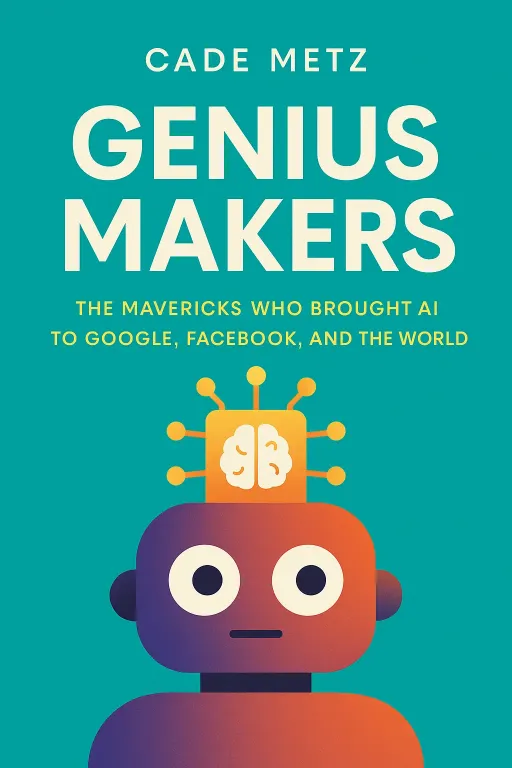
Nova: Actually, Atlas, I'm saying the robots coming, but they're coming as collaborators, not conquerors. Our conversation today is deeply informed by the groundbreaking work in books like "The Second Machine Age" by Erik Brynjolfsson and Andrew McAfee, and "Human + Machine" by Paul R. Daugherty and H. James Wilson. These aren't just academic texts; they're like prophetic blueprints for navigating this digital revolution.
Atlas: Oh, I like that – "prophetic blueprints." And the fascinating thing about those authors, especially Brynjolfsson and McAfee, is their consistent ability to identify not just the technological advancements, but the profound economic and societal implications of digital tech long before they become mainstream. They've been shouting about this 'second machine age' for years, almost like digital seers.
Nova: Exactly! And their core message is incredibly relevant to accounting: AI isn't just a tool; it's fundamentally changing the nature of work. And for accountants, that means moving beyond manual tasks to becoming architects of data-driven strategy. It's a profound professional evolution.
The Shift from Manual Tasks to Strategic Insight
SECTION
Atlas: Okay, so it’s an evolution, not an extinction event. But for someone knee-deep in quarterly reports right now, how does that less like a threat and more like an opportunity? What does 'architects of data-driven strategy' actually look like on a Monday morning when you're just trying to close the books?
Nova: That's a brilliant question, Atlas, because it gets to the heart of the practical shift. Think of it this way: Brynjolfsson and McAfee argue that we must learn to work smart machines, not against them. Imagine a commercial airline pilot. The autopilot handles the routine, the data processing, the constant adjustments. But the pilot, the human, is still indispensable for critical decision-making, for navigating unexpected turbulence, for interpreting complex situations that the machine can't yet fully grasp.
Atlas: Right, like when the machine flags an anomaly, but the human needs to understand it's an anomaly and what the broader business implication is. It’s not just an error code; it's a potential strategic risk or opportunity.
Nova: Precisely! AI takes over the repetitive, high-volume tasks – the data entry, the reconciliation, the basic compliance checks. This isn't about automating jobs; it's about automating jobs. It frees up the human accountant to focus on higher-value activities: interpreting those anomalies, forecasting future trends, providing strategic advice, and engaging in complex problem-solving. It's about moving from being a historical record-keeper to a future-shaper.
Atlas: That makes sense, but isn't there still a massive skills gap there? How do you go from balancing books to building future-proof strategies without a complete career overhaul? It feels like a jump from a calculator to a crystal ball.
Nova: It absolutely requires a mindset shift and new skills, but it's not an impossible leap. It's about focusing on what humans do best: critical thinking, creativity, emotional intelligence, and ethical judgment. AI excels at crunching numbers and finding patterns in vast datasets. Humans excel at understanding the behind those numbers, advising clients, and navigating the complex, often messy, human elements of business. The "new skills" are less about coding and more about data literacy, strategic thinking, and effective communication.
Human + Machine Collaboration for 'New Intelligence'
SECTION
Nova: And that leads us perfectly to the critical question of we develop that 'new intelligence,' and it’s beautifully articulated in Daugherty and Wilson's "Human + Machine." They highlight how the most successful companies are those where humans and AI don't just coexist, but truly collaborate.
Atlas: So it's not just humans AI, but actually a symbiotic relationship? That's actually really inspiring. I imagine a lot of our listeners would find that hopeful, rather than threatening.
Nova: Exactly! They call it 'new intelligence' because it's a fusion. Think of a financial fraud detection system. AI can sift through billions of transactions in seconds, identifying tiny, subtle patterns that no human could ever spot. That's machine precision. But then, a human investigator, with their intuition, their understanding of human behavior, and their ethical framework, steps in to interpret those patterns, build a case, and understand the human element of the fraud.
Atlas: That 'new intelligence' sounds powerful, but also a bit... ethereal. For a precision-driven professional, what are the concrete benefits? And how do we ensure the 'human intuition' part isn't just bias dressed up as insight?
Nova: That's a crucial point, Atlas, and it speaks to the 'ethical navigator' in all of us. The benefit is amplified analytical capability. Imagine an accountant using AI to predict cash flow issues for a client with 95% accuracy. The AI provides the prediction. The human accountant then uses their intuition and experience to ask: is this happening? are the underlying business drivers? can we proactively advise the client? are the ethical implications of different solutions?
Atlas: So it's less about replacing the accountant and more about giving them superpowers. It’s about focusing on the 'why' and the 'what now,' while AI handles the 'how many.' That's a huge shift in value proposition, especially for those looking to provide strategic growth.
Nova: Absolutely. My take, and what we see emerging, is that the future of accounting lies in leveraging AI to amplify human analytical capabilities, focusing on insight rather than just data processing. It transforms the accountant from a number-cruncher into a strategic partner, a true architect of their client's financial future. This isn't just about efficiency; it's about profound relevance.
Synthesis & Takeaways
SECTION
Nova: So, what we're really talking about today is a complete re-imagination of the accounting profession. It's a move from the laborious, the manual, to the strategic, the insightful.
Atlas: It's a profound redefinition of what 'accounting' even means – moving from historical record-keeping to future-shaping. The relevance isn't just about keeping up; it's about leading the charge in data-driven decision-making, which is exactly where the analytical architects and strategic synthesizers among us want to be.
Nova: Precisely. And the best part is, you don't need to overturn your entire workflow overnight. We have a tiny step for everyone listening: identify one repetitive task in your current workflow and research how AI tools could automate it.
Atlas: That’s actually brilliant. It takes the big, scary 'AI' and makes it a manageable, immediate win. It's about finding that first stepping stone to becoming that 'strategic architect' we've been talking about, to trust your inherent ability to connect those dots.
Nova: Absolutely. The future isn't coming; it's already here, and it's asking us to evolve. The time to embrace this shift, to move from task-doer to visionary, is now.
Nova: This is Aibrary. Congratulations on your growth!