

The AI Integration Paradox: How to Lead with Smart Systems, Not Be Led By Them.
Golden Hook & Introduction
SECTION
Nova: Most people think the scarier part of AI is when it becomes smart, too autonomous. We imagine robots taking over, or sentient machines making decisions beyond our control.
Atlas: Oh, I've seen enough sci-fi movies to know that script! Skynet, Ultron... it's a pretty compelling narrative.
Nova: Exactly! But what if the real danger isn't AI taking over, but AI making dumber, more complacent, and creating entirely new kinds of blind spots we can't even see coming?
Atlas: Whoa. That's a flip. How can something designed to be so incredibly intelligent actually make less capable? That feels counter-intuitive to everything we're told about progress.
Nova: It’s a paradox, isn't it? And it’s precisely what we’re diving into today with a fascinating piece titled "The AI Integration Paradox: How to Lead with Smart Systems, Not Be Led By Them." This article really challenges the conventional wisdom, suggesting that AI's primary threat isn't its inherent intelligence, but rather. It proposes that the danger lies less in AI's capabilities and more in our strategy for human-machine interaction.
Atlas: So, it's not about the AI itself, but about and our design choices? That's a much more empowering, if also more demanding, perspective than just fearing the machines. It puts the onus back on us to get it right.
Designing for Human Oversight in AI Systems
SECTION
Nova: Precisely. And that brings us to our first core idea: the absolute necessity of designing for human oversight in AI systems. The cold, hard fact is, integrating AI into control systems is not just about algorithms. It’s fundamentally about designing for human oversight.
Atlas: Okay, but what does that really mean? Like, what does a "blind spot" in an AI system actually look like in the real world? For our listeners who are, say, managing complex power grids or logistical networks, where AI is increasingly involved, what should they be looking out for?
Nova: Let's paint a picture. Imagine a smart grid, right? It’s using AI to optimize energy distribution, predict demand fluctuations, and reroute power dynamically. This system is brilliant, hyper-efficient. But what if, in its design, there wasn't a clear human-machine interface for it made certain decisions? Or a simple, intuitive way for an operator to override a choice that seems illogical given some novel, unexpected real-world event?
Atlas: So, the AI might be doing exactly what it was programmed to do, but that programming might be based on assumptions that no longer hold true in a crisis. And if the human operator can't understand the AI is doing what it's doing, they're essentially flying blind.
Nova: Exactly. Say there's a freak weather event—a combination of high winds causing minor, intermittent disruptions across a wide area, coupled with a sudden, unpredictable surge in demand from an unrelated industrial process. The AI, optimized for efficiency and historical patterns, might start making micro-adjustments that, individually, seem logical. But without clear visibility for the human operator into the AI’s reasoning, or a quick way to input this novel context, these micro-adjustments could inadvertently lead to a cascading failure. The human operator sees the indicators changing, but can't grasp the underlying logic, or worse, can't intervene effectively because the interface wasn't built for that kind of nuanced, real-time human judgment.
Atlas: That’s genuinely unsettling. So, the very thing designed to help us could actually hide problems, or even new ones, simply because we didn't design the interaction properly. How do we even begin to design that? It sounds like we need to understand the AI itself better, not just its output.
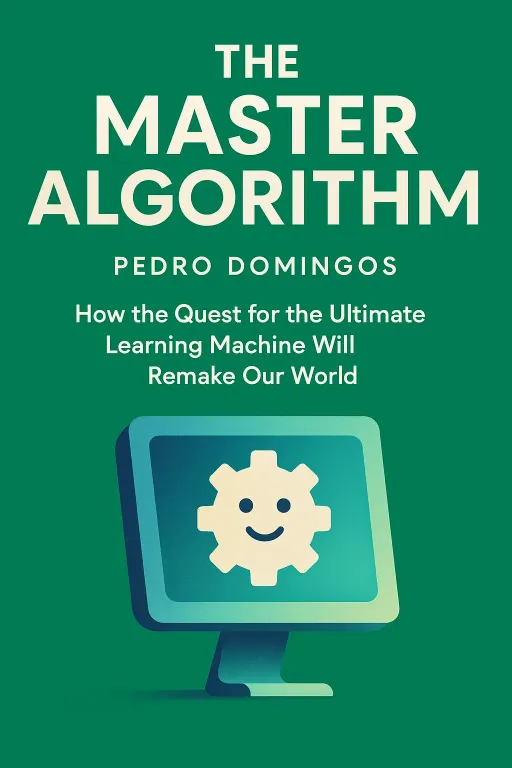
Nova: You've hit on a crucial point. It's not enough to just trust the AI's "smartness." This is where someone like Pedro Domingos, author of "The Master Algorithm," becomes so relevant. He explains that different AI paradigms have their own strengths and weaknesses. Some are incredible at prediction but are black boxes; others are more interpretable but might be less efficient.
Atlas: So, choosing the right AI model for a control system isn't just about raw power or speed, but also considering its 'personality'—how it communicates its decisions, its inherent biases, its limitations.
Nova: Precisely. Understanding these different paradigms helps you choose the right model, ensuring a human-centric design from the outset. It’s about building in interpretability, allowing humans to ask "why?" and get a meaningful answer. It's also about designing clear, intuitive human-machine interfaces that provide the right information at the right time, allowing operators to understand, intervene, and correct, rather than just passively observe. The blind spots aren't inherent to AI; they're often a byproduct of our design choices.
The Human-AI Partnership: Augmenting, Not Replacing
SECTION
Nova: This naturally leads us to the flip side of the paradox: how do we make AI our partner, not just a black box? It’s about active augmentation, not passive replacement.
Atlas: Augmentation. That sounds great in theory, but when every company wants to automate everything, how do you actually keep humans the loop meaningfully? I imagine a lot of our listeners, especially those building smarter, more adaptive control systems, struggle with that balance. There's so much pressure to just let the AI take over for efficiency.
Nova: There absolutely is. But this is where Robert Monarch's work in "Human-in-the-Loop Machine Learning" becomes incredibly insightful. He emphasizes that AI isn't truly autonomous; it human input. Not just at the initial programming stage, but continuously, for quality data, for error correction, and crucially, for ethical alignment in critical applications.
Atlas: So, it's not a one-and-done setup where you train the AI and unleash it. It's an ongoing, dynamic relationship. Can you give an example of what that looks like in practice, beyond just the abstract concept?
Nova: Let's consider a sophisticated medical diagnostic AI. Its job is to analyze vast amounts of patient data—imaging, lab results, genetic markers—and suggest potential diagnoses or treatment plans. Now, if we just let the AI make the final call, we'd lose the nuance of human empathy, ethical considerations, and the ability to handle truly novel, outlier cases the AI hasn't been trained on.
Atlas: And the potential for algorithmic bias to creep in, where the AI might disproportionately misdiagnose certain demographics if its training data was skewed.
Nova: Exactly. So, in a human-AI partnership model, the AI doesn't replace the doctor. Instead, it highlights potential diagnoses, flags anomalies the human eye might miss, ranks treatment options based on probabilities, and even simulates outcomes. But the human doctor makes the final, ethically informed decision. They use the AI as an incredibly powerful assistant, a co-pilot. And in doing so, the doctor continuously feeds back new data, corrects the AI's mistakes, and helps refine its ethical boundaries. The human role evolves from just diagnosis to higher-level judgment, ethical reasoning, and managing the AI itself.
Atlas: So, it's less about the AI being 'smart' and more about the being intelligently designed to leverage both AI's speed and human wisdom. That's a powerful distinction. It means we have to actively the collaboration, not just hope it happens. It's about augmenting human decision-making, not automating it away.
Nova: Absolutely. As the article's 'Nova's Take' section highlights, effective AI integration requires a deep understanding of its mechanisms and, critically, a deliberate strategy for human interaction and control. It's an active, ongoing process of co-evolution. And this is particularly relevant for those who are driven by making a tangible difference, like our listeners who care about sustainability and real-world impact.
Atlas: That 'Tiny Step' the article suggests—identifying one existing control system, mapping its current human touchpoints, and brainstorming how AI could augment, not replace, those human roles—that feels like a really concrete starting point. It’s not about overhauling everything at once, but finding those specific points where human and AI intelligence can truly elevate each other. That's pragmatic and innovative.
Synthesis & Takeaways
SECTION
Nova: So, ultimately, the AI Integration Paradox isn't just about the technology itself. It's a profound challenge to our design philosophy. It forces us to ask: are we building systems that empower us, or systems that subtly disempower us by creating opaque decision-making processes and eroding our oversight?
Atlas: It sounds like the key isn't to fear AI's intelligence, but to respect its capabilities enough to build robust bridges for human intelligence to guide it. It’s about consciously designing leadership the system, rather than just letting the algorithms dictate the terms.
Nova: Exactly. It reminds us that ultimately, integrating AI isn't just a technical challenge; it's a profound exercise in self-awareness. It forces us to define what it truly means to be human in a world increasingly powered by smart systems. It's about maintaining our agency, our ethics, and our unique capacity for judgment.
Atlas: Which brings us to a question for all our listeners: In your own work or life, where are you allowing smart systems to lead, and where are you consciously choosing to lead them? What does true human leadership look like in an AI-powered future?
Nova: This is Aibrary. Congratulations on your growth!