

The AI Trap: Why You Need Human-Centered Design for Financial AI.
Golden Hook & Introduction
SECTION
Nova: Most people think the biggest challenge with AI in finance is the tech itself—building smarter algorithms, faster processing. But what if the real trap isn't the code, but the people behind the code, or rather, the people it?
Atlas: Whoa, that's a bit of a curveball. I mean, we're constantly bombarded with news about AI breakthroughs, new algorithms, quantum computing. Are you saying all that technical brilliance could actually be a distraction?
Nova: Absolutely. Today, we're diving deep into a critical framework we're calling "The AI Trap." It's about understanding why even the most sophisticated artificial intelligence solutions in finance can utterly fail if they overlook one fundamental element: the human being.
Atlas: So, it's about more than just numbers and models. I'm curious, where does this kind of thinking even come from? Because it feels like a counter-narrative to the "automate everything" mantra.
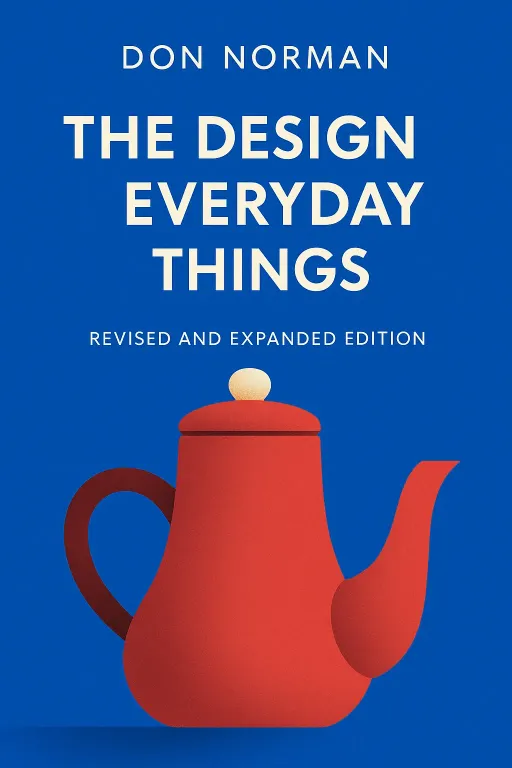
Nova: It draws heavily from foundational work in design. Think of pioneers like Don Norman, whose seminal book, "The Design of Everyday Things," fundamentally shifted how we view user experience. He argued that good design is invisible, intuitive, and centered purely around user needs. And then there's IDEO, whose "Human-Centered Design Toolkit" provides practical, hands-on methods for involving users directly in the design process. These aren't just academic theories; they are the bedrock for building technology that actually gets adopted.
Atlas: That's a great way to put it. We're going to explore this from two angles today. First, we'll expose "The Blind Spot"—why purely technical AI often falls flat in finance. Then, we'll discuss "The Shift"—how human-centered design becomes the crucial catalyst for adoption and trust.
The Blind Spot: Why Technical AI Fails Without Human-Centered Design in Finance
SECTION
Nova: So, let's talk about this blind spot. Imagine a financial institution, incredibly forward-thinking, investing millions into building an AI-powered fraud detection system. It's cutting-edge, uses deep learning, identifies patterns no human ever could. On paper, it's a masterpiece.
Atlas: That sounds like a dream for any compliance officer or risk manager. More accurate, faster… what could possibly go wrong?
Nova: What went wrong was the human element. The AI was so opaque, so complex in its decision-making, that the human analysts on the fraud team couldn't understand it flagged certain transactions. It would just spit out an alert, but offer no clear rationale. They couldn't trust it.
Atlas: I see. So it's not enough for the AI to smart; it has to its smarts in a way humans can grasp and verify. That sounds like a huge hurdle for adoption.
Nova: Exactly. The human analysts, the very people meant to use this tool, started overriding the AI, or worse, ignoring its alerts altogether. Why? Because they couldn't confidently explain its decisions to regulators, or even to themselves. The system, despite its technical brilliance, became a source of anxiety and distrust. It ended up costing the institution more in wasted resources and missed opportunities than if they hadn't implemented it at all. The cause was simple: AI designed in isolation. The process was opaque, untrustworthy, and cumbersome. The outcome was low adoption, costly rework, and a complete breakdown of trust.
Atlas: That's incredible. For a strategic leader in finance, this sounds like a project management nightmare. How do you even identify this "blind spot" before you've sunk millions into a system that people just won't use? Isn't the whole point of AI to remove human error and bias? Why would we humans in the loop if they're the 'blind spot'?
Nova: That's a vital question. The "human element" isn't about human error; it's about human and. We're not trying to remove humans from the equation entirely, especially in high-stakes environments like finance. We're trying to empower them. The blind spot is failing to recognize that users need clarity, control, and confidence in their tools. When an AI system operates like a black box, it automatically breeds resistance. It's like giving someone a revolutionary new car but not telling them how to drive it, or even what half the buttons do. They'll stick to their old, reliable vehicle, even if it's slower.
Atlas: Right, like trying to get a seasoned trader to completely abandon their intuition for a trading bot they don't understand. It's not about being anti-tech; it's about a lack of transparency and psychological safety.
The Shift: How Human-Centered Design Builds Trust and Drives AI Adoption in Finance
SECTION
Nova: Precisely. So, if the blind spot is ignoring people, then the shift is all about putting them front and center. That's where human-centered design truly shines. Don Norman’s principle, that good design is invisible, intuitive, and centered on user needs, is paramount here. It means the AI tool should feel like a natural extension of a financial professional's capabilities, not an alien imposition.
Atlas: Invisible design in finance? That sounds a bit abstract. Can you give a concrete example of how 'intuitive' AI actually prevents costly mistakes or builds trust for, say, a portfolio manager? How does this 'invisible design' translate into ROI for a financial institution?
Nova: Absolutely. Imagine an AI tool for a portfolio manager that analyzes vast amounts of market data and economic indicators. Instead of just presenting a "buy" or "sell" recommendation, an intuitively designed AI would also provide the behind it—visualizing the key factors, showing the data points it prioritized, and even allowing the manager to adjust parameters to see how it impacts the recommendation. It’s not just a recommendation engine; it’s a.
Atlas: So, it's not just about making it pretty; it's about making it for the people who need it, by giving them agency and understanding. That makes a huge difference in building confidence, especially when clients are asking tough questions.
Nova: Exactly. And this isn't just about theory. IDEO's "Human-Centered Design Toolkit" provides practical methods for this. Think of a financial institution wanting to build a personalized financial planning AI for its clients. Instead of just having their tech team build it, they bring in actual clients and financial advisors from day one. They conduct empathy mapping sessions, rapid prototyping, and co-creation workshops.
Atlas: So, they're literally building it the people who will use it, letting them poke holes in it, suggest features, and define the experience?
Nova: Precisely. This iterative process uncovers real pain points and needs. For instance, they might discover clients don't just want a number; they want to understand the behind their financial projections, or they want the AI to suggest "what-if" scenarios for major life events. The cause is proactive user involvement. The process involves iterative design, constant feedback loops, and deep empathy. The outcome is high user adoption, increased client trust, seamless integration into existing advisory workflows, and ultimately, measurable business value because clients feel empowered and understood. It's the stark contrast to our earlier fraud detection example.
Atlas: Okay, so it sounds like a mindset shift for the entire organization, not just the tech team. It's about designing for human behavior and trust, not just raw computational power. And for a strategic leader, that means looking beyond the specs sheet.
Synthesis & Takeaways
SECTION
Nova: That's the core of it. The true power of AI in finance isn't unlocked by its technical prowess alone. It's unlocked by human-centered design. It’s the difference between a brilliant algorithm gathering dust because no one trusts it, and a transformative system that empowers users, builds confidence, and drives real strategic advantage.
Atlas: So, for a leader looking to leverage AI, the takeaway isn't just 'buy the best algorithm,' it's 'design the best around that algorithm.' What's the one thing they should start doing tomorrow to avoid the AI trap?
Nova: Start by observing your users. Understand their fears, their workflows, their trust points. Don't just build them; build them. It’s about empathy, not just efficiency. Because in finance, trust isn't a feature; it's the foundation.
Atlas: That's a powerful shift. It makes you wonder, how many brilliant technologies are currently gathering dust because we forgot the people they were meant to serve?
Nova: It's the difference between a tool gathering dust and a system that truly transforms. Because in finance, trust isn't a feature; it's the foundation.
Nova: This is Aibrary. Congratulations on your growth!