

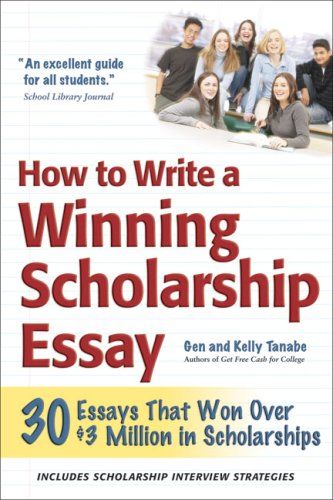
How to write a winning scholarship essay
Introduction
Nova: Welcome to Aibrary, where we unpack the books that can change your life. I'm Nova, and I'm joined by my co-host. Today we're diving into a book that quite literally could be worth thousands of dollars to you — How to Write a Winning Scholarship Essay by Gen Tanabe and Kelly Tanabe.
Nova: : And I have to admit, Nova, when I first picked up this book, I thought — another scholarship guide? But then I saw the subtitle: 30 Essays That Won Over Three Million Dollars in Scholarships. That got my attention.
Nova: Right? And here's the thing that really grabbed me. The authors aren't just giving theoretical advice. Gen and Kelly Tanabe themselves won over a hundred thousand dollars in merit-based scholarships and graduated from Harvard completely debt-free. They've been in the arena.
Nova: : That's the kind of credibility you want. So what's the core message of this book?
Nova: The book opens with a pretty stark warning. Scholarship judges often decide in less than 60 seconds whether your application moves forward or goes into the trash. One minute. That's all you have to make an impression. And the two things that determine your fate? Your essay and your interview. This book is a masterclass in both.
Nova: : Sixty seconds. That's terrifying and motivating at the same time. Let's dig in.
What Selection Committees Really Want
Inside the Judges' Mind
Nova: One of the most unique features of this book is something called the Judges' Roundtable. Three separate chapters where the Tanabes actually sat down with scholarship judges from across the country and asked them point-blank: what are you really looking for?
Nova: : That's brilliant. Most applicants are just guessing what judges want. Having actual judges spell it out is like getting the answers before the test.
Nova: Exactly. And what they reveal might surprise you. Straight A's and perfect test scores are not what set winners apart. One judge explained that by the time applications reach the final round, almost everyone has impressive grades. What separates the winner from the runner-up is something else entirely — it's the story the applicant tells.
Nova: : So what specifically are they looking for in an essay?
Nova: The judges identified a few non-negotiables. First, authenticity. They can smell a fabricated or exaggerated story from a mile away. Second, they want to see how you think — not just what you've done. They want evidence of reflection, growth, and self-awareness. And third, they're looking for what the Tanabes call a "focus on solutions." Don't just describe a problem or a challenge you faced. Show how you addressed it, what you learned, and how you'll apply that going forward.
Nova: : That makes so much sense. A scholarship is essentially an investment, right? The organization wants to invest in someone who solves problems, not just someone who identifies them.
Nova: That's precisely the mindset. One judge put it bluntly: the essay reveals character in a way that grades and test scores never can. And another fascinating insight — many judges said they're looking for essays that make them feel something. Not manufactured emotion, but genuine connection. If an essay moves a judge, they will remember it when it's time to make decisions.
Nova: : So it's almost like the essay is a proxy for an interview before you even get to the interview stage. It's your chance to be human on paper.
Nova: Perfectly put. And the judges also shared what immediately turns them off. Generic essays that could have been written by anyone. Essays that read like a resume in paragraph form. And perhaps most damning — essays where the student clearly didn't do their homework on what the scholarship organization actually stands for.
Finding Your Topic and Telling Your Story
The Essay Writing Workshop
Nova: Chapter four is the heart of the book — a complete essay writing workshop that takes you from a blank page to a polished draft. And it starts with what the Tanabes consider the hardest part: picking the right topic.
Nova: : I can relate to that. When you're sitting there thinking, what on earth do I write about, it's easy to freeze up.
Nova: The Tanabes offer a really practical framework. They say the best topics come from moments of genuine challenge, growth, or discovery. But here's the key — the topic itself matters less than how you write about it. A seemingly ordinary experience, written with insight and reflection, beats a dramatic story told superficially every time.
Nova: : Give me an example from the book.
Nova: One of the winning essays was about a student's experience working at a fast-food restaurant. Not glamorous, right? But the writer connected that experience to lessons about teamwork, handling pressure, and understanding people from different backgrounds. The essay worked because it was specific, honest, and showed real thinking.
Nova: : So it's not about having the most dramatic life story. It's about being perceptive about the life you've actually lived.
Nova: That's it. The Tanabes also identify what they call the four common features of all winning essays. First, they have a clear and compelling narrative — a beginning, middle, and end. Second, they use specific examples and concrete details, not vague generalities. Third, they reveal something meaningful about the writer's character or values. And fourth, they answer the prompt directly and thoroughly.
Nova: : That fourth one sounds obvious, but I bet a lot of people miss it.
Nova: Absolutely. The Tanabes share some hard-to-believe-but-true essay mistakes, and one of them is essays that completely ignore the prompt. A student writes a beautiful personal story, but it has nothing to do with the question being asked. Instant rejection. Another common mistake: the "Behold! My statistics" essay, which is basically a resume copied into paragraph form. The judges already have your resume. The essay needs to do something different.
Nova: : What about editing? I imagine that's a big part of the workshop.
Nova: Huge. The Tanabes emphasize that the first draft is just the starting point. They recommend getting multiple editors — a parent, a teacher, a friend — because different readers catch different things. But they also warn about too many cooks in the kitchen. Your voice needs to remain yours. If an essay has been edited so heavily that it no longer sounds like you, that's a problem judges will notice.
Learning from Spectacular Failures
The Essays That Bombed
Nova: Okay, this might be my favorite part of the book. Chapter six: 12 Essays That Bombed. These are real essays that failed, and the Tanabes analyze exactly why.
Nova: : I love this. Sometimes learning what not to do is more useful than learning what to do.
Nova: Completely. And some of these failures are spectacularly instructive. One category they call "The Attempted Tearjerker." This is the essay where the writer tries so hard to make the reader cry that it becomes manipulative and inauthentic. The emotion is manufactured rather than earned.
Nova: : I've read essays like that. You can feel the writer reaching for your heartstrings and it just feels... off.
Nova: Exactly. Another category is "Convoluted Vocabulary." This is the essay where the student apparently swallowed a thesaurus. Every simple word is replaced with something unnecessarily complex. It doesn't make the writer sound smart — it makes the essay unreadable. The Tanabes quote one judge who said, and I'm paraphrasing, that the best essays sound like a real human being speaking thoughtfully, not like someone trying to impress with big words.
Nova: : What about the "Miss America essay"? That one caught my eye in the table of contents.
Nova: The Miss America essay is the one where the writer wants to achieve world peace, end hunger, and cure all diseases. It's so broad and generic that it means nothing. The Tanabes' advice: be specific. Instead of saying you want to help people, say exactly who you want to help, how, and why that matters to you personally.
Nova: : There's also a category called "Excuses, Excuses, Excuses," right?
Nova: Yes. This is the essay that spends paragraphs explaining why the writer's grades slipped one semester, or why they didn't do more extracurricular activities. The Tanabes point out that while context can be useful, an essay built around excuses is a losing strategy. Judges want to see resilience and forward momentum, not a defense of past shortcomings.
Nova: : And then there's "Creativity Overload."
Nova: The creativity overload essay is the one where the writer tries a gimmick — writing in the form of a play script, or a fake news article, or some other overly clever format. The Tanabes say creativity is welcome, but when the format overshadows the substance, judges get annoyed. The medium shouldn't distract from the message.
Nova: : So the through line in all these failures is basically — be real, be specific, and don't try too hard to impress?
Nova: That's a perfect summary. The irony is that trying too hard to stand out is exactly what makes you blend in with all the other applicants who are also trying too hard.
From Hostile Questions to Group Dynamics
Mastering the Scholarship Interview
Nova: The second half of the book tackles something many students find even more intimidating than the essay: the scholarship interview. And the Tanabes cover it exhaustively.
Nova: : I would be terrified. You're sitting across from people who are deciding whether to give you thousands of dollars. How do you not crumble?
Nova: The Tanabes' first piece of advice is to reframe the interview entirely. Instead of thinking of it as an interrogation, think of it as a conversation. The judges aren't trying to trip you up — they genuinely want to get to know you and understand if you're the right fit for what their scholarship represents.
Nova: : That's a helpful mindset shift. But what about when the interview does feel hostile?
Nova: The book has an entire section on the hostile interview. Some judges deliberately ask tough, confrontational questions to see how you handle pressure. The Tanabes' advice: stay calm, take a breath before answering, and never get defensive. If you don't know something, admit it honestly rather than bluffing. Judges respect authenticity far more than fake confidence.
Nova: : What about group interviews? I know some scholarships use those.
Nova: Group interviews are a whole different beast. The Tanabes say the key is to be collaborative, not competitive. If you try to dominate the conversation or undermine other applicants, judges notice — and not in a good way. The best approach is to contribute meaningfully, listen actively to others, and build on what other people say. It demonstrates leadership and emotional intelligence.
Nova: : There's also practical stuff like what to wear, right?
Nova: Yes. Dress and act the part. The Tanabes are clear: err on the side of being slightly overdressed rather than underdressed. But beyond clothing, they talk about body language, eye contact, and the power of a firm handshake. These small things signal confidence and respect.
Nova: : The book also includes actual sample questions and answers, doesn't it?
Nova: Over twenty of them. Everything from "Tell us about a time you failed" to "Why do you deserve this scholarship?" to opinion questions on current events. For each one, the Tanabes provide both the question and an analysis of what makes an answer strong. The common thread in every good answer: be specific, use examples from your actual life, and connect your answer back to what the scholarship represents.
Nova: : There's also advice from a Rhodes Scholar in this section, which is pretty incredible.
Nova: Yes, and the Rhodes Scholar's insight is profound in its simplicity. The secret, he says, is to know yourself deeply before you walk into that room. If you've done the hard work of understanding your own values, strengths, and goals, then no question can really throw you off. You're not scrambling for answers — you're simply sharing what you already know to be true about yourself.
What Three Million Dollars in Scholarships Looks Like on Paper
The 30 Winning Essays and the Strategy Behind Them
Nova: Chapter five is the showcase: thirty actual winning essays that collectively earned over three million dollars. These aren't hypothetical examples — they're the real thing, reprinted in full with analysis.
Nova: : Three million dollars. It's almost hard to believe that number.
Nova: And these come from some of the most prestigious scholarships out there — Rhodes, Truman, Coca-Cola, Gates Millennium, Fulbright, National Merit. The range is incredible. One student alone received over a quarter million dollars in scholarship offers.
Nova: : What patterns emerge across these winning essays?
Nova: A few things really stand out. First, every single essay tells a story, and it's almost always a story about a specific moment or experience, not a broad summary of the writer's entire life. The best essays zoom in on something small and explore it deeply.
Nova: : So it's depth over breadth?
Nova: Exactly. Second, the winning essays all have what the Tanabes call "genuineness." You can feel that the writer is being real with you. There's vulnerability, honesty, and a distinct absence of self-promotion. These students aren't trying to sell themselves — they're trying to share something true.
Nova: : Any standout examples?
Nova: One essay that struck me was from a student who wrote about being the child of immigrants and navigating between two cultures. What made it powerful wasn't the topic itself — lots of students write about this — but the specific, sensory details she used. She described the smell of her mother's cooking, the sound of her father struggling with English on the phone with a utility company. It was vivid and immediate.
Nova: : Those details make a huge difference.
Nova: Another winning essay was about a student's experience hiking the Appalachian Trail. But it wasn't a travelogue. He used the physical journey as a metaphor for personal growth, connecting every challenge on the trail to a lesson about resilience, preparation, and knowing when to ask for help.
Nova: : The book also has advice directly from the winners about what strategies they used, right?
Nova: Yes, and one piece of advice that comes up again and again from the winners: get editors. Multiple editors. The winners didn't write their essays in isolation — they shared drafts with teachers, counselors, parents, and friends. They also emphasized the importance of starting early. One winner said she spent three months revising her essay before she was satisfied.
Nova: : Three months! That's commitment.
Nova: It is. But when the payoff can be tens of thousands of dollars, that time investment starts to look pretty reasonable. Another strategy winners shared: they recycled and reused their essays, adapting a strong personal statement for multiple scholarship applications. You don't need to start from scratch every time.
Strategy Beyond the Essay
Finding and Winning the Right Scholarships
Nova: One thing the Tanabes emphasize early in the book is that winning a scholarship isn't just about writing a great essay — it's also about finding the right scholarships to apply to in the first place.
Nova: : That seems obvious, but I bet a lot of students just apply to the biggest, most famous ones.
Nova: That's exactly what happens, and it's a mistake. The Tanabes argue that your odds improve dramatically when you target scholarships that align with your specific background, interests, and goals. They outline several "scholarship goldmines" — places most students overlook entirely.
Nova: : Like what?
Nova: Local community organizations, for one. Rotary clubs, chambers of commerce, local businesses — these often have less competition than national awards. Religious organizations, employers of your parents, professional associations related to your intended career. The Tanabes even suggest looking at organizations connected to your hobbies or passions. Are you a bowler? There might be a bowling scholarship. A chess player? Same thing.
Nova: : That's actually really encouraging. It means there's something for everyone if you know where to look.
Nova: And the Tanabes make another crucial point: before you write a single word, research the organization offering the scholarship. Understand their mission, their values, what they care about. Your essay should demonstrate that you share those values. If you're applying for a scholarship from an environmental organization and your essay never once mentions the environment, that's a missed opportunity.
Nova: : Does the book actually include a scholarship directory?
Nova: It does — an appendix with 125 scholarships including details on how to apply. It's not the most exhaustive directory out there, but it's a solid starting point, especially since these are scholarships the Tanabes have vetted as legitimate and worthwhile.
Nova: : What about timing? When should students start?
Nova: The Tanabes' advice: start searching as early as your freshman year of high school, even if you can't apply yet. Understanding the landscape early gives you time to shape your high school experience in ways that make you a stronger candidate. And once you're ready to apply, start the essay process at least two to three months before the deadline.
Conclusion
Nova: So let's bring it all together. How to Write a Winning Scholarship Essay by Gen and Kelly Tanabe isn't just a collection of tips — it's a complete system for approaching the scholarship process strategically.
Nova: : What would you say are the absolute must-remember takeaways?
Nova: First, you have about sixty seconds to make an impression. Your essay is what buys you more time. Make it count. Second, authenticity beats polish every time. Judges want to meet a real person, not a perfect resume. Third, learn from failure — both your own and the twelve essays that bombed in this book. Knowing what not to do is half the battle.
Nova: : And for the interview?
Nova: Prepare, but don't script yourself. Know your story deeply so that no question throws you. Treat the interview as a conversation, not an interrogation. And dress like you respect the opportunity, because you should.
Nova: : I think what strikes me most about this book is how empowering it is. It demystifies a process that can feel totally opaque and unfair.
Nova: That's exactly it. The Tanabes pull back the curtain and show you that winning scholarships is a skill — one that can be learned, practiced, and mastered. They did it themselves. The thirty essay writers in the book did it. And with the right approach, anyone reading can do it too.
Nova: : A final thought for our listeners?
Nova: The money is out there. Billions of dollars in scholarships go unclaimed every year, and a significant chunk of those are awarded based on essays just like the ones in this book. Investing the time to learn this skill might be the highest-paying work you ever do.
Nova: : That's a powerful way to think about it. Thank you for walking us through this book, Nova.
Nova: Thank you for the great questions. And to our listeners — go write something true. It might just pay for your education.
Nova: : This is Aibrary. Congratulations on your growth!