

Master the Art of Impactful Communication
Golden Hook & Introduction
SECTION
Nova: Influence.
Atlas: Oh, I like that. For me, that immediately conjures images of... well, sales pitches, really. Or maybe a perfectly crafted TED Talk that just.
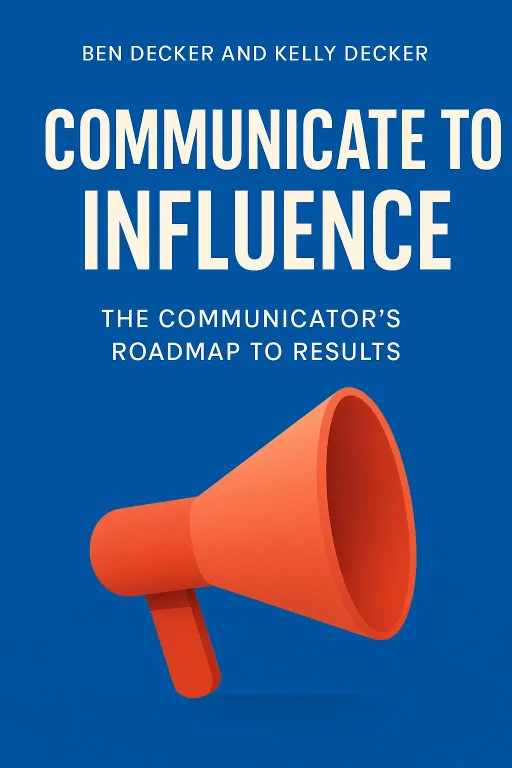
Nova: Exactly! Or, when you strip away the layers, it's about connection. Today, we're dissecting the very art of impactful communication, pulling profound insights from two titans in the field. We’re diving into "Communicate to Influence" by Ben and Kelly Decker, and the truly evergreen "How to Win Friends and Influence People" by Dale Carnegie.
Atlas: That’s a powerful combination. Decker and Decker’s work feels very much of the moment, doesn't it?
Nova: It absolutely does. Ben and Kelly Decker, as communication consultants for some of the biggest Fortune 500 companies, built their reputation on making communication in high-stakes environments. Their book distills decades of practical, results-driven experience, showing you how to cut through the noise. It’s born from the trenches of corporate strategy.
Atlas: And then you have Dale Carnegie, whose book has been a cornerstone for generations.
Nova: Indeed. Carnegie’s masterpiece, first published in 1936 during the Great Depression, offers foundational principles that have simply refused to age. It’s a testament to the enduring power of human nature, teaching us how to genuinely connect and build rapport even when times are tough. It’s been translated into countless languages and continues to be a global bestseller for a reason.
Atlas: So we’re talking about blending modern strategy with timeless human wisdom to truly influence and build trust. That sounds like the holy grail for anyone trying to lead or innovate today.
Nova: It really is. And that naturally leads us right into our first deep dive: the strategic architecture of modern communication, as illuminated by Decker and Decker.
The Modern Edge: Strategic Communication for Impact
SECTION
Nova: So, let's start with the Deckers. Their core message is that impactful communication isn't accidental; it’s a deliberate craft. It begins with a crystal-clear intention, a deep understanding of your audience's needs, and then structuring your message for maximum impact.
Atlas: Okay, so it’s not just about what you say, but and you say it. I imagine a lot of our listeners, who are constantly building and optimizing systems, might see this as an added layer of complexity. How does this translate into tangible progress?
Nova: That’s a great question. Think of it this way: for a strategic builder, time is scarce, and every interaction needs to count. The Deckers argue that if you don't start with a clear intention – what do I want my audience to after this communication – you're essentially firing blind. You might deliver a ton of facts, but if it doesn't move the needle, it's wasted effort.
Atlas: So, the intention is the bullseye, and understanding the audience is figuring out what kind of arrow they’ll respond to best?
Nova: Precisely! They emphasize asking: "What are their challenges? What keeps them up at night? What language resonates with them?" Without that, your perfectly structured message could still fall flat.
Atlas: Can you give an example? Like, how does this play out in a real-world scenario where someone might they're communicating effectively but actually aren't?
Nova: Absolutely. Let's imagine a brilliant software engineer, let's call her Priya, who’s developed a revolutionary new algorithm that could save her company millions. She’s presenting it to the executive board. Her intention is clear: get approval for funding. But her audience, the board, isn't interested in the intricate code or the technical elegance. They care about ROI, market advantage, and risk mitigation.
Atlas: Right, so she’s speaking a different language.
Nova: Exactly. Priya, in her passion, starts with the technical specifications, the intricate mathematical proofs, the elegance of her solution. She’s confident in her facts, but the board members are glazing over. They're trying to translate "big-O notation" into "bottom line."
Atlas: Oh, I’ve been there. You can almost see the disconnect in the room. They’re thinking, "Just tell me what it for us."
Nova: That’s the critical insight from Decker and Decker. Priya’s message lacked a clear narrative tailored to. She didn't frame it in terms of business impact, strategic advantage, or how it mitigates future risks. She delivered information, but not.
Atlas: So, how would the Deckers advise Priya to reframe her presentation? What’s the strategic shift?
Nova: They would tell her to start with the "why" that resonates with her audience. Instead of "Here’s my algorithm," she should open with, "Our current system is bleeding resources, costing us X million dollars a year, and here’s how my solution will plug that leak and generate Y million in new revenue within 18 months, with minimal risk."
Atlas: That’s a night and day difference. It’s immediately relevant, speaks to their pain points, and offers a clear, quantifiable solution. It’s about structuring the message to hit needs, not just her own.
Nova: And then, the "how" and "what" follow, but always framed through the lens of audience benefit. The Deckers also emphasize the power of compelling narratives. People remember stories, not just data points. So, Priya could weave in a brief, relatable anecdote about a past challenge the company faced and how her solution would have prevented it.
Atlas: That makes sense. For someone who values efficiency, learning to craft these narratives upfront probably saves a lot of time and effort down the line in getting buy-in. It’s an investment in communication infrastructure, really.
Nova: It absolutely is. It's about designing your communication like you'd design a complex system: with precision, foresight, and a clear understanding of its intended function and its users.
The Timeless Heart: Authentic Connection for Lasting Influence
SECTION
Nova: Now, while the Deckers give us the incredible framework for strategic messaging, it can sometimes feel a bit... clinical, if you don't infuse it with something else. And that's where Dale Carnegie steps in, bringing the timeless heart of human connection.
Atlas: That makes me wonder. In a world that’s so focused on strategy and optimization, doesn't "genuine interest" or "sincere appreciation" sound a bit… soft? Like, how do you maintain efficiency and still be genuinely interested in?
Nova: That’s a common misconception, and it’s a brilliant point to raise. Carnegie isn't advocating for boundless, indiscriminate emotional labor. He's revealing a fundamental truth: people respond to being seen, heard, and valued. His principles – like genuinely listening, remembering names, making others feel important, and seeing things from their perspective – are not about being "soft." They're about being profoundly effective.
Atlas: So it’s less about being universally chummy and more about a strategic empathy?
Nova: Exactly! It's a strategic. Let's take an example: imagine Mark, a project manager, who’s struggling with a highly technical and somewhat introverted team member, Sarah. Sarah is brilliant, but she’s missed several deadlines, and Mark is getting frustrated. He's tried all the strategic project management tactics, but nothing is working.
Atlas: Okay, so a classic situation. Mark could just push harder, right? Demand results.
Nova: He could. But Carnegie would suggest a different approach. Instead of focusing on the missed deadlines or the project plan, Mark could genuinely try to see things from Sarah's perspective. He might notice she seems overwhelmed, or perhaps she's struggling with a specific technical hurdle she's too shy to voice.
Atlas: So, instead of a direct confrontation about deadlines, he might start by asking about her work, her challenges, not just the project's.
Nova: Yes. Mark could approach Sarah, not with an accusation, but with genuine curiosity. "Sarah, I've noticed you've been working incredibly hard, and I appreciate your dedication to X part of the project. I also noticed you seem a bit swamped. Is there anything I can do to help clear some roadblocks for you?" He's showing sincere appreciation for her effort and genuine interest in her well-being, not just her output.
Atlas: That’s a subtle but powerful shift. He’s acknowledging her value first, then offering support, rather than leading with the problem.
Nova: The result? Sarah, feeling seen and valued, might open up about the specific, obscure bug she's been wrestling with for days, or the personal stressor that's impacting her focus. Suddenly, the problem isn't just a missed deadline; it's a human being with a solvable challenge. Mark, by applying Carnegie's principles, transforms a potentially adversarial interaction into a collaborative problem-solving session.
Atlas: Wow, that's actually really inspiring. It sounds like it trust and collaboration, which ultimately boosts efficiency in the long run. It’s not a time sink; it's a foundational investment.
Nova: Precisely. Carnegie’s principles teach us that influence isn't about manipulation; it's about building lasting trust and rapport. When people feel respected and understood, they are far more likely to be receptive to your ideas, collaborate effectively, and go the extra mile. It’s about creating an environment where people to be influenced by you.
Atlas: So, whether you’re pitching an idea to a board, or trying to motivate a team, or even just building your professional network, these human principles are the bedrock.
Synthesis & Takeaways
SECTION
Nova: What truly emerges when you combine the strategic frameworks of Decker and Decker with the timeless wisdom of Dale Carnegie is a complete, powerful approach to communication.
Atlas: It’s like the Deckers give you the blueprint for the most structurally sound, impressive building, but Carnegie reminds you that people actually have to in it. You need to make it welcoming and functional for them.
Nova: That’s a perfect analogy! Modern strategy gives you the map, the tactics, the precise language to articulate your vision and structure your message for maximum impact. It’s about being clear, concise, and compelling in a noisy world.
Atlas: And the timeless wisdom? That’s the compass. It guides you to remember the human at the other end. It’s about building genuine relationships, fostering trust, and understanding that true influence comes from authentic connection, not just clever words.
Nova: The ultimate impact isn't just about what you say, or even how perfectly you say it. It's how you make people, and how profoundly you their needs and perspectives. This fusion enables not just effective message delivery, but authentic leadership and enduring connection.
Atlas: That’s a profound thought. For anyone striving for holistic growth and tangible progress, it's clear these aren't just "soft skills." They're essential capabilities. So, the next time you need to communicate, pause. Ask yourself: what's my clear intention, how can I genuinely connect with the person across from me?
Nova: It’s about being both strategically brilliant and deeply human.
Atlas: That’s a powerful takeaway.
Nova: This is Aibrary. Congratulations on your growth!









