

The Sovereignty of Effective Thought
Golden Hook & Introduction
SECTION
Nova: What if I told you that your professional destiny isn't some cosmic lottery you either win or lose, but a blueprint you're actively drawing right now, whether you realize it or not?
Atlas: Oh man, Nova, that's a bold claim. Because for so many of us, especially when we're trying to navigate volatile markets or scale an ambitious venture, it often feels like we're just passengers, at the mercy of external forces, right? The economy, the competition, the latest tech disruption – it can feel overwhelming.
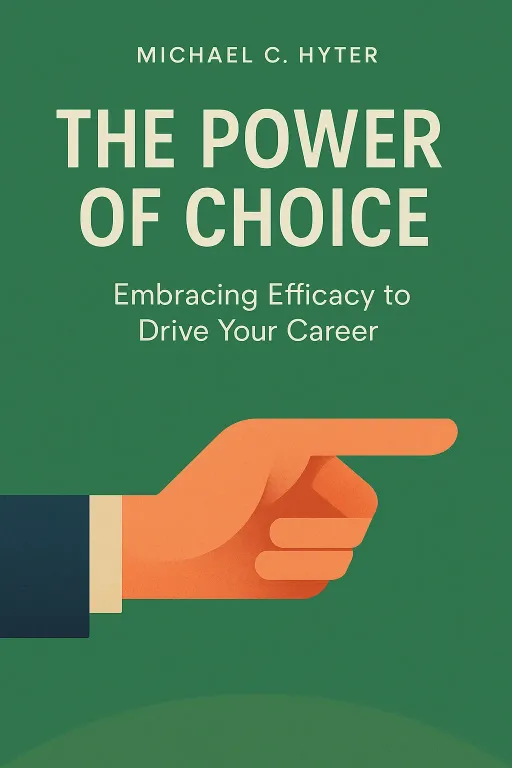
Nova: Absolutely, Atlas. And that feeling is precisely what we're challenging today. We're diving deep into the sovereignty of effective thought, exploring how much control we truly have over our professional paths and the quality of our decisions. We’re pulling insights from two powerful sources. First, Michael C. Hyter’s incisive work, "The Power of Choice." Hyter, a renowned business leader and executive coach, distilled decades of real-world experience leading organizations into this profound understanding of personal agency.
Atlas: That's fascinating. So, a true practitioner, not just a theorist. I like that. What’s the other piece of the puzzle?
Nova: Our second guide is "How to Think More Effectively" from The School of Life. They’re brilliant at taking complex philosophical and psychological concepts and making them incredibly practical for everyday life, for anyone striving for greater clarity and impact. Their work provides the frameworks to really put Hyter’s idea of conscious choice into action.
Atlas: So, we’re talking about equipping ourselves with both the mindset the toolkit to truly steer our own ships. That sounds like exactly what our listeners, the pragmatic learners and driven innovators, need to hear.
Conscious Accountability and Professional Destiny
SECTION
Nova: Exactly. Let's start with Hyter's core argument: that our professional destiny is fundamentally a result of conscious accountability, not external circumstances. Imagine a seasoned sea captain, Atlas. They’re sailing through notoriously unpredictable waters. A sudden, violent storm rolls in – a truly external circumstance, right? The captain has two choices.
Atlas: Okay, I’m with you. One choice is to panic, let the ship drift, blame the storm, and hope for the best. Which, honestly, I think a lot of us might be tempted to do sometimes when a big market shift hits.
Nova: Precisely. That’s the path of external circumstance dictating destiny. The other choice, the one Hyter champions, is conscious accountability. It’s about the captain immediately assessing the damage, consulting the charts, rallying the crew, and making deliberate decisions to navigate through or around the storm, even if it means altering the original course. It’s about owning the response, even when you can’t own the event.
Atlas: But hold on, Nova, for someone trying to master tech trends or scale a venture, it often like external circumstances—market shifts, disruptive technologies, funding droughts—are everything. Are we really saying those don't matter? Because that feels a bit naive to anyone who’s been through a major industry upheaval.
Nova: That's a critical distinction, Atlas. It's not about denying the existence or impact of external factors. They absolutely matter. But Hyter's insight is that our to those factors is where our power lies. Consider the story of two startup founders, both in the same booming market. Suddenly, a new, massive competitor enters, offering a similar service at half the price.
Atlas: Ouch. That’s a nightmare scenario for any founder.
Nova: It is. Founder A throws their hands up. They say, "Well, that's it. Our market's gone. We're sunk." They spend their energy complaining, perhaps even quietly winding down operations, feeling victimized by this external force. That's a reaction.
Atlas: I know that feeling. It’s easy to fall into that trap.
Nova: Founder B, however, also feels the punch. But after the initial shock, they consciously choose accountability. They gather their team, analyze the competitor's strategy, identify their own unique strengths, and pivot. Maybe they focus on a niche the competitor can't serve, or they double down on customer service, or they innovate a premium offering. Their destiny, though challenged, is actively being reshaped by their choices, not just passively accepted. Their professional path isn't determined by the competitor, but by their accountable response to it.
Atlas: So it's not about ignoring the storm, but about being the captain who charts a new course, rather than just drifting. That’s a powerful reframe. It transforms what feels like a passive victimhood into active agency. It connects to that idea of embracing even small steps to build momentum, because every conscious choice, no matter how small, is a step towards charting that new course.
Nova: Exactly! It’s about understanding that while you can’t always control the cards you’re dealt, you absolutely control how you play them. And that level of conscious accountability requires a certain quality of thought. You can’t just react; you have to effectively.
Overcoming Emotional Biases for Strategic Judgment
SECTION
Nova: And that ability to chart a new course, Atlas, often hinges on something even more fundamental: the quality of our thinking. Because even the best captain can make bad decisions if their compass is off. This brings us to The School of Life's insights on "How to Think More Effectively." They highlight how our emotions, often unconsciously, can cloud our strategic judgment.
Atlas: I can definitely relate to that. For driven innovators, especially when you're deeply invested in a product or a strategy, it's incredibly hard to step back and see objectively. You pour your heart and soul into something, and then someone suggests a pivot, or the data points to a flaw, and it feels like a personal attack. That's where emotions really take over.
Nova: Absolutely. They call these "emotional biases." Think about something like the "sunk cost fallacy." You've invested so much time, money, and effort into a project, even if all the objective data says it's failing, you keep pouring resources into it because of the emotional attachment to what you've already committed. You don't want to admit it was a mistake.
Atlas: That’s a classic. I’ve seen that play out countless times. It’s like trying to master a tech trend, but you’re so emotionally tied to the old tech that you can’t see the new opportunities. So, what kind of frameworks does The School of Life offer to actually these biases? Because "just think clearly" isn't exactly a hack for optimizing limited time. We need actionable strategies.
Nova: They offer brilliant, practical tools. One powerful approach is what they call "emotional intelligence for decision-making." It’s not about suppressing emotions, but them. Before making a big decision, especially a strategic one, they suggest a deliberate pause. Ask yourself: "What emotions am I feeling right now about this decision? Am I anxious about potential loss? Am I overly excited by potential gain? Is there pride involved in sticking to my original idea?"
Atlas: That’s interesting. So, acknowledging the emotion first, almost like stepping outside of it.
Nova: Exactly. Once you've named the emotion, you can then consciously separate it from the objective facts. They recommend a technique similar to "prospective hindsight," or a pre-mortem. Imagine a startup founder, deeply emotionally attached to a product that's struggling to find market fit. All the early feedback is lukewarm, but they in it. Their pride, their fear of failure, their sheer investment of time, are all biases at play.
Atlas: That scenario is all too real. It’s a huge challenge for anyone trying to scale ventures.
Nova: So, the founder, using this framework, would pause and imagine it's a year from now, and the product has completely failed. Then, they’d work backward: "What were all the reasons it failed? What were the early warning signs I ignored? What emotional biases prevented me from seeing the truth?" This exercise creates a psychological distance, allowing them to critique their own idea it's too late, detached from the immediate emotional investment.
Atlas: Wow. So it's about building a mental 'circuit breaker' that helps you pause and re-evaluate, especially when the stakes are high, instead of just reacting? Like scheduling that 20 minutes daily for focused learning, but for your decisions, creating a dedicated space for unbiased thought.
Nova: That’s a perfect analogy, Atlas. It's about designing a process to deliberately introduce objectivity. It’s a productivity hack for your brain, really. By understanding that emotions are of our thinking, but shouldn’t our thinking, we reclaim sovereignty over our strategic judgment. It allows us to make conscious choices that truly align with our goals, rather than being swayed by internal or external pressures.
Synthesis & Takeaways
SECTION
Nova: So, bringing Hyter and The School of Life together, it's clear that conscious accountability for our professional destiny isn't just about hard work or ambition. It's profoundly about the quality of our thinking. It's an active, ongoing process of self-awareness and deliberate strategy.
Atlas: It really brings it back to that initial challenge, doesn't it? Reflect on your last major business decision: Was it a reaction to a market trend, or a conscious choice based on a corrected, effective thinking process? That's a powerful self-assessment, and honestly, a little uncomfortable to confront sometimes.
Nova: It is. But that discomfort is where growth happens. The sovereignty of effective thought isn't about being emotionless; it's about acknowledging our emotions, understanding their potential influence, and then consciously choosing to apply frameworks that allow us to think beyond those immediate impulses. It’s about building mental resilience and strategic foresight, especially when the stakes are high for mastering new trends or scaling a business.
Atlas: That’s a truly deep insight, Nova. It empowers us to be the architects, not just the inhabitants, of our professional lives. So, for our listeners, what's one area this week where you can consciously choose to apply a clearer lens to a decision, rather than letting an old bias or external pressure dictate your path? Even a small step builds momentum, right?
Nova: Absolutely. Start small, but start with intent. That’s where real power lies.
Atlas: Incredible food for thought.
Nova: This is Aibrary. Congratulations on your growth!









