

Sculpting Your Mind: Principles & Practices for Profound Thought
Golden Hook & Introduction
SECTION
Nova: Alright, Atlas, quick game. Five words. How would you describe the of thinking, not just what it is, but what it for us?
Atlas: Oh, I love this! Hmm… "Shapes our world, defines our future." How's that for a start?
Nova: Ooh, punchy! I like it. Mine would be: "Mind's deliberate dance, life's blueprint."
Atlas: "Life's blueprint"—that's brilliant, Nova. It perfectly sets the stage for what we're diving into today. Because so often, we just, without really, if you know what I mean.
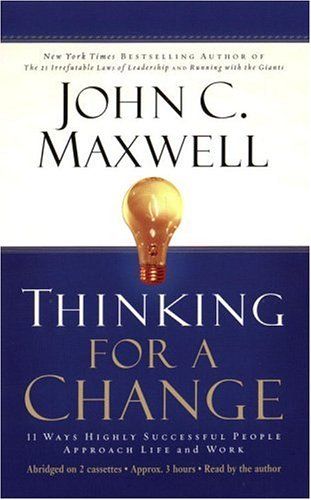
Nova: Exactly! And that's precisely what two brilliant works explore. We're talking about, a renowned leadership expert known for distilling complex ideas into actionable wisdom, and, which applies philosophical insights to refine our everyday cognitive processes.
Atlas: Ah, Maxwell, the maestro of practical leadership, bringing structure to our mental chaos. And The School of Life, turning abstract philosophy into a user manual for the mind. It’s like getting a masterclass in mental architecture and then a detailed guide on how to renovate your inner space.
Nova: A perfect analogy! Because the deep question we’re grappling with today, the one that ties these two powerful resources together, is: how can we intentionally integrate diverse modes of thinking into our daily routine to proactively shape our personal philosophy and decision-making? It’s not just about good ideas, but about the mind that generates them.
Atlas: Right? Because for a lot of our listeners, who are processing information deeply and seeking tangible impact, it's not enough to just passively absorb. They want to know how to this. So, today we'll dive deep into this from two perspectives. First, we'll explore the incredible spectrum of thinking modes available to us, moving beyond just one way of approaching problems. Then, we'll discuss the practical art of 'cognitive sculpting' – how to intentionally integrate and refine these modes into our daily lives for clearer, more impactful thought.
The Spectrum of Thought: Unlocking Different Thinking Modes
SECTION
Nova: So, let's kick off with the first idea: the idea that thinking isn't a monolithic block. Maxwell, in "Thinking for a Change," really hammers this home. He argues that most of us get stuck in one or two default ways of thinking, like having a single wrench in a toolbox full of specialized instruments.
Atlas: That makes perfect sense. I mean, I know I've definitely fallen into the trap of just powering through problems with brute-force logic, even when it feels like I'm hitting a wall. But what are some of these different "instruments" Maxwell talks about?
Nova: He outlines several, but let's focus on four key ones that are incredibly powerful: big-picture thinking, focused thinking, creative thinking, and reflective thinking. Think of them as different lenses you can put on your intellectual camera.
Atlas: Okay, so, different lenses. Can you give me a quick snapshot of each? Because for someone leading complex projects, knowing which lens to grab could be a game-changer.
Nova: Absolutely. Let's start with. This is like being the architect of a grand design. You're stepping back, seeing the entire landscape, understanding how all the pieces connect, and where you ultimately want to go. It’s about strategy, vision, and understanding context. You're not worrying about the individual bricks, but the entire blueprint of the skyscraper.
Atlas: That's incredibly important for strategic leaders, right? To not get bogged down in the weeds but see the overarching mission. But then, how does that contrast with? Because sometimes you need to be in the weeds.
Nova: Precisely. is the surgeon's precision. It's about intense, uninterrupted concentration on a single task or problem. You're eliminating distractions, diving deep, and executing with meticulous attention to detail. This is where you actually lay those individual bricks, making sure each one is perfect. Maxwell stresses that this is where true mastery often happens, but it requires discipline to protect that mental space.
Atlas: I can definitely relate to that. The sheer volume of information we deal with daily makes deep focus feel like a superpower. But then, we also need new ideas. What about?
Nova: Ah, is the artist's palette. It’s about connecting seemingly disparate ideas, playing with possibilities, brainstorming without judgment, and daring to look at things from entirely new angles. It’s not just for artists; it’s for anyone who needs to innovate, find novel solutions, or break free from conventional approaches. Think of it as mixing colors you’ve never combined before to create a new shade.
Atlas: Wow. So, it's about breaking free from the "how it's always been done" mindset. That’s crucial for growth architects, always looking for new pathways. And finally,?
Nova: is the philosopher's journal. It's about pausing, reviewing your experiences, assessing your decisions, and extracting lessons learned. It’s where growth truly solidifies. This is how you integrate insights, understand your biases, and consciously evolve your thinking process. It's not just, it's. It’s looking back at your finished painting to understand the strokes that worked and those that didn't.
Atlas: That’s actually really inspiring. So, it's not about being at one type of thinking, but having access to this full spectrum. But here's the thing, Nova: many of our listeners are high-achievers. They might naturally gravitate towards, say, focused thinking for execution. How do they even begin to which mode they need, or more importantly, which one they’re neglecting? It sounds like a lot to juggle.
Nova: That's a brilliant question, Atlas, and it highlights a common pitfall. The key isn't to force yourself into a mode, but to develop an awareness. Often, the mode you is the one that feels least comfortable or most counter-intuitive in a given situation. If you're stuck in the details, you probably need big-picture. If you're constantly brainstorming without execution, you need focused. If you're repeating the same mistakes, you need reflective. It's about diagnosing the problem, then picking the right mental tool.
The Art of Cognitive Sculpting: Intentional Practice for Sharper Minds
SECTION
Nova: And that naturally leads us to the second key idea, which often acts as the practical application of understanding these modes: the art of cognitive sculpting. It’s not enough to about different thinking modes; the real magic happens when we actively cultivate and integrate them into our daily lives. This is where "How to Think More Effectively" by The School of Life really shines, offering practical exercises and philosophical insights to refine our cognitive processes.
Atlas: Okay, "cognitive sculpting"—I love that imagery. It suggests agency, like we're actively shaping our minds, not just letting them wander. But what does that in practice? Because for someone who's already got a packed schedule, the idea of adding more "thinking exercises" might feel overwhelming. What are the smallest, most impactful actions?
Nova: That's a totally fair point. The School of Life emphasizes that it’s not about grand gestures, but consistent, intentional micro-practices. One of their core tenets is dealing with. Think of your mind like a workshop. If it's full of half-finished projects, distracting tools, and old junk, you can't do your best work. Cognitive sculpting starts with decluttering.
Atlas: So, how do we "declutter" our minds? Is it just meditation? Because while powerful, that’s not always accessible for everyone in every moment.
Nova: It's broader than that. One powerful tool is. Not just a diary, but a dedicated space to process thoughts, unravel emotional knots, and analyze decisions. It’s a reflective practice that helps you see patterns in your thinking. Another is what they call Instead of just reacting to a problem, you mentally run through different scenarios: "What if I did X? What would be the best-case, worst-case, most likely-case outcome?" It's like a mental flight simulator for decision-making.
Atlas: That’s a fantastic idea, especially for strategic leaders who need to anticipate consequences. It sounds like a proactive way to engage reflective and big-picture thinking. And what about cultivating creativity and clarity when you feel stuck? Many growth architects struggle with creative blocks.
Nova: For creativity, they advocate for cultivating a This means approaching problems as if you know nothing, questioning assumptions, and being open to absurd ideas. It’s about shedding expertise temporarily to see things afresh. For clarity, they suggest Before a project even starts, imagine it has utterly failed. Then, work backward to identify all the reasons it failed. This uncovers potential pitfalls you might have missed in your optimism.
Atlas: That's brilliant! It's like flipping the script on risk assessment. Instead of asking "How can this succeed?", you ask "How could this?" and it forces you to think differently. I’m curious, though, for our listeners who identify as resilient philosophers, who are always seeking wisdom and personal growth, how does this intentional cognitive sculpting impact their personal philosophy? What's the long-term gain beyond just better decisions?
Nova: The long-term gain, Atlas, is nothing short of shaping your very worldview. By intentionally practicing these modes – by decluttering your mind, engaging in thought experiments, embracing a beginner's mind – you're not just solving problems; you're actively constructing your understanding of reality. You become more resilient because you've practiced different mental pathways for challenges. You become more empathetic because you've considered multiple perspectives. You become more aligned with your values because you've reflected on them deeply. It's about building a robust internal operating system for life, one that allows you to navigate complexity with greater wisdom and peace. It’s a continuous process of self-creation.
Atlas: Wow, "self-creation." That really resonates. It’s not just about improving your thinking for professional success, it's about fundamentally improving and. It's about building mental resilience, which is so critical today.
Synthesis & Takeaways
SECTION
Nova: Exactly. What both Maxwell and The School of Life ultimately teach us is that thinking isn't a passive state; it's a dynamic skill. It’s like a mental gym. You wouldn't expect to build physical strength by only lifting one type of weight or doing the same exercise every day. You need to train different muscle groups, with varied intensity and focus.
Atlas: That's a perfect analogy. So, our mental muscles need a diverse workout regime. It's about knowing your mental toolkit, understanding when to use a specific tool, and then actively practicing with it. It’s about moving from unconscious competence to conscious mastery.
Nova: Precisely. The power lies in the intentionality. It's about asking yourself, "What kind of thinking does this moment demand?" And then, "What small practice can I engage in right now to cultivate that mental muscle?" The cumulative effect of these small, intentional acts of cognitive sculpting is profound. It doesn't just change your output; it literally changes your inner landscape, your personal philosophy, and your capacity for wisdom.
Atlas: What a powerful thought. It's not just about being smart, but about being of how we're smart. So, for all our listeners out there, processing deeply and seeking that tangible impact, we want to leave you with this question: What one mode of thinking do you feel you neglect most often, and what tiny, intentional practice can you start today to give that mental muscle a workout?
Nova: Consider it your personal challenge. Start small, be consistent, and watch how your entire world begins to reshape.
Atlas: This is Aibrary. Congratulations on your growth!









