Plugging Your Daily Energy Leaks
Golden Hook & Introduction
SECTION
Nova: We treat our phones like they are the only things that need charging. But your brain has a battery life, too, and you are draining it at a rate that is actually preventable.
Atlas: That is a harsh reality to face on a Tuesday morning. I feel like I am constantly running on low battery, and I usually blame the workload. Are you saying the workload is not the primary culprit?
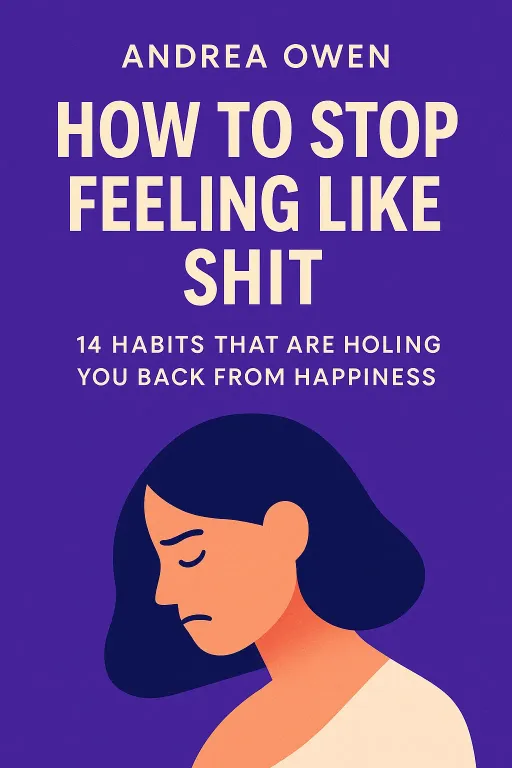
Nova: The workload is definitely a factor, but the real silent killer of productivity is how we manage our internal energy during the day. Today, we are diving into the science of energy management by looking at two specific frameworks. First, we are looking at How to Stop Feeling Like Shit by Andrea Owen. She is a powerhouse in the coaching world, known for her no-nonsense, deeply vulnerable approach to uncovering the self-sabotaging behaviors we all hide.
Atlas: I have heard the name. She is well-regarded for helping people move past the perfectionism that usually keeps them stuck.
Nova: Exactly. And to balance that, we are bringing in Conversations Worth Having by Jackie Stavros and Cheri Torres. This book is a masterclass in organizational development and communication. Stavros and Torres basically rewired how we think about workplace dialogue, moving us away from problem-solving and toward appreciative inquiry.
Atlas: So, we are looking at the internal drain—the people-pleasing and the catastrophizing—and then looking at how to fix the external output through the way we talk to people.
Nova: You nailed it. We are going to look at why your energy leaks are happening and how to plug them so you can actually get your work done without burning out by three in the afternoon.
The Architecture of Energy Leaks
SECTION
Atlas: Let us start with the leaks. I want to talk about this concept of people-pleasing. It sounds like a personality trait—like you are just a nice person. But you are framing it as a massive energy drain. How does being nice cost me physical energy?
Nova: That is the crucial distinction. Being kind is a choice. People-pleasing, however, is a survival mechanism. When you are people-pleasing, you are constantly scanning the environment for the needs of others while suppressing your own. That creates a massive cognitive load. Think of it like running a background program on your computer that you cannot close. It is always pinging the processor, checking if everyone is happy, checking if you are in trouble, checking if you are being perceived correctly.
Atlas: That makes perfect sense from an architectural standpoint. If I have five different programs running in the background, my primary task—the actual work I need to do—slows down. I am essentially multitasking, but the multitasking is emotional labor.
Nova: Precisely. Andrea Owen points out that this is often tied to perfectionism. You are so worried about the outcome being judged that you spend three times the amount of mental energy on the preparation, the execution, and then the post-mortem analysis of the interaction. You are not just doing the work; you are managing the perception of the work.
Atlas: I know that feeling intimately. It is the email you re-read ten times before sending, not because the content is complex, but because you are worried about the tone. You are trying to anticipate how the other person will react.
Nova: And that brings us to the second drain Owen identifies: catastrophizing. When you are in that state, your brain defaults to the worst-case scenario. You send that email, you do not get a reply in ten minutes, and your brain immediately jumps to: I messed up, they are angry, I am going to lose this client. That spiral triggers your cortisol. You are having a physiological stress response to a fiction you created.
Atlas: So, the energy isn't just leaking because I am doing too much. It is leaking because I am simulating disasters that haven't happened yet. My brain is burning glucose to fight tigers that aren't in the room.
Nova: That is the perfect way to put it. You are fighting imaginary tigers all day. By the time you actually have to do your real work, you are physically exhausted. You aren't tired because you worked hard; you are tired because you worried hard.
Atlas: Okay, so if the diagnostic is that I am essentially running a high-stress simulation in my head, how do I stop it? I cannot just tell myself to stop worrying. That never works.
Re-framing the Conversation
SECTION
Nova: That is where the second book, Conversations Worth Having, becomes our operational manual. Stavros and Torres talk about appreciative inquiry. The standard way we approach conversations—especially when things are going wrong—is to ask: What is broken? Who caused this? How do we fix the problem?
Atlas: That sounds like a standard management meeting. That is how most businesses operate.
Nova: It is, and it is exhausting. When you focus on the problem, you are focusing on the deficit. You are looking at what is missing. Appreciative inquiry flips that. You ask: What is working? What do we want to create? How can we build on the momentum we already have?
Atlas: But wait, if something is objectively broken—like a project is failing or a process is failing—are you suggesting we ignore the problem? That sounds like toxic positivity.
Nova: Not at all. It is not about ignoring the problem. It is about how you frame the investigation. If you walk into a room and say, "Why did this fail?" everyone's defenses go up. Their energy goes into protection, not solution-finding. If you walk in and say, "What part of this process was effective before it stalled, and how can we amplify that?" the energy shifts. You are looking for assets instead of liabilities.
Atlas: That is interesting. You are shifting the focus from blame to construction. It sounds like you are conserving the energy that would otherwise be spent on defensiveness.
Nova: Exactly. Think about the energy cost of a defensive conversation. When someone feels attacked, they shut down or they fight back. Both reactions are high-energy states. If you can move the conversation toward what is possible, you are actually lowering the barrier to entry for collaboration.
Atlas: I can see how that applies to a team setting. But what about the daily, one-on-one interactions? Let's say I am dealing with a colleague who is constantly catastrophizing, just like we talked about earlier. How do I use this framework to stop myself from getting dragged into their energy drain?
Nova: You become the architect of the conversation. When they start spiraling, instead of validating the spiral—which is what we usually do to be polite—you shift the inquiry. They say, "I am sure this client is going to hate this proposal." You say, "That is a possibility. What have we done in previous proposals that gave the client confidence in our work?"
Atlas: Oh, I see. You are not arguing with them. You are just pivoting the focus to the evidence of success.
Nova: Precisely. You are redirecting their mental energy. You are saying, "I hear your concern, but let’s look at the data of what has worked." It is a subtle shift, but it stops the catastrophizing in its tracks because you are refusing to engage in the simulation of the disaster.
The High-Performance Application
SECTION
Atlas: This feels like it has massive implications for performance. If I can control the energy of the room, I am not just saving my own battery, I am effectively acting as a leader.
Nova: That is the key. High performance is not just about your individual output. It is about your ability to create an environment where output is sustainable. If you are constantly leaking energy, you cannot lead effectively. You become the bottleneck.
Atlas: I have been thinking about the "Disciplined Architect" mindset. We often view discipline as "grinding through it." If I am tired, I just push harder. But what you are describing is a different kind of discipline. It is the discipline of emotional regulation.
Nova: It is the discipline of observation. You have to catch yourself in the act. When you feel that tightening in your chest—that moment when you are people-pleasing or catastrophizing—you have to label it. You have to say, "I am currently catastrophizing about this email."
Atlas: That is the "stop" moment.
Nova: Yes. And then you replace the anxiety with an appreciative inquiry question. Instead of "What if this goes wrong?" you ask, "What is the best possible outcome here, and what is one step I can take to move toward it?"
Atlas: It sounds simple, but it is incredibly hard to do in the moment. Our brains are hardwired for the negative. That is a survival trait, right? We notice the tiger in the bushes more than the beautiful sunset.
Nova: Absolutely. Our brains are wired for threat detection. So, when you are people-pleasing or catastrophizing, you are just letting your ancient brain run the show. You have to consciously override it. That is where the work comes in. It is not about never feeling the anxiety. It is about not letting the anxiety drain your battery.
Atlas: What about the physical aspect? We talked about the mental drain, but is there a physical component to this, too? I feel like when I am in these loops, I am physically tense. My shoulders are up to my ears.
Nova: Oh, absolutely. The body keeps the score. When you are people-pleasing, you are literally physically shrinking. You are making yourself smaller to avoid conflict. If you are constantly holding tension in your jaw or your neck because you are worried about what someone thinks of you, that is a physical leak. You are exhausted by the end of the day because you have been holding your body in a state of high alert.
Atlas: So, the fix isn't just a mental reframe. It is a physical one, too. Maybe it is about checking your posture or taking a breath before you hit send on that email.
Nova: Exactly. It is about grounding. When you feel the urge to people-please or the urge to spiral, pause. Take one deep breath. Feel your feet on the floor. That grounds you in the present moment, which is the only place where you can actually take action. The future—where the catastrophe happens—is not real. The past—where the people-pleasing mistakes happened—is gone. The present is where you have power.
Synthesis & Takeaways
SECTION
Atlas: I think I am starting to see the pattern. It is all about reclaiming your agency. If I am worried about what others think, I am giving them power over my energy. If I am worried about the future, I am giving the future power over my energy.
Nova: That is exactly it. You are handing the keys to your battery over to external factors. When you use appreciative inquiry, you are taking the keys back. You are saying, "I am the one who decides where we focus our energy."
Atlas: So, for the listener who wants to apply this today—what is the one thing they should do?
Nova: I would suggest starting with a "leak audit." For the next 24 hours, pay attention to when you feel that sudden drop in energy. Don't judge it. Just notice it. Ask yourself: Was I trying to please someone? Was I catastrophizing about a future outcome? Was I in a conversation that focused entirely on what was wrong, rather than what was possible?
Atlas: I love that. A leak audit. It makes it feel like a project, which is right up our alley. You are just gathering data on where the system is failing.
Nova: And once you have the data, you can start the repair. You don't have to fix everything at once. Pick one recurring conversation—maybe it is a weekly meeting or a check-in with a specific person—and decide that the next time you have it, you will ask one appreciative question. Just one. See how the energy of the room changes.
Atlas: It is a low-risk experiment with a high potential for return. I am going to try that. I have a meeting tomorrow that usually leaves me feeling like I need a nap, and I am going to try to flip the script.
Nova: That is the spirit. It is not about being perfect. It is about being intentional. When you stop the leaks, you don't just get more energy for your work; you get more energy for your life. You stop being a person who is constantly drained by the world and become a person who shapes it.
Atlas: That is a powerful distinction. It shifts you from a victim of your circumstances to the architect of your environment.
Nova: And that is the ultimate goal of high performance. It is not about doing more; it is about doing what matters with the energy you have.
Atlas: This has been incredibly grounding. I feel like I have a much better roadmap for managing my energy now.
Nova: I am glad to hear that. Remember, the goal is not to eliminate all stress—that is impossible. The goal is to make sure your energy is being spent on things that actually move the needle, not on the background noise of anxiety and people-pleasing.
Atlas: I am ready to plug those leaks. Thank you for this, Nova.
Nova: You are very welcome. Take that audit, and see what you find. This is Aibrary. Congratulations on your growth!