

How to read a person like a book
Introduction
Nova: Imagine you are sitting in a busy airport terminal. To your left, a man is sitting bolt upright, ankles locked tight, hands clenched into a single fist, rhythmically massaging one thumb against the other. To your right, a woman is talking on a payphone, her body turned completely away from the crowd, head tilted, cradling the receiver as if it were a living thing. You might not realize it, but you have just read two very different stories without hearing a single word.
Atlas: It sounds like a scene out of a spy novel, but you are saying we do this all the time? Just watching people and guessing their life stories?
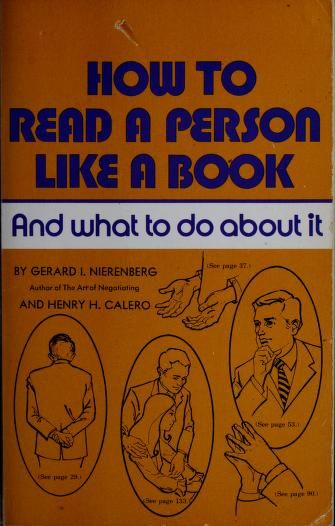
Nova: Exactly. And that airport scene is actually how Gerard Nierenberg and Henry Calero open their landmark 1971 book, How to Read a Person Like a Book. They argue that while we focus so much on what people say, the real truth is written in the way they move, sit, and even hold a telephone.
Atlas: 1971? That is over fifty years ago. I have to wonder, in the age of Zoom calls and texting, does a book about physical gestures from the seventies still hold up? Or is it just a collection of outdated tropes like crossing your arms means you are angry?
Nova: That is the perfect question to start with. Nierenberg was actually a pioneer in what we now call the win-win negotiation. He did not write this to give people a cheat code for manipulation. He wrote it to help us understand each other better. Today, we are going to dive into his system, from the famous unbuttoning of the coat to the subtle art of the chin stroke, and see if we can still use these tools to decode the people around us.
Atlas: I am ready to be convinced, but I am keeping my arms crossed for now. Let us see if you can read what that means by the end of the hour.
Key Insight 1
The Grammar of the Body
Nova: Before we get into specific gestures, we have to talk about Nierenberg's golden rule. He says that a single gesture is like a single word. If I just say the word bank, you do not know if I am talking about a place where you keep money or the side of a river. You need a sentence for context.
Atlas: So, if I see someone with their arms crossed, I cannot just assume they are being defensive or closed off?
Nova: Precisely. Nierenberg calls this the Cluster. You never look at one movement in isolation. You look for a group of gestures that all point in the same direction. If someone has their arms crossed, but they are also shivering and their teeth are chattering, they are probably just cold. But if their arms are crossed, their legs are locked, their fists are clenched, and they are leaning back? Now you have a cluster that signals defensiveness.
Atlas: That makes a lot more sense. It is about looking for a pattern rather than a smoking gun. But how many gestures make a cluster? Is there a magic number?
Nova: There is no magic number, but Nierenberg emphasizes congruence. This is when the verbal message matches the non-verbal message. He gives this great example of the nervous laugh. We have all heard it. Someone says something that should be funny, but their body is shifting, their arms are moving restlessly, and they look like they want to bolt for the door. The sound says amusement, but the cluster says extreme discomfort.
Atlas: I have definitely been that person in a job interview. My mouth is smiling, but my legs are probably doing a marathon under the table. It is interesting that he calls it reading a person like a book, because it implies there is a grammar to it.
Nova: It really is a language. And like any language, you can have synonyms. For example, nervousness can show up as clearing your throat, or it can show up as someone fidgeting with the coins in their pocket. Nierenberg actually spent thousands of hours video-recording negotiations to find these patterns. He was one of the first to use video-tape technology to study human interaction in real-time.
Atlas: That is a lot of footage. Did he find that people are generally aware of what they are doing with their bodies?
Nova: Most of the time, no. He calls it thinking through to the subconscious. We often have an intuitive feeling about someone—like, I do not trust this guy—but we cannot explain why. Nierenberg’s goal was to bring those subconscious signals into our conscious mind so we can actually analyze them. Instead of just feeling uneasy, you realize, oh, he is avoiding eye contact and keeping his palms hidden, which are classic signs of secretiveness.
Atlas: So it is about turning a gut feeling into a data point. I like that. But I imagine it takes a lot of practice to see these clusters in real-time without looking like a total creep staring at people.
Nova: It does! He suggests starting in low-stakes environments. Like that airport observation. Or watching a television interview with the sound turned off. If you can guess the emotion of the conversation just by the movements, you are starting to learn the grammar.
Key Insight 2
The Face and the Hands
Nova: Let us get into the specifics. One of the most fascinating sections of the book is about the evaluation cluster. This is what happens when someone is actually listening to you and weighing what you are saying.
Atlas: I am guessing that involves a lot of nodding?
Nova: Actually, nodding can be a trap! Sometimes people nod just to get you to keep talking so they do not have to. Nierenberg points to the hand-to-cheek gesture. If someone is resting their chin in their palm with their index finger pointing up the cheek, they are usually in deep evaluation. But here is the kicker: if the thumb starts supporting the weight of the chin while the index finger stays up, that evaluation is often turning critical or cynical.
Atlas: Wait, just moving the thumb changes the whole meaning? That is incredibly subtle.
Nova: It is! And if they start stroking their chin? That is the classic decision-making gesture. Nierenberg observed that in negotiations, when a person is asked for a final answer, they will often stroke their chin. If they follow that by leaning forward with their hands on the table, they are likely ready to say yes. If they follow it by crossing their arms, the answer is probably no.
Atlas: What about the eyes? People always say the eyes are the window to the soul. Does Nierenberg buy into that?
Nova: He does, but he looks at the eyes in combination with other tools. For instance, he talks about peering over the top of glasses. If you are wearing reading glasses and you look up at someone over the frames, it can come across as incredibly judgmental or suspicious, even if you are just trying to see them better. It is a gesture that often makes the other person feel like they are being cross-examined.
Atlas: I have had teachers do that to me! It feels like they are looking for a lie. Speaking of lies, does he have a tell for when someone is being dishonest?
Nova: He is careful about the word lie, but he talks a lot about suspicion and secretiveness. One of the big ones is the nose touch. Now, modern science says this might just be an itch caused by increased blood flow when you are stressed, but Nierenberg saw it as a common gesture when someone is holding something back. Another one is the hand-over-the-mouth. It is almost like the subconscious is trying to physically stop the words from coming out.
Atlas: It is like that see no evil, hear no evil, speak no evil thing. But what if someone is just bored? I feel like boredom is the most common thing we try to hide in meetings.
Nova: Boredom is easy to spot once you know the cluster. The head starts to lean more heavily into the hand. The eyes start to wander. But the real giveaway is the drumming of fingers or the rhythmic tapping of a foot. Nierenberg says these are essentially the body's way of trying to create its own stimulation because the environment is not providing enough.
Atlas: So, if I see my boss drumming his fingers while I am presenting, I should probably skip to the final slide and wrap it up?
Nova: Exactly. Or change your tone. Nierenberg suggests that once you read the gesture, you should use it to change your own behavior. If you see boredom, do not just keep talking—ask a question, change the pace, or even just stop and see if they re-engage.
Key Insight 3
The Negotiation Breakthrough
Nova: Now, Nierenberg was known as the father of contemporary negotiating, so a huge part of the book is about how these gestures play out when a deal is on the line. There is one specific gesture he is famous for identifying: the unbuttoning of the coat.
Atlas: That sounds like something a guy in a 1970s suit would do. Does it still apply if I am wearing a hoodie?
Nova: The principle does! Unbuttoning a coat is a signal of openness. Nierenberg found that when negotiators were close to an agreement, they would often unbutton their coats, uncross their legs, and move toward the edge of their chairs. It is a physical opening up of the body's defenses. He even noted that if a group of people are all in agreement, they will often all have their coats unbuttoned.
Atlas: And I am guessing the opposite is true? If the deal is going south, the coats stay buttoned up tight?
Nova: Not just buttoned, but often gripped. He describes people who are being defensive as literally shielding their vital organs. Crossed arms are the most common version of this. But he also mentions the sprinter's position. This is when someone is sitting on the edge of their chair, but their feet are tucked back under them, ready to push off. It means they are ready to end the meeting, one way or another.
Atlas: It is like they are physically preparing to bolt. I have seen that in high-pressure sales meetings. But what about the person who is trying to dominate the room? How do they sit?
Nova: That brings us to the confidence and power gestures. One of the most famous is steepling. This is when you join your fingertips together to form a sort of church steeple, but your palms do not touch. It is a huge signal of confidence. You will often see executives or lawyers do this when they are feeling very sure of their position.
Atlas: I have seen that! It looks very calculated. Almost like they are saying, I have already won this argument.
Nova: It can definitely come across that way. Another power move is leaning back with your hands behind your head. Nierenberg calls this the ultimate gesture of superiority and territorial dominance. It says, I am so comfortable and in control here that I do not even need to protect my front.
Atlas: That feels almost aggressive. Like they are taking up as much space as possible just to show they can.
Nova: It is very territorial. And Nierenberg points out that these gestures can actually backfire. If you are trying to build a win-win relationship, using a dominance gesture like that can make the other person feel small or defensive, which actually makes it harder to reach a deal.
Atlas: That is a great point. It is not just about reading them; it is about being aware of what you are broadcasting. If I am sitting there with my hands behind my head, I might think I am just relaxed, but the person across from me thinks I am being an arrogant jerk.
Nova: Exactly. Nierenberg tells a story about a judge who had a habit of grimacing and blinking during trials. The lawyers thought he was angry or skeptical of their arguments. It turned out the judge had suffered a stroke that left him with those facial tics. It was a purely physical habit, but because the lawyers did not know that, they were reading it as a negative gesture-cluster and it was ruining their performance.
Atlas: That is a perfect example of why context and the cluster matter. You cannot just take one twitch and build a whole theory around it.
Key Insight 4
Territory and Readiness
Nova: We have talked about sitting and hands, but Nierenberg also dives into how we use the space around us. He talks about territory in a way that feels very primal. For example, how do you think someone shows they are ready to take action when they are standing up?
Atlas: Feet apart? Hands on hips?
Nova: You nailed it. Hands on hips is the classic readiness gesture. It makes the person look larger and more imposing. It is often used by people who are about to start a task or, in some cases, by someone who is feeling defiant. Think of a child refusing to eat their vegetables—they almost always put their hands on their hips.
Atlas: It is the superhero pose! But I guess in a business setting, it might look a bit too confrontational.
Nova: It can be. Another territorial thing he mentions is how people use objects. If you are in a meeting and someone starts moving their coffee cup or their notebook into your space, they are literally expanding their territory. Or, if they are feeling insecure, they might build a wall of objects—putting their briefcase, their phone, and their water bottle right in front of them like a barricade.
Atlas: I do that with my laptop sometimes when I am in a coffee shop and I do not want anyone to talk to me. I am basically building a digital fortress.
Nova: That is a perfect modern analogy! Nierenberg also looked at how people walk. He claimed you could tell a lot about a person's status or mood by their gait. People who walk with their hands in their pockets, shoulders hunched, are often feeling dejected or secretive. Meanwhile, the person who walks with a heavy swing of the arms and a rhythmic stride is broadcasting confidence and goal-orientation.
Atlas: I am curious about the courtship gestures he mentions. That seems like a bit of a minefield. Did he really think you could read someone's romantic interest through their body language?
Nova: He did, though he focused more on the social dynamics of it. He noted things like preening—adjusting your tie, smoothing your hair, or checking your appearance in a mirror. These are all signals that you care about how the other person perceives you. He also talked about the direction of the feet. If two people are talking in a group, but their feet are pointed toward each other, they are likely more interested in that specific interaction than the rest of the group.
Atlas: The feet do not lie! I have heard that before. It is the one part of the body we forget to control because we are so focused on our faces.
Nova: It is true. We spend so much time practicing our poker face that we forget our feet are pointing toward the exit. Nierenberg’s whole philosophy was that the body is much more honest than the tongue. He believed that if you could learn to see these honest signals, you could bypass a lot of the games people play.
Atlas: But does this work across cultures? I mean, a gesture in New York might mean something totally different in Tokyo, right?
Nova: That is one of the biggest modern critiques of the book. Nierenberg was writing primarily from a Western, mid-century perspective. While many gestures like the smile or the frown are universal, things like eye contact or personal space vary wildly across the globe. In some cultures, direct eye contact is a sign of respect; in others, it is a sign of aggression or disrespect. So, you always have to layer cultural context on top of the gesture-cluster.
Conclusion
Nova: As we wrap up our look at How to Read a Person Like a Book, it is important to remember why Nierenberg and Calero wrote it in the first place. It was not about becoming a human lie detector or a master manipulator. It was about empathy.
Atlas: It is funny, I started this thinking it was going to be about how to win every argument, but it sounds more like it is about how to listen with your eyes.
Nova: That is a beautiful way to put it. Nierenberg believed that by understanding the non-verbal struggles of others—their nervousness, their defensiveness, their need for reassurance—we could become more effective communicators. If you see someone is defensive, you do not attack; you try to find out why they feel threatened. If you see they are bored, you try to engage them better.
Atlas: So the takeaway is: look for the clusters, respect the context, and use what you see to build a bridge, not a wall.
Nova: Exactly. Whether you are in a high-stakes negotiation or just trying to understand your partner better, paying attention to the silent language of the body can open up a whole new world of connection. The book might be fifty years old, but the human need to be understood is timeless.
Atlas: I think I am going to start by watching that airport terminal next time I travel. Without the headphones this time.
Nova: You will be amazed at what you hear when you are just looking. This is Aibrary. Congratulations on your growth!