

Unleashing Intentional Creativity & Flexible Thought
Golden Hook & Introduction
SECTION
Nova: What if everything you've been told about having 'one true path' to success, happiness, or even creativity was actually holding you back?
Atlas: Oh, I know that feeling. That relentless pressure to find "the one thing," the single perfect answer, only to feel... well, pretty unfulfilled when you don't instantly find it. It's like a mental straitjacket.
Nova: Exactly, a mental straitjacket indeed. And today, we're diving into two brilliant perspectives that actively dismantle that very idea, offering us a path to much greater freedom and flexible thought. We're looking at Derek Sivers's "How to Live," a fascinating collection of philosophies from a man who, after founding and selling the massively successful CD Baby, intentionally chose to live life entirely on his own terms.
Atlas: Right, so he's not just theorizing; he's lived a life that actively questions conventional wisdom. That's a powerful starting point.
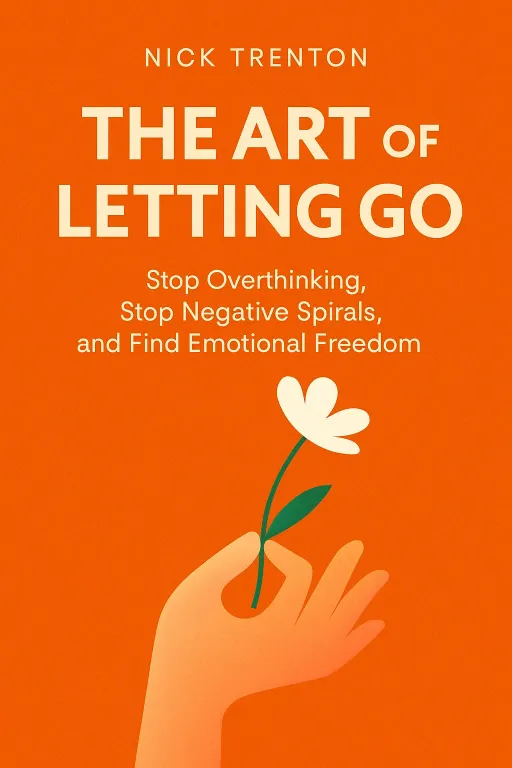
Nova: Absolutely. And then, we'll delve into Nick Trenton's "The Art of Letting Go," which offers practical, actionable techniques for clearing the mental clutter and rigid expectations that often keep us stuck in those single-path narratives.
Atlas: So, we're talking about first seeing the vastness of possibility, and then actively making space for those new possibilities to emerge? I'm already feeling lighter just thinking about it.
Nova: That's the goal! It’s about cultivating intentional creativity by first understanding the multitude of ways to exist, and then shedding the mental burdens that prevent us from exploring those avenues.
Embracing Plurality: The Many Paths to a Creative Life
SECTION
Nova: Sivers’s book, "How to Live," is a masterclass in mental agility. He presents 27 distinct philosophies for approaching life. From 'live for yourself' to 'live for others,' 'live to create,' 'live to experience,' 'live for stability,' 'live for adventure.' It’s not about picking one and sticking to it forever. It's about recognizing that there isn't a single 'right' way to exist.
Atlas: That’s a powerful idea. For our listeners who are in a phase of deep inquiry, trying to trust the unfolding of their unique path, this sounds incredibly liberating. But wait, isn't having so many options just... paralyzing? Like standing in front of a thousand-item menu when you’re just trying to get a sandwich?
Nova: That's a great question, and it's a common initial reaction. But Sivers isn't advocating for indecision. What he's doing is expanding our lens. Think of it less like choosing dish, and more like understanding the. Before, you might have thought only Italian food existed. Now, you realize there's French, Japanese, Mexican, Ethiopian. It’s not about eating everything at once, but knowing your options, and choosing with intentionality.
Atlas: I see. So it's about awareness, not obligation. It’s about realizing the map has far more roads than you initially thought, and some of those roads might lead to places you never even considered for your creative journey or personal growth.
Nova: Precisely. He himself is a testament to this. After building CD Baby into a multi-million dollar company, he sold it and then, instead of retiring to a beach, he embraced new philosophies. He became a circus performer, a music producer, a family man in different countries. His life isn't a linear progression; it's a series of intentional philosophical choices. He’s often praised for his non-dogmatic, practical approach, which really resonates with people looking for genuine self-discovery.
Atlas: That's incredible. It sounds like he's saying, "Don't just follow the default settings for life." It’s a radical permission slip to invent your own operating system. But then, how do you even begin to choose which philosophy resonates? For someone who values inner wisdom, does this mean ignoring their gut feeling and just trying things out?
Nova: Not at all. It's about using your inner wisdom to which philosophy feels most aligned with your current goals or challenges. He encourages you to "try on" a philosophy for a set period, like a scientific experiment. If you're feeling stuck creatively, you might try the 'live to create' philosophy for a month. If you're overwhelmed, perhaps 'live with less.' It's about active exploration, which is very much in line with the explorer spirit. It fosters mental agility by getting us out of rigid, binary thinking.
Atlas: That makes sense. It’s not about abandoning your internal compass, but rather using it to navigate a much larger, richer world of possibilities. It challenges that ingrained assumption that there's one true north.
The Art of Unburdening: Releasing Mental Constraints for Innovation
SECTION
Nova: And once you realize there are so many potential roads to take, Atlas, the next crucial step is making sure you actually take them. This is where Nick Trenton's "The Art of Letting Go" becomes incredibly powerful. Many times, our greatest creative blocks or personal stagnation aren't about lacking new ideas or new paths, but about clinging too tightly to old ones.
Atlas: That makes me wonder, how do we even these ingrained rules or assumptions we're holding onto? Sometimes they're so deeply a part of us, so fundamental to our worldview, we don't even see them as burdens. They just.
Nova: You've hit on a core challenge. Trenton’s work provides techniques for releasing emotional burdens, negative thought patterns, and those very rigid expectations you’re talking about. He emphasizes self-awareness as the first step. It's about noticing when you feel resistance, anxiety, or a lack of flow. For instance, a common one is the assumption that 'success always means more.' More money, more fame, more work. This can be a huge creative burden, leading to burnout and stifling genuine innovation.
Atlas: Wow. That's actually really insightful. I imagine a lot of our listeners, especially those driven by self-discovery and authentic growth, might be wrestling with that very idea. Letting go of what "success" or "creativity" is to look like.
Nova: Exactly. Trenton offers practical tools like mindful observation, journaling to trace thought patterns, and cognitive reframing. It’s not about ignoring challenges or becoming indifferent; it’s about acknowledging them, processing them, and then consciously choosing to release the grip they have on your mental and emotional space. By shedding what no longer serves us, we create a void, which nature—and creativity—abhors. That void then gets filled with innovation and fresh perspectives.
Atlas: So it's like mental decluttering. You're not throwing out all your belongings, but you're getting rid of the things that are weighing you down, taking up space, and preventing new things from coming in. It’s not about emptying your mind, but about making it more functional and spacious.
Nova: A perfect analogy. Think of an artist who's been told their work must fit a certain style to be "marketable." That's a rigid expectation, an ingrained rule. Letting go of that, even just for one project, can unleash a completely new, authentic, and often more impactful creative direction. Or someone holding onto a past failure, letting it define their potential. Releasing that burden creates mental space for new ventures.
Atlas: That gives me chills. So, it's not about abandoning inner wisdom, but about refining it. It's about recognizing that some of what we perceive as wisdom might actually be a well-worn groove that's no longer serving our growth.
Nova: Precisely. It’s about trusting the unfolding, as many of our listeners resonate with, by actively participating in clearing the path for that unfolding. It's a proactive form of surrender.
Synthesis & Takeaways
SECTION
Nova: So, when we bring Sivers and Trenton together, we see a powerful synergy. Sivers opens our eyes to the vast, multi-faceted landscape of possibilities, showing us that there are countless ways to live, create, and define success.
Atlas: And Trenton then gives us the tools to clear the internal debris—the old maps, the outdated compasses, the emotional baggage—that prevents us from actually exploring that landscape with an open mind and a flexible spirit.
Nova: Absolutely. The deep question that arises from these insights is truly profound: Which ingrained 'rules' or assumptions might you be holding onto that, if released, could open a new avenue for your creative projects or personal growth? It’s about identifying those hidden chains.
Atlas: For anyone out there who feels like they’re hitting a wall, or that their creative well is dry, this isn't about finding a new trick. It's about a fundamental shift in perspective and an active process of mental liberation.
Nova: Yes. It’s about giving yourself permission to explore, to experiment with new philosophies, and to shed the narratives that no longer serve the unique path you're on. Your path is unique, and it deserves all the mental space and flexibility you can give it.
Atlas: Trust the unfolding, indeed. This is about making space for that unfolding, and actively participating in it. It’s not always easy, but the freedom on the other side is immense.
Nova: Exactly. So, what's one assumption you're willing to question this week? One rigid expectation you could try to loosen your grip on? Just notice it. That's where the journey begins.
Atlas: What a powerful invitation to introspection and action.
Nova: This is Aibrary. Congratulations on your growth!









