

The Authority Myth: Leading from the Middle with Usman Khan
Golden Hook & Introduction
SECTION
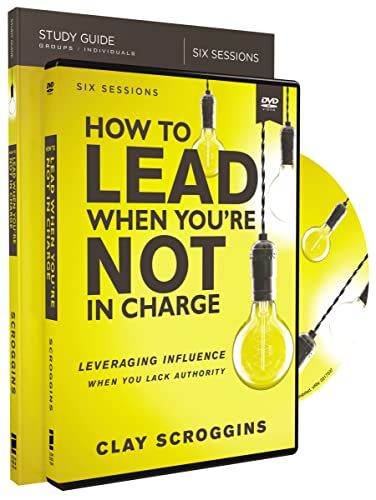
Nova: Imagine sitting in a meeting, seeing a glaring problem, but staying silent because, well, it is not your department. We have all been there, right? Just waiting for the person with the official title to step up and fix it. But what if waiting is the very thing holding your career back? Today, we are busting the ultimate corporate myth: the idea that you need formal authority to be a leader. Welcome to the podcast! I am Nova, and today we are diving deep into Clay Scroggins' game-changing book, How to Lead When You're Not in Charge. And I am absolutely thrilled to have Usman Khan here with us. Usman, welcome!
Usman Khan: Thanks, Nova! It is great to be here. You know, that opening scenario you described really resonates with me. From an analytical perspective, we often treat organizations as rigid, top-down hierarchies where power only flows downward. But Scroggins completely flips that model on its head. He argues that leadership is not about a title or a corner office; it is about influence. And influence is something anyone can cultivate, regardless of where they sit on the organizational chart.
Nova: Oh, I love that! It is so empowering, isn't it? We don't have to wait for permission to make a difference. Today, we are going to tackle this from two major angles. First, we will explore the Authority Myth and why leading yourself is actually the hardest—and most important—job you will ever have. Then, we will dissect the practical behaviors of non-authoritative influence, specifically how we can think critically without falling into the trap of becoming the office cynic. Sound like a plan, Usman?
Usman Khan: That sounds perfect, Nova. I am really interested in unpacking the cognitive shifts required here. It is one thing to say 'lead without authority,' but it is another thing entirely to reprogram how we view our role within a complex system. Let's dig into it.
Deep Dive into Core Topic 1
SECTION
Nova: Let's do it! So, let's start with the author himself, Clay Scroggins. He was a pastor at North Point Ministries, which is this massive organization. And early in his career, he found himself in this middle-management sweet spot—or maybe sweet-and-sour spot is a better way to put it! He had a ton of responsibility for running programs, but very little actual authority to make final decisions. He describes sitting in these endless meetings, feeling his chest tighten, wanting to scream, 'Why are we doing it this way?!' But he kept quiet because he felt his hands were tied. He fell right into what he calls the 'if-only' trap. You know, 'If only I were the boss, then we would finally get things done.'
Usman Khan: Hmm, the 'if-only' trap. That is a classic cognitive distortion, isn't it? It is essentially externalizing our sense of agency. In psychology, we talk about the concept of the 'locus of control.' When we fall into the 'if-only' mindset, we are operating from an external locus of control. We believe that our success, our happiness, and our ability to make an impact are entirely dependent on external forces—like our boss, our title, or the company culture.
Nova: Yes! Exactly! And Clay realized that waiting for that title was actually a form of passivity. He was letting his lack of authority become an excuse for not taking responsibility. He writes about how we often confuse authority with leadership. But authority is just a position; leadership is an action. When we wait for authority to lead, we are essentially putting our potential on pause.
Usman Khan: That is a really profound distinction, Nova. If you think about it, waiting for authority is actually highly inefficient. If everyone in an organization waits for the person above them to initiate change, the entire system grinds to a halt. It creates this culture of compliance rather than commitment. But when you shift to an internal locus of control, you realize that while you cannot control your position, you can absolutely control your disposition. You control your attitude, your work ethic, and how you respond to challenges. That is the essence of self-leadership.
Nova: It really is. And Clay says that self-leadership is actually the ultimate prerequisite for leading others. I mean, think about it: if we can't manage our own time, our own emotions, and our own reactions, why on earth should anyone trust us to lead a team? He has this great line where he says, 'The hardest person you will ever have to lead is you.' And honestly, when I read that, I was like, 'Oof, okay, that hits a little too close to home!'
Usman Khan: It really does! It is easy to point fingers at a bad boss or a disorganized system. It is much harder to look in the mirror and ask, 'How am I contributing to this problem? Am I managing my own energy? Am I staying disciplined when no one is watching?' From an analytical standpoint, self-leadership is about self-regulation. It is about creating a feedback loop for yourself where you constantly assess your own performance and make adjustments, rather than waiting for an annual review to tell you how you are doing.
Nova: That feedback loop concept is so smart, Usman! It is like being the scientist of your own behavior. And Clay points out that when we start leading ourselves well, people notice. Trust is built in the quiet, everyday moments, not in a grand announcement of a promotion. When your peers and your managers see that you are reliable, that you take initiative, and that you manage your own emotions under pressure, your influence naturally expands. You don't need a title to command respect; your character does it for you.
Usman Khan: Absolutely. It is about building social capital. Every time you follow through on a promise, every time you bring a solution instead of just a complaint, you are making a deposit into your organizational trust account. And that trust is the currency of influence. Without it, even if you are given a title, you won't actually be able to lead anyone. People might obey you because they have to, but they won't follow you because they want to.
Nova: Oh, that is such a key distinction! Obedience versus followership. We want people to buy into the vision, not just comply with the rules. And that brings us to the core of how we actually build that influence day-to-day.
Deep Dive into Core Topic 2
SECTION
Usman Khan: Right. Scroggins outlines four specific behaviors that help us build this kind of non-authoritative influence: lead yourself, choose positivity, think critically, and reject passivity. I found the interplay between 'choosing positivity' and 'thinking critically' to be particularly fascinating. On the surface, they almost seem to contradict each other, don't they?
Nova: They really do! I mean, when we think of 'positivity,' we sometimes worry it means being a blind optimist who just smiles through disaster. And when we think of 'critical thinking,' we sometimes picture the person who shoots down every single idea in a brainstorming session. But Clay argues that they actually need to go hand-in-hand. Let's talk about the critical thinking piece first, because I know that really jumped out to you, Usman.
Usman Khan: It did. Scroggins makes a vital distinction between a critical thinker and a cynic. A cynic is passive. They stand on the sidelines, pointing out flaws, complaining about leadership, and predicting failure, but they offer no constructive alternatives. They use their intellect as a shield to avoid taking responsibility. A critical thinker, on the other hand, is active. They analyze a situation, identify the gaps, but they do so with the goal of making things better. They are driven by curiosity and a desire to improve the system, not just tear it down.
Nova: Yes! The cynic says, 'This plan is terrible and it's never going to work.' The critical thinker says, 'I see some potential bottlenecks in this plan, particularly in our timeline. Here are two ways we might adjust our workflow to mitigate that risk.' See the difference? One is a dead end; the other is a bridge!
Usman Khan: Exactly. And from a systems-thinking perspective, the critical thinker understands that the boss doesn't have a monopoly on good ideas. In fact, because leaders are often operating at a high level, they might be disconnected from the day-to-day realities of the front lines. As someone 'not in charge,' you actually have a unique data set. You see the immediate friction points. Sharing that data is not being disrespectful; it is actually a service to your leader. But the key is you present it.
Nova: Oh, the 'how' is everything! Clay talks about this idea of 'managing up.' He says we need to understand our boss's world. What are their pressures? What keeps them up at night? If we just dump a pile of problems on their desk, we are just adding to their stress. But if we frame our critical thinking in a way that helps them succeed, they will start actively seeking out our opinion.
Usman Khan: That is a crucial point. It is about cognitive reframing. Instead of seeing your boss as an adversary or an obstacle, you see them as a partner. You ask yourself, 'How can I make their job easier?' If you can align your critical thinking with their strategic goals, your influence skyrockets. You become an invaluable asset. But this is where the 'choosing positivity' behavior becomes so important. If your critical thinking isn't wrapped in a genuine attitude of positivity and support, it will just sound like criticism.
Nova: Spot on, Usman! Positivity is like the lubricant that keeps the gears of critical thinking moving smoothly. And let's be clear: choosing positivity isn't about ignoring reality. It is a conscious decision to believe that a solution exists, and that we can find it together. It is about bringing hope into the room. In a world where it is so easy to be cynical and complain, a genuinely positive, solution-oriented attitude is like a superpower. It is incredibly attractive. People want to be around it, and leaders want to promote it.
Usman Khan: It really is a strategic asset. In organizational psychology, we talk about 'emotional contagion.' Emotions are literally contagious. If a leader or a team member is constantly negative, it drags the whole team's productivity and morale down. But a positive, proactive attitude can lift the entire room. It creates psychological safety, which allows for better collaboration and innovation. So, choosing positivity isn't just a nice personal trait; it is a highly effective leadership strategy.
Nova: I love that term, 'emotional contagion.' We get to decide what we are infecting our workplace with! Are we spreading cynicism, or are we spreading hope and solutions? And that leads us to the fourth behavior Clay talks about: rejecting passivity. It is about taking action, even when the path isn't perfectly clear. It is about stepping into the gap.
Usman Khan: Yes, rejecting passivity is where the rubber meets the road. It is the bridge between thinking and doing. Often, we stay passive because we are afraid of making a mistake or stepping on someone's toes. But Scroggins argues that in most organizations, there is a massive 'initiative gap.' There are always things that need to be done that don't fall neatly into anyone's job description. If you see a gap and you have the capacity to fill it, just do it. Don't wait to be asked.
Nova: Yes! He says, 'Don't wait for permission to do what is obviously right.' Now, of course, we have to use wisdom and not overstep our bounds in a way that damages trust. But more often than not, leaders are desperate for people who will just take ownership and get things done without needing their hand held every step of the way. It is about moving from a 'tell me what to do' mindset to an 'I've got this' mindset.
Synthesis & Takeaways
SECTION
Usman Khan: This has been such a rich discussion, Nova. If I were to synthesize the core message of Clay Scroggins' book, it is that leadership is ultimately a choice, not a position. It starts with a fundamental shift in how we view ourselves. We have to stop seeing ourselves as passive passengers in our careers and start seeing ourselves as active drivers. By mastering self-leadership, choosing positivity, thinking critically, and rejecting passivity, we can exert massive influence and drive real change, no matter where we are on the org chart.
Nova: Beautifully summarized, Usman! You nailed it. It is all about taking back our agency. We don't have to wait for a title to start making our organizations, our teams, and our lives better. We can start right now, today, from exactly where we are sitting.
Usman Khan: Absolutely. And for our listeners who want to put this into practice, I’d suggest starting with what I call the 'One-Degree Shift.' Don't try to overhaul your entire work life tomorrow. Just pick one small area. Maybe it is choosing to bring a concrete solution to the next problem you discuss with your boss. Or maybe it is taking ownership of a small project that has been neglected. Just a one-degree shift in your daily actions can completely alter your career trajectory over time.
Nova: Oh, I love that—the 'One-Degree Shift.' It is so doable, so encouraging! Thank you so much, Usman, for sharing your incredible analytical insights with us today. You have given us so much to think about and, more importantly, to act on.
Usman Khan: It was my absolute pleasure, Nova. Thanks for having me.
Nova: And thank you to all of our listeners! We want to leave you with one question to ponder today: What is one area in your work or life where you have been waiting for 'permission' to lead, and how can you make a 'One-Degree Shift' to start leading yourself in that area today? Remember, you don't need to be in charge to make a difference. Go out there, choose positivity, think critically, and lead from right where you are. We believe in you! Until next time, keep growing and keep leading!