

Reclaiming Attention and Autonomy
Golden Hook & Introduction
SECTION
Nova: The average person touches their smartphone two thousand, six hundred and seventeen times a day. If you calculate that over the course of a year, that is nearly one million interactions.
Atlas: That sounds less like using a tool and more like an addiction to a slot machine that never pays out the jackpot.
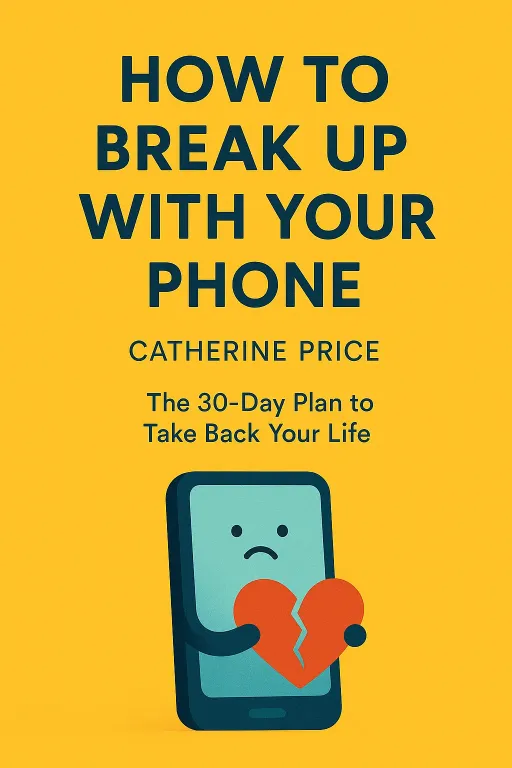
Nova: That is exactly the point. Today, we are looking at the mechanics of that habit. We are diving into two essential books that, when paired together, offer a complete blueprint for reclaiming your mind. We are discussing How to Break Up with Your Phone by Catherine Price and Stop Checking Your Likes by Susie Moore.
Atlas: I love that pairing. One feels like the tactical manual for the hardware—the phone itself—and the other feels like the software update for our own psychology.
Nova: That is the perfect way to frame it. Catherine Price, who wrote the first book, is a science journalist. She didn't just wake up one day and decide to put her phone down; she actually approached her digital life like a laboratory experiment. She spent months researching the neuroscience of attention, talking to tech designers, and essentially deconstructing why these devices are so impossible to put down.
Atlas: Which is a relief, honestly. Because when you realize that some of the smartest engineers in the world are paid specifically to keep you scrolling, it stops feeling like a personal failure of willpower and starts feeling like a battle against a system designed to win.
Nova: Exactly. And then you have Susie Moore, whose work in Stop Checking Your Likes addresses the other half of the equation—the internal itch. Even if we put the phone down, that deep, almost primal desire for external validation—that need to see the little red notification bubble—remains. Together, these two authors help us move from being passive consumers of technology to intentional architects of our own attention.
The Architecture of Hijacking
SECTION
Atlas: Let’s start with that first piece, the phone itself. You mentioned Price approaches this like a scientist. What is the most shocking thing she uncovered about how these devices are actually built?
Nova: The most striking revelation is the concept of the variable reward schedule. Think about a slot machine in a casino. If a slot machine paid out every single time you pulled the lever, you would get bored. It’s the unpredictability—not knowing if you are going to win big or get nothing—that triggers the dopamine release.
Atlas: Right. The "maybe" is the most addictive part.
Nova: Exactly. Your phone is a pocket-sized slot machine. When you pull down to refresh your email or your social media feed, you are pulling the lever. Sometimes you get a boring update, sometimes you get a like, sometimes you get a piece of news that spikes your adrenaline. That uncertainty is the design feature that keeps us locked in. Price emphasizes that this isn't an accident. It is a fundamental strategy used by app developers to maximize time on device.
Atlas: That makes so much sense. I catch myself doing it when I am standing in line for coffee. I don't even have a notification. I am just pulling the lever to see if anything interesting happened in the last four minutes.
Nova: And that is the "hijacking" she talks about. It is not that you are weak-willed; it is that the device is specifically calibrated to exploit your brain’s neurochemistry. Price suggests that we need to stop thinking about our phones as neutral tools. They are environments. And right now, we are living in an environment that is constantly trying to nudge us toward distraction.
Atlas: So, if the environment is rigged, what is the practical move? I know our listeners are looking for systems, not just vague advice about "being more present." How do we actually change the architecture of our daily lives to counter this?
Nova: Price proposes a very systematic, two-part program. The first part is about creating physical friction. If you have to work to get the reward, you are less likely to do it mindlessly. She suggests things like charging your phone in a different room, buying an old-school alarm clock so your phone isn't the first thing you touch in the morning, and—this is the big one—turning off all non-human notifications.
Atlas: Wait, explain that. What do you mean by "non-human" notifications?
Nova: Think about the difference between a text message from your partner and a notification from a game, a news app, or a social media platform telling you that someone you barely know just posted a photo. The first one is a human connection. The second one is an algorithm trying to pull you into the machine. Price says if it’s not a human being trying to reach you, you don't need a buzz in your pocket for it.
Atlas: That is a massive filter. It effectively silences the machines and keeps the humans. I can see how that would immediately lower the cortisol levels. Because every time my phone buzzes, even if it is just a "news update," my body has a mini stress response.
Nova: Precisely. You are constantly being interrupted by things that do not actually require your immediate attention. By silencing the machines, you are reclaiming your right to focus on the task in front of you. And for the "Architect" type of person—someone who wants to build, create, and optimize—that focus is the most valuable currency you have.
The Internal Validation Loop
SECTION
Atlas: Okay, so we silence the machines. We create physical distance. But then there is the second part of the equation, which leads us to Susie Moore’s work. Even if the phone is quiet, the urge to check it often comes from inside. What does Moore say about this need for validation?
Nova: Moore points out that the desire for approval is one of the most powerful human motivators. We are social animals. For most of human history, being part of the tribe meant survival, and being ostracized meant death. So, when we post something online and wait for the likes to roll in, we are essentially playing on that ancient biological need for belonging.
Atlas: That makes the "like" button seem way more sinister than just a harmless digital gesture. It’s like we are constantly performing a status check with the tribe.
Nova: Exactly. Moore argues that we have outsourced our self-worth to an algorithm. We are letting the number of likes, comments, or views dictate how we feel about our own ideas, our own work, or even our own lives. She challenges us to look at where we are seeking validation and why we feel the need for that external stamp of approval.
Atlas: I imagine this is a tough one for people who are trying to build a brand or a career. If you are an architect, or a consultant, or a creator, you are told that "visibility is everything." How do you reconcile the need to be visible with the need to stop chasing the dopamine hit of a "like"?
Nova: That is the crucial tension. Moore doesn't say you should become a hermit or never share your work. Instead, she suggests that you need to shift the locus of your validation. You have to build a "validation bank" inside yourself. You need to be able to look at your own work and say, "This is good. This is valuable," without waiting for the internet to tell you so.
Atlas: It’s the difference between "I need people to like this to know it’s good" versus "I know this is good, and it’s great if people engage with it."
Nova: That is a perfect distinction. It is the difference between leading with your ego and leading with your mission. When you are driven by mission, the external validation is just feedback, not fuel. When you are driven by ego, the external validation becomes the only thing that keeps you going.
Atlas: That sounds like a major shift in perspective. It moves you from a place of scarcity—where you are constantly begging for attention—to a place of abundance, where you are confident in your own output.
Nova: And think about the sustainability of that. If you rely on external validation, you are on a roller coaster. One post goes viral, you feel like a genius. The next post gets crickets, you feel like a failure. That is not a sustainable way to build a life or a career. By focusing on the intrinsic value of what you are doing, you stabilize your emotional state.
Synthesis & The Path Forward
SECTION
Atlas: I am thinking about the listener who is feeling overwhelmed by all of this. We have talked about the phone as a slot machine and the "like" button as a false idol. If you are sitting there right now, feeling like you are constantly distracted and constantly seeking approval, what is the very first step?
Nova: The first step is the experiment I mentioned earlier. Try turning off all non-human notifications for twenty-four hours. Just one day. It sounds small, but it is deeply revealing. You will notice how often you reach for your phone out of pure, unconscious reflex, not because you actually need to check anything.
Atlas: I have tried this, and the first few hours are actually really uncomfortable. You feel this phantom vibration in your pocket. You feel like you are missing out on something major.
Nova: That is the "withdrawal" phase. That is your brain trying to get back to its previous state of constant stimulation. But if you push through that first twenty-four hours, something interesting happens. You start to reclaim your attention. You start to notice things in the physical world again. You start to have original thoughts because you aren't constantly consuming other people's thoughts.
Atlas: And that is where the "Architect" mindset comes in. You aren't just reacting to the world anymore; you are observing it. You are taking the time to think, to plan, and to build.
Nova: Exactly. And that leads to the final insight from both books. Reclaiming your attention is not about being a Luddite or throwing your phone in a river. It is about autonomy. It is about deciding that your time and your focus are your most valuable assets, and you are not going to give them away for free to an app developer or a validation loop.
Atlas: It’s about taking the driver’s seat back. The phone is a tool, and you are the user. When you flip that dynamic, everything changes. You stop being the product, and you start being the protagonist of your own life again.
Nova: That is beautifully put. The goal is to design a life where your technology supports your ambition rather than sabotaging it. It is about building a system—a daily routine—that protects your deep work and fosters your own internal sense of worth.
Atlas: I think that is a powerful note to end on. It’s not about perfection; it’s about intentionality.
Nova: Always. It is a marathon, not a sprint. Start with the twenty-four hours, observe your own patterns, and build from there. If you want to dive deeper into this, I highly recommend picking up both How to Break Up with Your Phone and Stop Checking Your Likes. They are the perfect complementary reads for the modern age.
Atlas: And for everyone listening, try that challenge today. Turn off those non-human pings and see what happens to your focus. You might be surprised at what you find when you are finally left alone with your own thoughts.
Nova: We are really excited to see how this shifts your daily workflow. Thank you for joining us for this deep dive into attention and autonomy. This is Aibrary. Congratulations on your growth!









